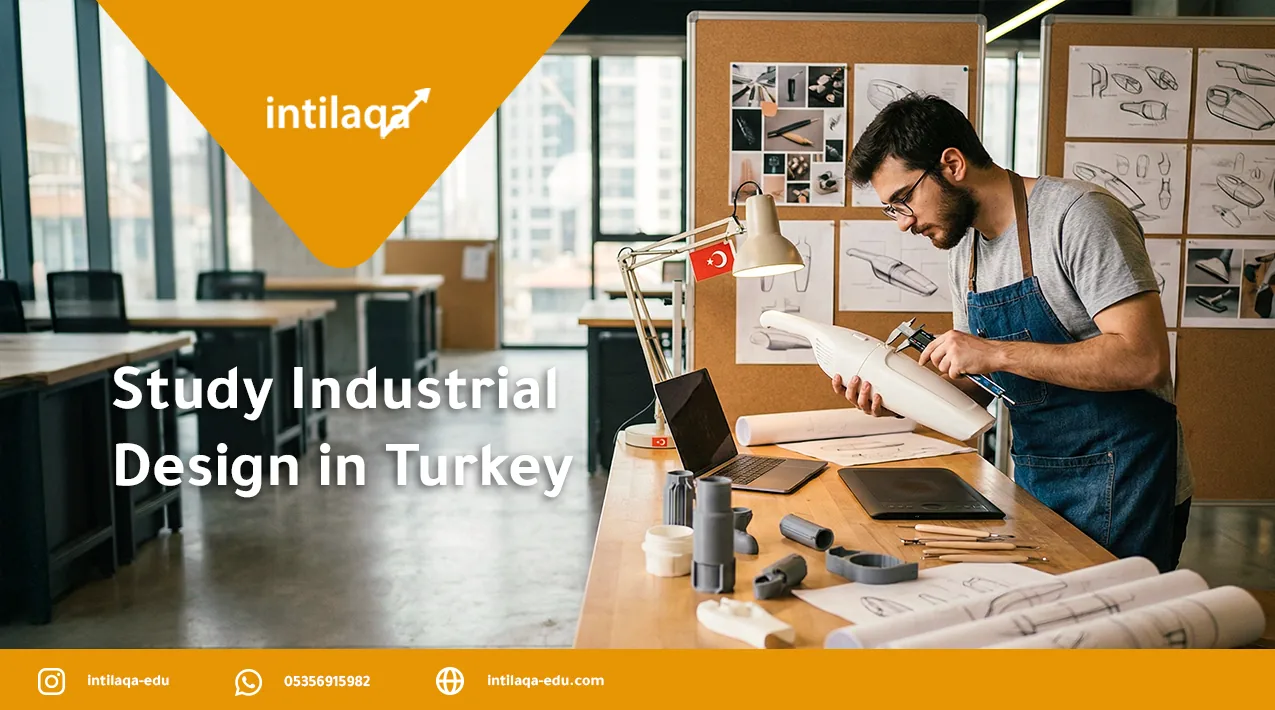
The modern world no longer looks only for people who can manufacture products, but for those who can innovate. This is where choosing to study Industrial Design in Turkey becomes particularly valuable, as the field combines the creativity of Art with the precision of Engineering within a strong industrial environment. Private Turkish universities provide students with access to technical workshops, laboratories, and real production environments that help prepare them for professional careers.
This guide provides a complete roadmap, from admission requirements and the best universities to postgraduate pathways that can support advanced professional and leadership roles.
What Is Industrial Design?
Industrial Design is one of the most creative and dynamic fields, combining Art, Engineering, and Marketing. Its primary purpose is to create and develop everyday products that are more attractive, functional, and easy to use while ensuring that they can also be manufactured efficiently on a commercial scale.
When you choose to study Industrial Design in Turkey, you will discover that the field goes far beyond drawing or determining the external appearance of a product. It is a complete creative and technical process built around several important areas:
Problem Solving:
The designer’s role is not limited to aesthetics. It begins with understanding users, their needs, and the problems they face. Industrial Designers develop practical and ergonomic solutions that improve usability and make everyday tasks easier and more efficient.
Function and Form:
One of the main challenges in Industrial Design is combining visual aesthetics with practical performance. Students learn how to create products that are attractive and competitive in the market while ensuring that they perform their intended function efficiently.
Manufacturability:
Industrial Design moves beyond drawing into the realities of production. Students study materials and manufacturing technologies to ensure that products can be produced commercially at a reasonable cost while meeting quality and sustainability standards.
The work of an Industrial Designer can include almost everything from household products, furniture, and electronic devices to medical equipment, automotive components, and even digital user interfaces. It is the field that transforms abstract ideas into tangible products.
Why Study Industrial Design in Turkey?
Choosing to study Industrial Design in Turkey offers particular advantages because Turkey has a large and diversified industrial sector, creating a strong environment for both education and practical training.
Direct Connection With the Job Market:
Turkey has major industries in furniture, Automotive Manufacturing, and household appliances. This industrial diversity creates opportunities for students to gain practical training experience in factories and companies during their studies.
Advanced Infrastructure and Facilities:
Turkish universities, particularly private universities, provide modern workshops and laboratories equipped with technologies such as 3D printers, digital design tools, and computer simulation software, allowing students to transform ideas into physical prototypes.
Academic Quality and International Standards:
Turkish universities follow European higher education standards, supporting graduates who want to pursue professional careers or postgraduate studies in Turkey and abroad.
Affordable Tuition Fees:
Compared with many universities in Europe and the United States, Turkey offers relatively competitive tuition and living costs for students studying Design and Creative disciplines.
Inspiring Cultural Environment:
Turkey’s cultural diversity and its position between Eastern and Western traditions provide Industrial Design students with a rich source of visual and cultural inspiration that can contribute to distinctive and creative design work.
Industrial Design Courses in Turkey
When you study Industrial Design in Turkey, the academic curriculum generally progresses from fundamental artistic skills toward technical production and professional design practice.
First Year: Foundations and Visual Language
The first year focuses on developing visual awareness and understanding the basic principles of composition before moving into complex manufacturing concepts.
- Basic Design: Understanding visual language, form, space, color, and composition through foundational design projects.
- Technical and Freehand Drawing: Learning technical drawing principles and rapid hand sketching to communicate design ideas effectively.
- Introduction to Industrial Design: Studying the history of the profession and its fundamental concepts.
Second Year: Technical Tools and Production
Students begin moving from manual drawing toward digital design and the practical realities of manufacturing.
- Digital Modeling (CAD): Learning 3D design software used to transform sketches into precise digital models.
- Materials and Manufacturing Methods: Studying the properties of wood, metals, plastics, and the processes used to manufacture them industrially.
- Ergonomics: Studying human dimensions and physical interaction to ensure that products are comfortable and safe to use.
Third Year: Specialization and Complex Problem Solving
This stage represents a more advanced level of design maturity, with students working on realistic and sustainability-oriented projects.
- Product and Furniture Design: Working in specialized studios to design electronic devices, furniture, or other products.
- Sustainable Design: Learning how to create environmentally responsible and recyclable products.
- Packaging and Interface Design: Expanding skills into product packaging and UX/UI concepts for smart products.
Fourth Year: Professional Practice and Graduation Project
The final year prepares students to enter the professional market.
- Design Management: Learning how to manage projects, communicate with clients, and understand legal issues and Intellectual Property Rights.
- Portfolio Development: Preparing a professional portfolio that presents the student’s strongest work for employment opportunities.
- Graduation Project: Developing a complete project from the initial idea to a working prototype, generally presented to a committee of academics and industry representatives.
How Long Does It Take to Study Industrial Design in Turkey?
The standard duration to study Industrial Design in Turkey at the bachelor’s level is 4 academic years, divided into 8 semesters.
The total duration may extend to 5 years if the student does not meet the required proficiency level in the language of instruction, whether Turkish or English. In this case, the student completes a language preparatory year (Hazirlik) before beginning the main academic program.
Master’s Degree in Industrial Design in Turkey
For graduates who want to continue their postgraduate education after studying Industrial Design, modern universities increasingly combine Design with Business and Technology.
Rather than focusing only on artistic development, advanced programs may prepare designers for leadership positions through fields such as Technology and Innovation Management.
Thesis Master’s (Tezli Yuksek Lisans):
This pathway is designed to prepare graduates for development and innovation management roles that combine creative thinking with Business and Technology Management. The program generally lasts two years and can support both academic and professional careers.
- Research and Development Management and technological innovation strategies.
- Product Lifecycle Management from the initial concept through commercial launch.
- Technology entrepreneurship and Business Model development for new products.
- Preparing an original research thesis addressing practical challenges in Product Development or industrial-process improvement.
Non-Thesis Master’s (Tezsiz Yuksek Lisans):
This is a professionally oriented pathway for designers who want to develop leadership skills within approximately one year. Instead of emphasizing academic theory, the program focuses on market strategies and practical applications and replaces the thesis with a professional Term Project.
- Agile Project Management: Applying modern project-management approaches to accelerate Design and Production cycles.
- Business Intelligence for Designers: Understanding financial data, analyzing markets, and evaluating the commercial feasibility of new products.
- Professional Networking: Building relationships with managers and industry professionals through Case Studies and collaborative workshops.
Main Research Areas and Specializations:
Postgraduate programs related to Industrial Design can allow students to expand into areas connected to modern manufacturing, innovation, and emerging technologies, including:
- Sustainable Design Management: Integrating sustainability and Circular Economy principles into Product Manufacturing strategies.
- User Experience and Smart Products: Managing the development of interactive products and Internet of Things (IoT) technologies.
- Industrial Marketing Strategies: Identifying market gaps and directing Design teams toward consumer needs.
- Creative Leadership: Developing work environments and Management structures that support continuous innovation within companies and industrial organizations.
Ph.D. in Industrial Design in Turkey
At the doctoral level, students may also continue through broader strategic fields such as Business Administration, particularly when their research interests focus on Design Management, Product Innovation, Technology, and commercial strategy.
This transition allows researchers to combine technical and creative Design experience with advanced Business and Management research.
1. Advanced Theoretical Coursework:
The first year focuses on developing strategic Management depth and understanding markets and large organizations. Rather than repeating technical Design subjects already studied at previous levels, the program may focus on:
- Marketing Strategies and Consumer Behavior: Understanding customer psychology and how technological innovation and Product Design influence purchasing decisions.
- Advanced Innovation Management: Studying modern theories used to lead Research and Development teams and transform creative ideas into commercially viable projects.
- Quantitative and Qualitative Research Methods: Developing the analytical tools needed to conduct academic research and publish in international academic journals.
2. Comprehensive Proficiency Exam (Yeterlilik Sinavi):
After completing the required coursework, doctoral students take a comprehensive qualification examination. The academic committee evaluates the student’s intellectual maturity and ability to combine an innovative designer’s perspective with rigorous Management analysis before beginning independent doctoral research.
3. Dissertation and Research Phase:
Although the doctoral degree may be formally offered under Business Administration, the student can direct the dissertation toward a specialized Design-related topic.
Possible research topics include:
- The impact of sustainable Industrial Design on corporate Return on Investment (ROI).
- Product Lifecycle Management strategies in Technology companies.
- The role of User Experience (UX) in increasing Brand Loyalty.
This pathway can create a multidisciplinary profile combining knowledge in Design, Innovation, Technology, and Business Management.
Best Universities to Study Industrial Design in Turkey
When selecting a university for Industrial Design, students should look beyond traditional classrooms and consider the entire innovation environment, including workshops, 3D printing facilities, laboratories, and partnerships with manufacturers.
Bahcesehir University (BAU)
Bahcesehir University provides a centrally located academic environment with modern facilities and an internationally oriented approach. Its Design education emphasizes contemporary global trends and English-language education, supporting students who want to pursue careers in international companies.
Ostim Technical University
Ostim Technical University provides a highly practical environment because of its location within Ankara’s industrial zone. Students can interact closely with manufacturing companies and gain direct exposure to production technologies and real industrial environments.
Istanbul Aydin University
Istanbul Aydin University provides an environment suitable for studying fields related to Technology and Innovation Management, supported by technology centers and industry partnerships. These resources can help students develop skills in Research and Development, Product Development, and Technology Management.
Istanbul Nisantasi University
Istanbul Nisantasi University benefits from the technological infrastructure of its NeoTech Campus and offers programs related to Technology Management, Digital Economy, and Entrepreneurship.
These areas can be particularly relevant for students who want to combine Design with Agile Management and modern Business Models.
Istinye University
Istinye University has a strong Research and Development environment and provides opportunities connected to Smart Technologies and Artificial Intelligence.
This environment can be relevant for students interested in Medical Product Design, Interactive Products, and Technology-driven Design.
Beykent University
Beykent University provides academic education that combines aesthetic and functional aspects of Design. Its experience in Arts-related fields supports students in building both theoretical knowledge and practical Design skills.
Istanbul Topkapi University
Istanbul Topkapi University emphasizes practical and career-oriented education, helping students develop the technical skills required by Design companies and local manufacturing sectors.
Cost to Study Industrial Design in Turkey
The cost to study Industrial Design in Turkey at private universities varies according to the technological environment of the university, the quality of available workshops and studios, the language of instruction, and the level of investment in Design facilities.
Bachelor’s Degree: Annual Tuition Fees
Annual bachelor’s tuition fees generally range between 2,000$ and 12,500$.
The difference in tuition is influenced by the language of instruction, with English-taught programs often costing more, as well as the availability of advanced facilities such as 3D printers, CNC machines, and prototyping laboratories.
Master’s Degree: Total Program Cost
The total cost of postgraduate programs, whether focused on Advanced Design or Innovation Management, generally ranges between 3,000$ and 12,000$.
This cost can reflect access to Research and Development centers, Business incubators, laboratories, and facilities used to transform Design concepts into practical prototypes.
Ph.D. Degree: Total Program Cost
Doctoral programs, often offered through areas such as Business Administration or Engineering Management, generally cost between 5,000$ and 20,000$ for the complete four-year program.
Requirements to Study Industrial Design in Turkey
Private Turkish universities generally provide relatively flexible admission procedures for international students who want to study Industrial Design in Turkey.
1. Bachelor’s Degree Requirements
- High School Diploma: Students from all high school tracks, including Science, Humanities, and Vocational education, can generally apply to Industrial Design programs at private universities.
- Academic Average: Many private universities accept applicants with a high school average of approximately 50% or above.
- Language Requirement: A language certificate is not always required before application. Students can generally take the university’s internal proficiency examination and complete an English or Turkish preparatory year if necessary.
- Required Documents: Valid passport copy, academic transcript, high school diploma translated and certified when required, and a personal photo.
2. Master’s Degree Requirements
- Academic Background: Admission is generally available to Industrial Design graduates. Applicants from related Art, Design, and Engineering fields may also qualify, particularly for programs such as Technology and Innovation Management.
- GPA: Universities generally require a cumulative GPA of approximately 2.00 – 2.50 out of 4.00.
- Language Requirement: Applicants holding an accepted language proficiency certificate may receive direct language clearance, while others may be allowed to take the university’s internal exemption examination.
- Required Documents: Bachelor’s degree certificate, university transcript, and passport copy.
3. Ph.D. Requirements
- Master’s Degree Type: Applicants generally need a thesis-based Master’s degree (Tezli), particularly when applying to research-oriented doctoral programs such as Business Administration.
- Research Proposal: Applicants may be required to submit a preliminary research proposal connecting Design, Innovation, Technology, or Management.
- Language Requirement: Doctoral programs may require an official language result such as a TOEFL IBT score of at least 79 or an accepted YDS result.
- Required Documents: Master’s degree certificate, Master’s transcript, passport copy, and an academic recommendation letter.
Career Opportunities for Industrial Design Graduates
The role of Industrial Designers is no longer limited to improving the external appearance of products. Today, designers play an increasingly important role in corporate strategy by developing products that are functional, user-friendly, innovative, and commercially viable.
As Turkey and the global economy continue moving toward innovation-driven industries, Industrial Design graduates can work in several sectors.
1. Main Employment Sectors
Industrial Design graduates can work far beyond traditional furniture factories and enter several technology-oriented and innovative industries.
- Technology and Smart Devices: Designing smartphones, Wearables, Smart Home devices, and other products that combine visual appeal with technical functionality.
- Automotive and Transportation Design: Designing vehicle bodies, interiors, and sustainable transportation solutions such as electric scooters.
- Medical and Biomedical Products: Working with healthcare professionals to design prosthetics, surgical equipment, and Medical Devices that consider Ergonomics and patient comfort.
- Physical UX/UI: Connecting Engineering with User Experience to make physical products, control systems, and interfaces easier and more intuitive to use.
2. Advanced Career Titles
Industrial Design graduates can pursue several professional and leadership roles beyond the traditional title of Designer.
- Product Manager: Managing the Product Lifecycle from initial concept through commercial launch.
- R&D Specialist: Working in innovation laboratories to improve materials, products, and manufacturing processes.
- Design Strategy Consultant: Advising companies on how Design can improve product positioning and commercial performance.
- Packaging Designer: Specializing in packaging that protects products while improving visual appeal and market presentation.
3. Why Is Demand Increasing?
- Growth of Private Brands: Companies increasingly want to develop their own brands rather than manufacturing only for other companies, increasing the need for designers who can differentiate products through Design.
- Sustainability and the Circular Economy: Companies increasingly need designers capable of creating products that are recyclable, environmentally responsible, and more efficient in their use of energy and materials.
How to Study Industrial Design in Turkey?
To begin your journey to study Industrial Design in Turkey within a university environment that provides modern workshops and prototyping laboratories, you can follow these steps:
1. Choose the Right University
Choosing the right university for Industrial Design requires comparing not only tuition fees but also workshop quality, industry partnerships, academic staff, and practical training opportunities.
The Intilaqa team can help you identify universities that match both your creative goals and study budget.
2. Prepare Your Application Documents
Prepare your documents early to avoid delays. The main requirements generally include your high school diploma and academic transcript translated and certified when required, along with a valid passport copy and recent personal photos.
3. Apply Through Intilaqa
Because Design programs require careful comparison of practical facilities and academic environments, the Intilaqa team can review your profile, recommend suitable universities, and manage your application free of charge while helping you access available partial scholarships and tuition discounts.
4. Confirm Your Preliminary Admission
After receiving preliminary acceptance, you generally need to transfer the required first tuition installment directly to the university’s official account to secure your seat and receive the final acceptance document.
5. Apply for a Student Visa
After receiving final acceptance, students who require a visa can apply through the Turkish embassy or consulate responsible for their country or place of residence.
6. Complete Final Registration
After arriving in Turkey, complete final registration by submitting the required original documents to the university’s Student Affairs Office. Once registration is completed, you receive your student card and begin your first academic year in Industrial Design.
How Can the Intilaqa Team Help You?
The Intilaqa Education team supports you step by step in choosing the program and university in Turkey that best match your academic interests and study budget.
We provide a comprehensive free consultation that includes:
- Recommending suitable Turkish universities that offer your chosen program.
- Explaining tuition fees and available scholarship opportunities.
- Providing full support throughout the application process until final admission.
Whether you plan to study Industrial Design in Turkey or pursue another program, you can learn more about studying in Turkey through our complete guide: