In the heart of the business world and the global economy, the accounting major stands out as one of the most important pillars ensuring the stability and growth of institutions. With Turkey’s rising status as an economic power and a leading educational destination, choosing to Study Accounting in Turkey has become a strategic step for ambitious students seeking high-quality education that combines international standards with promising professional opportunities in a dynamic environment.
Whether you are planning to start your academic journey at the bachelor’s level or seeking to deepen your expertise through graduate studies, this comprehensive guide will take you on a detailed tour to answer everything on your mind.
What is the Accounting Major?
The accounting major is the backbone of the world of finance and business administration, often known as the “language of business.” It is the science that studies the principles and methods used in analyzing and recording the financial transactions of institutions to provide accurate and reliable information that helps in making sound economic decisions.
Fundamentally, the accounting major in Turkey focuses on several key areas, most importantly:
Recording and Classifying Financial Transactions:
Learning how to document all financial activities of a company, from sales and purchase invoices to payroll and expenses.
Preparing Financial Statements:
Mastering the preparation of essential reports such as the income statement, balance sheet, and cash flow statement that display the institution’s financial position.
Financial Analysis:
Using financial data to evaluate company performance, identify strengths and weaknesses, and provide recommendations to improve profitability.
Auditing:
Examining financial records to ensure their accuracy and compliance with accounting standards and laws, and preventing fraud and errors.
Tax Accounting:
Calculating tax liabilities for companies and individuals, and preparing tax returns in accordance with local legislation.
Managerial Accounting:
Providing internal managers with the necessary information to set budgets, determine production costs, and make operational and strategic decisions.
What is the Difference Between Accounting and Financial Management?
This is an excellent and frequently asked question. Here is the fundamental difference between the two majors:
Accounting:
Its primary function is recording what has actually happened in the past and present. The accountant focuses on preparing accurate financial statements (budgets, income statements, cash flows) and ensuring the company’s compliance with laws and taxes. Thus, the accounting perspective is internal and historical.
Financial Management:
Its primary function is planning for the future and making decisions about how to acquire funds (investment) and how to spend them efficiently (financing). The financial manager focuses on value, risk, and returns, meaning the financial management perspective is external and futuristic.
Advantages of Studying Accounting in Turkey
Choosing Turkey as an academic destination to study accounting is a strategic decision combining educational quality with promising future opportunities. Studying accounting in Turkey grants international students a set of competitive advantages that make their experience rich and rewarding.
Here are the most prominent advantages:
1. World-Class Academic Quality:
Turkish universities offer modern accounting programs that comply with International Financial Reporting Standards (IFRS). Curricula are continuously updated to include the latest accounting practices and technological developments in the sector.
2. Competitive Tuition and Living Costs:
Compared to European and American destinations, university fees and living costs in Turkey are very reasonable, allowing students to obtain high-quality education without bearing massive financial burdens.
3. Dynamic Economy and Active Labor Market:
Turkey enjoys a strong, growing economy and is a regional hub for many multinational corporations. This creates a continuous demand for qualified accountants and provides excellent opportunities for practical training (internships) and employment after graduation.
4. Integration Between Theory and Practice:
Turkish universities focus on the practical side by integrating digital accounting software (such as SAP and Oracle) into the curricula, encouraging students to participate in workshops and applied projects simulating a real work environment.
5. Strategic Location Connecting Continents:
Serving as a bridge between Asia and Europe, Turkey provides a unique international business environment. Students will learn how to handle financial and commercial systems serving diverse markets, giving them an added advantage in the global labor market.
6. Internationally Recognized Degrees:
Accounting degrees from Turkish universities are recognized in many countries worldwide, making it easier for graduates to pursue higher education or start their professional careers anywhere.
Disadvantages of Studying Accounting in Turkey
It is important for students to be aware of some challenges that are a natural part of the study abroad experience.
1. Importance of the Turkish Language:
As is the case when studying in any country, learning the local language remains essential for full integration into society and the labor market. Although studies may be in English, the best professional opportunities in accounting in Turkey often require proficiency in Turkish.
2. Competition in the Labor Market:
Accounting is a common and highly demanded major, which means there is strong competition for jobs, especially in major companies. International graduates compete with thousands of talented Turkish graduates.
3. Need to Adapt to Local Laws:
Every country has its own accounting and tax system. An international student will need to put in extra effort to understand Turkish financial and tax laws and regulations, which may differ from those in their home country.
4. Cultural Differences:
Students may face some difficulties adapting to a new culture or dealing with administrative and routine procedures in various institutions.
What are the Courses of the Accounting Major in Turkey?
The undergraduate curricula for the accounting major in Turkey are designed to provide students with a comprehensive and deep understanding that combines basic theories with modern practical applications. While course titles may vary slightly from one university to another, the core content is largely similar and covers all aspects of accounting and business.
The study plan is usually divided over four years as follows:
First Year: Foundational Courses
This year focuses on building a solid knowledge base in business and economic principles, which are often shared with other majors in the Faculty of Business and Economics.
- Principles of Accounting
- Introduction to Business Administration
- Principles of Economics (Micro and Macro)
- Business Mathematics
- Introduction to Law
Second Year: Core Major Courses
The student begins to delve into the core accounting subjects that form the essence of the major.
- Financial Accounting
- Cost Accounting
- Managerial Accounting
- Commercial Law
- Business Statistics
- Corporate Finance
Third Year: Advanced and Specialized Courses
At this stage, the focus shifts to more specialized and applied areas in accounting.
- Auditing
- Tax Accounting
- Accounting Information Systems
- Corporate Accounting
- International Financial Reporting Standards (IFRS)
Fourth Year: Applied Courses and Projects
The final year is dedicated to practical application, advanced case studies, and preparing the student for the labor market.
- Financial Statement Analysis
- Internal Auditing
- Governmental Accounting
- Graduation Project
- Practical Training (Internship), which is mandatory in many universities.
This comprehensive study plan ensures that the graduate possesses the theoretical knowledge and practical skills necessary to succeed in their career as a professional accountant.
How Many Years to Study Accounting in Turkey?
The duration of a Bachelor’s degree in Accounting in Turkey is primarily four academic years.
These four years are distributed across eight semesters.
If the student is not proficient in the language of instruction (whether Turkish or English) and does not possess a language proficiency certificate, they will need to study a language preparatory year. In this case, the total study duration becomes five years.
Studying a Master’s Degree in Accounting in Turkey
The Master’s stage in accounting is an advanced step for those wishing to deepen their academic understanding or specialize in precise areas qualifying them for leadership or research roles. Master’s programs in accounting at Turkish universities aim to equip students with the latest theoretical knowledge and advanced analytical skills.
Program Duration and Types:
Studying for a Master’s in accounting in Turkey usually takes two years. Programs are generally divided into two main types:
1. Master’s with Thesis (Tezli): This track focuses on in-depth scientific research, where the student prepares a scientific dissertation (thesis) on a specialized topic. This option is ideal for students who aspire to pursue a PhD or work in academia.
2. Master’s without Thesis (Tezsiz): This track focuses on the professional and applied aspect, where the student completes intensive coursework and a graduation project instead of a thesis. This option is suitable for professionals seeking to enhance their expertise and secure promotions in the labor market.
Prominent Master’s Courses:
Courses at this stage are more specialized and deeper, including topics such as:
- Advanced Financial Accounting and its Applications
- International Accounting and Financial Reporting Standards (IAS & IFRS)
- Advanced Auditing and Risk Analysis
- Strategic Managerial Accounting
- Corporate Governance and Professional Ethics
- Financial Analysis and Corporate Valuation
- Forensic Accounting and Fraud Detection
Studying a PhD in Accounting in Turkey
The PhD stage in accounting is the academic pinnacle in this major, designed for researchers who aspire to contribute to enriching accounting knowledge through original and innovative research. PhD programs in Turkish universities aim to prepare experts and academics capable of leading intellectual and professional development in the accounting field.
Program Duration and Main Stages:
PhD studies in Turkey typically take from four to five years. The program consists of several crucial stages:
1. Coursework Stage: Lasts for two years, during which the student studies in-depth courses in accounting theories, advanced research methodologies, and data analysis, aiming to build a solid theoretical and research foundation.
2. Proficiency Exam: After successfully completing the coursework, the student undergoes a comprehensive exam (oral and written) to assess their grasp of basic and advanced concepts in their specialization.
3. Dissertation Stage: The core of the PhD program. After passing the proficiency exam, the student begins preparing and submitting a research proposal, then conducts their original research and writes the dissertation under specialized academic supervision. The program concludes with the dissertation defense before a panel of experts.
Prominent Specialized Research Areas:
PhD programs allow students to specialize in diverse and precise research areas, including:
- The impact of financial reporting standards on capital markets
- Audit quality and corporate governance
- Managerial accounting and performance control systems
- Tax policies and their impact on corporate decisions
- Accounting information systems and digital transformation
- Sustainability and corporate environmental and social performance (ESG Reporting)
Best Universities to Study Accounting in Turkey
Turkey boasts a large number of prestigious private universities offering strong and competitive accounting programs. These universities are distinguished by their modern infrastructure, distinguished academic staff, and strong relationships with the business sector, providing students with excellent internship opportunities.
Here is a list of the most prominent private universities with a brief introduction:
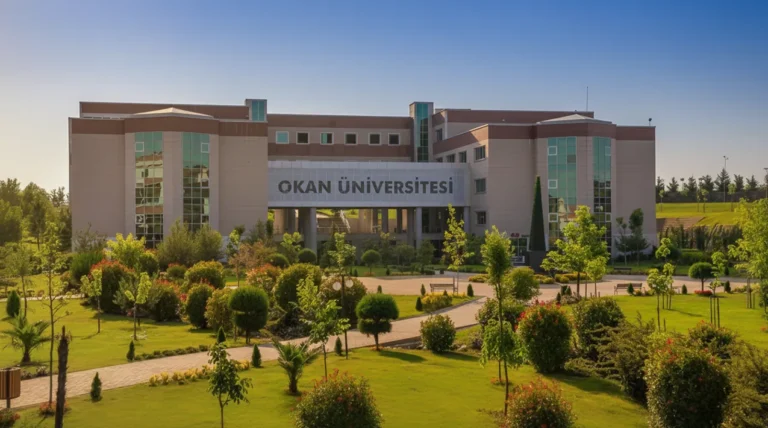
Okan University (Okan Üniversitesi):
Okan University is distinguished by its motto “Closest to Business Life” and focuses heavily on practical training and preparing students for their professional careers.
Istanbul Aydin University (İstanbul Aydın Üniversitesi):
Istanbul Aydin University is renowned as a preferred destination for international students and possesses an extensive network of partnerships with local and global companies.
Halic University (Haliç Üniversitesi):
Halic University is a deeply rooted private university in Istanbul, providing a strong academic environment with a special focus on practical application through its dedicated career center.
Bahcesehir University (Bahçeşehir Üniversitesi):
Known as a global university in the heart of Istanbul, Bahcesehir University stands out with its vast international network, offering students exceptional opportunities for academic exchange and professional training.
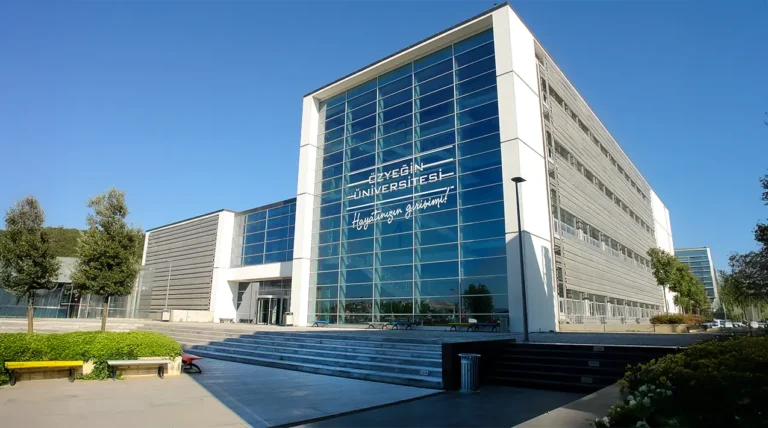
Ozyegin University (Özyeğin Üniversitesi):
Ozyegin University tops Turkish universities in entrepreneurship and graduate employment rates. It offers an innovative educational model integrating students into the real business environment from their early years.
Atilim University (Atılım Üniversitesi):
Located in the capital Ankara, Atilim University is a leading, globally ranked research university. It features a rigorous curriculum focusing on scientific research and development.
Cost of Studying Accounting in Turkey
Tuition fees for the accounting major in Turkey depend on several criteria, most importantly the university chosen (private or public), the language of instruction, and the university’s academic ranking. Turkish private universities offer diverse options fitting various budgets:
Bachelor’s (Annually):
The cost of studying for a Bachelor’s in accounting at private universities generally ranges between $2,950 and $5,000 annually. This range reflects the diversity among universities in terms of program strength and services provided.
Master’s (Total Program):
The cost of Master’s programs varies based on the study track (with or without a thesis). Overall, full program fees range between $2,600 and $12,000.
PhD (Total Program):
For the PhD stage, which requires a full research commitment, the total program cost ranges between $7,000 and $12,000 in most universities.
Requirements for Studying Accounting in Turkey
Admission requirements at private Turkish universities are highly flexible compared to public universities. Requirements vary based on the academic degree the student is applying for:
1. Bachelor’s Requirements:
Admission to the bachelor’s stage is direct and does not require complex entrance exams like YOS or SAT in most private universities. Basic documents required are:
- High School Diploma and Transcript: Private universities do not demand high GPAs; scoring 50% or above is usually sufficient.
- Passport Copy: Must be valid.
- Personal Photos: Recent, with a white background.
- Language Proficiency Certificate (if available): TOEFL for English or TÖMER for Turkish. If unavailable, the student takes a placement test or studies a language preparatory year at the university.
2. Master’s Requirements:
To transition to graduate studies, previous academic experience becomes the baseline. Requirements include:
- Bachelor’s Degree and Transcript: Must be in accounting or a related field (such as finance, business administration).
- Passport Copy and Personal Photos.
3. PhD Requirements:
This is the highest stage requiring a strong academic and research background. Main requirements:
- Master’s Degree and Transcript: Submitting a Master’s degree is required, with a strong preference for those holding a degree with a thesis.
- Bachelor’s Degree and Transcript: As proof of the student’s complete academic background.
- Research Proposal: A detailed document outlining the original research idea the student plans to execute.
- Statement of Purpose: A letter explaining the applicant’s academic and research goals.
- Recommendation Letters: From university professors or former academic supervisors.
- Additional Basic Documents: Personal photo, passport copy.
Future of Accounting Graduates
The accounting major is one of the most stable and highly demanded disciplines in the labor market, acting as the backbone of any successful commercial entity. Thanks to Turkey’s dynamic and growing economy, accounting graduates enjoy a promising professional future and a wide range of opportunities across various sectors.
Why is an Accountant’s Future Guaranteed in Turkey?
- Continuous Demand: Every company, whether a small startup or a massive multinational, needs accountants to manage its finances, audit its accounts, and ensure tax compliance.
- Diverse Fields: An accounting degree does not confine you to a single job; it opens doors to work in fields like auditing, financial consulting, banking, financial analysis, and budget management.
- Competitive Salaries: As you gain experience and acquire professional certificates, your salary increases significantly. Top managerial positions like Chief Financial Officer (CFO) are among the highest-paid roles in companies.
Prominent Career Paths for an Accounting Graduate:
- Corporate Accountant: Managing daily financial records, processing payroll, and tracking invoices.
- Internal Auditor: Working within the company to review financial operations and ensure no errors or fraud exist.
- External Auditor: Working in major accounting firms (like the Big 4) to review and audit the financial statements of multiple client companies.
- Tax Consultant: Helping companies and individuals with tax planning and filing returns in compliance with Turkish law.
- Financial Analyst: Analyzing corporate financial data to evaluate performance and help investors make sound decisions.
- Governmental Accountant: Working in public institutions such as the Ministry of Finance or the Central Bank.
- Bank and Financial Institution Accountant: Managing accounts, analyzing loan applications, and ensuring regulatory compliance.
Professional Development and Obtaining the CPA (SMMM) Certification:
To reach the highest professional ranks in Turkey, many graduates seek to obtain the “Certified Public Accountant” (SMMM in Turkey) certificate. This certification, requiring practical experience and passing specialized exams, grants its holder a license to provide financial consulting, audit accounts, and officially represent companies before tax departments, vastly expanding career prospects and significantly increasing income.
How Do I Study Accounting in Turkey?
The registration process to study accounting in Turkish universities is organized and straightforward. Follow these simplified steps to achieve your academic dream:
1. Step One: Determine Your Academic Destination
First and foremost, set your priorities. Are you looking for easy admission and modern curricula at a private university, or do you prefer lower costs at a public university? Also, determine your preferred language of instruction (English or Turkish) to narrow down your choices.
2. Step Two: Prepare Your File and Documents
Begin preparing your basic documents. You will need to translate and notarize your high school diploma and transcript, along with a copy of your valid passport and recent personal photos.
3. Step Three: Submit the Application
You can submit your application directly to your chosen university. To ensure the process goes smoothly and without errors, many students prefer to use a reliable educational consultant like “Intilaqa”, which handles all procedures on your behalf.
4. Step Four: Fulfill Admission Requirements
Make sure you understand the requirements. Most private universities accept students based solely on their high school diploma. Public universities, however, may require passing additional exams like YÖS or SAT.
5. Step Five: Receive the Initial Acceptance Letter
When you receive the initial acceptance letter (Kabul Mektubu), you must pay a portion of the tuition fees as an initial deposit to confirm your study seat. Following this, the university will send you the final acceptance letter.
6. Step Six: Obtain the Student Visa
Use the final acceptance letter you received to apply for a student visa at the Turkish embassy or consulate in your home country.
7. Step Seven: Travel to Turkey and Complete Registration
Upon arriving in Turkey, head to your university to personally complete the final registration process and submit your original documents. This officially begins your academic journey.
How Does the Intilaqa Team Help You?
The Intilaqa Educational Team works to assist you step-by-step in choosing the most appropriate major and university for you in Turkey, according to your academic interests and study budget.
We offer you a comprehensive free consultation that includes:
- Recommending the best Turkish universities that teach your major.
- Clarifying available costs and scholarships.
- Full follow-up in the registration process until final acceptance.
Whether you plan to study Accounting in Turkey or any other major, you can start by learning about the details of Study in Turkey through our complete guide:
Study in Turkey