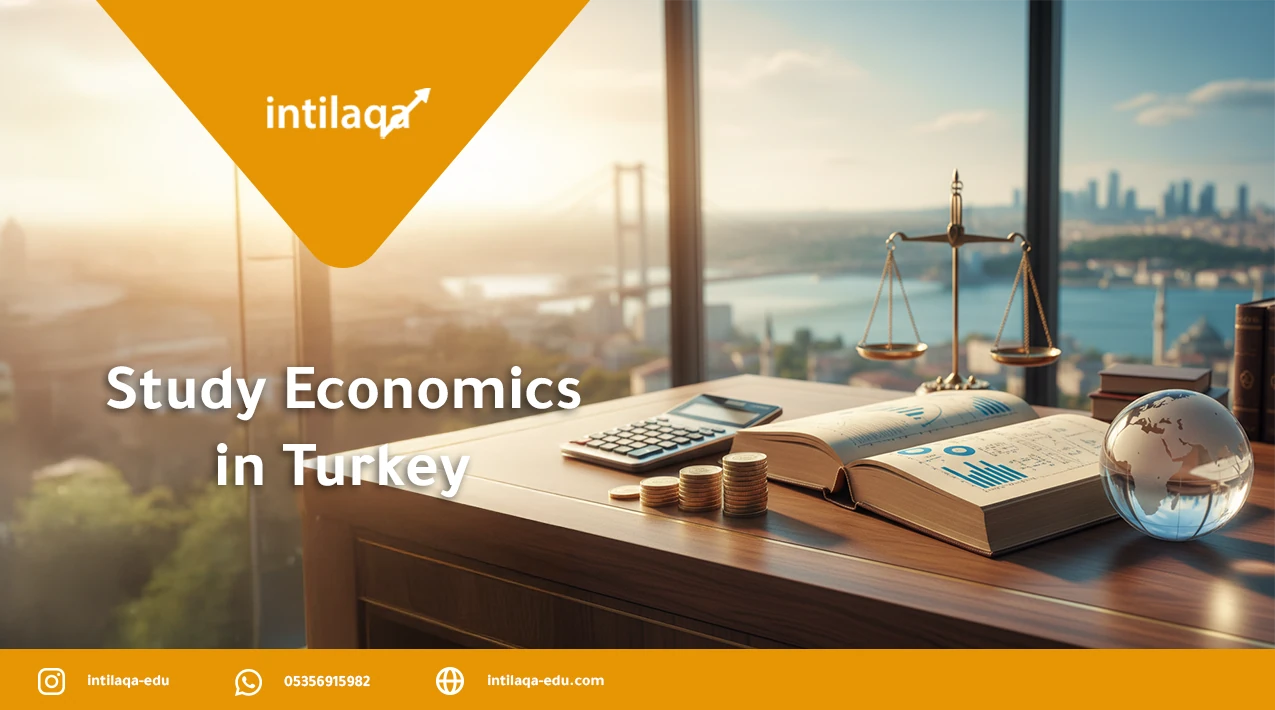
The decision to Study Economics in Turkey is a strategic choice for ambitious students, as Turkish universities offer robust programs that balance deep academic theory with practical application in an active economic environment. Turkey’s position as a bridge between continents makes it an ideal hub for understanding the global economy and international trade.
This comprehensive guide aims to provide you with all the necessary information regarding admission requirements, costs, top universities, and the professional future for graduates of this major in Turkey.
What is the Economics Major?
The economics major is one of the most important social sciences. This specialization focuses on studying how individuals, businesses, governments, and societies make critical decisions regarding how to allocate limited resources (such as time, money, and raw materials) to satisfy unlimited desires and needs.
Economics is not restricted to money and financial markets alone; rather, it is an in-depth analysis of human behavior and the systems governing the production, distribution, and consumption of goods and services.
This science is primarily divided into two main branches:
Microeconomics:
Focuses on the behavior of individual units such as consumers and companies. It answers questions such as: How does a company determine the price of its product? And how does a consumer decide what to buy?
Macroeconomics:
Looks at the economy as a whole, studying major phenomena such as inflation, unemployment, economic growth, and the monetary and fiscal policies pursued by countries.
Enrolling to Study Economics in Turkey grants the student a comprehensive understanding of these principles, applying them to the context of a vital and dynamic economy connecting East and West, equipping graduates with powerful analytical tools to understand and help shape the world around them.
Advantages of Studying the Economics Major in Turkey
Studying economics in Turkey possesses numerous advantages that make it a preferred destination for international students, combining educational quality, competitive costs, and an active economic environment.
Here are the most prominent advantages:
Vital and Growing Economy:
Turkey is a member of the G20 and possesses one of the fastest-growing economies in the region. Studying economics here allows the student to witness academic theories and apply them to a real, dynamic market undergoing continuous developments.
Quality of Academic Education:
Turkish universities follow European educational standards (Bologna Process) and offer economics programs with global standards. Many of these universities are ranked among the best higher education institutions globally.
Strategic Geographical Location:
As a bridge between Europe and Asia, Turkey plays a pivotal role in international trade and logistics. This unique location gives the economics major special applied importance, particularly in the fields of international trade and finance.
Programs in English:
Most major Turkish universities provide economics programs entirely in English, removing the language barrier for international students and facilitating smooth academic integration.
Competitive Study and Living Costs:
Compared to European and American study destinations, tuition fees in Turkish universities and living costs are reasonable and highly appropriate, providing high-quality education at a lower cost.
Multicultural International Environment:
Turkish universities attract students from all over the world, creating an educational environment rich in cultural diversity and helping students build a valuable international network of relationships.
What are the Courses of the Economics Major in Turkey?
The study plan for the Bachelor’s program in economics in Turkey focuses on building a strong and progressive foundation for the student. The plan begins with mathematics and analysis courses, then moves to core economic theories and their practical applications.
Course names vary slightly between universities, but the core study plan includes the following stages:
First Year: Foundational Courses
This year focuses on building the essential tools the student will need.
- Introduction to Economics
- Microeconomics
- Macroeconomics
- Calculus for Economics
- Statistics
- Principles of Business Administration
- Principles of Accounting
Second Year: In-Depth Core Courses
The student begins to delve into the main economic theories here.
- Intermediate Microeconomics
- Intermediate Macroeconomics
- Statistical Analysis for Economists
- Introduction to Econometrics
- Basic Concepts of Law
Third Year: Specialization and Analysis Courses
The circle of knowledge expands to include applied and analytical fields.
- Econometrics
- International Economics
- Public Finance
- History of Economic Thought
- Money and Banking
- Development Economics
Fourth Year: Advanced and Elective Courses
This year is dedicated to advanced elective courses and the graduation project, allowing the student to focus on their specific interests.
- Turkish Economy
- Monetary Policy
- International Trade
- Labor Economics
- Economic Growth
- Research Methods and Graduation Project
Additionally, the plan includes general elective courses from other faculties and mandatory courses affiliated with the Turkish Higher Education Council (YÖK).
How Many Years is the Study of the Economics Major in Turkey?
The duration for Bachelor’s studies in this specialization is 4 years of study.
This period is divided into 8 semesters, during which the student studies the foundational and specialized courses covered by the curriculum.
If the student does not hold a proficiency certificate in the language of study (whether Turkish or English) upon registration, they will study a Language Preparatory Year first.
Studying a Master’s in Economics in Turkey
Studying a Master’s in economics in Turkey is an advanced stage to deepen theoretical understanding and hone analytical skills. While the Bachelor’s grants a comprehensive understanding of principles, the Master’s is the beginning of precise specialization and research orientation.
Turkish universities offer postgraduate programs with global standards, aiming to prepare academic researchers or economic analysts (Economic Analysts) capable of competing globally by equipping them with advanced analytical tools.
Studying a Master’s in economics in Turkey typically takes 2 years (4 semesters). Turkish universities offer the following two tracks with high flexibility:
Master’s with Thesis (Tezli)
This track primarily focuses on original scientific research and preparing an in-depth scientific thesis (dissertation). This option is considered ideal for students aspiring to pursue PhD studies or work in the academic field, or in research centers and international institutions. Students can focus in their research (thesis) on precise fields such as:
- Advanced Econometrics
- Monetary Theory and Policy
- International Economics and Finance
- Development and Growth Economics
Non-Thesis Master’s (Tezsiz)
This track is common and specifically designed for professionals and employees already working in the financial or banking sector. It focuses on the advanced applied and professional aspect, where the student completes intensive coursework and accomplishes a specialized “graduation project” (instead of a thesis). This track targets experts seeking to enhance their analytical skills and assume senior managerial positions in fields such as:
- Financial Analysis and Risk Management
- Business Economics
- Corporate Financial Strategy
- Economic Data Analysis
Studying a PhD in Economics in Turkey
The PhD stage is the highest academic degree in the economics major in Turkey, and it is entirely directed toward original and innovative scientific research. This stage aims to graduate researchers and academics capable of producing new knowledge, developing economic theories, and contributing to policy formulation.
The program duration typically extends to 4 years (8 semesters), divided into two main phases:
First, Coursework and Competency Exam Phase:
The student begins the program with a period dedicated to advanced courses to deepen their understanding in their precise research area, such as:
- Advanced Microeconomic Theory
- Advanced Macroeconomic Theory
- Advanced Econometrics
After successfully completing these courses, the student undergoes a comprehensive competency exam (oral and written) to prove their readiness to begin research.
Second, Thesis and Defense Phase (Tez):
This is the core of the PhD program. Once the competency exam is passed, the student dedicates the bulk of their time (about 2-3 years) to conducting original and innovative research. The dissertation can address advanced topics such as:
- The impact of monetary policies on economic growth
- Financial risk modeling in emerging markets
- Analysis of labor markets and international migration
- Economics of international trade and supply chains
The program concludes with presenting and defending the PhD Dissertation (Doktora Tezi) before a committee of experts, and the dissertation must contribute a new and innovative scientific addition to the field.
Best Universities to Study Economics in Turkey
Turkey abounds with numerous distinguished universities offering robust programs in the economics major. The best choice depends on several factors, including the language of study, cost, and the academic focus of the program.
Private universities are a prominent choice for international students due to their modern programs that are mostly taught in English, and their strong link to the job market. Among the most prominent of these universities are:
Bahcesehir University (BAU):
Bahcesehir University is known for its strong focus on the global economy, understanding financial crises, and providing students with advanced statistical and analytical skills.
Bilgi University:
Bilgi University offers a strong program integrating “economics and finance,” and is known for its excellence in preparing students for positions in major financial institutions and professional certifications such as the CFA.
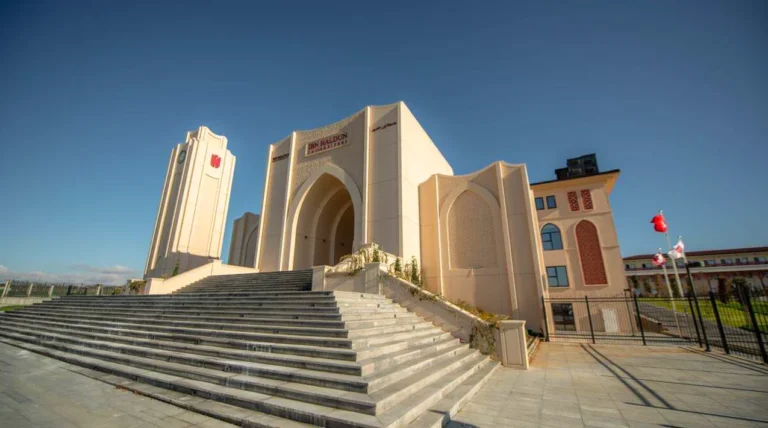
Ibn Haldun University:
Characterized by an elite education system (small student numbers) and its integration of modern specializations, offering tracks that combine economics with data science and artificial intelligence.
Istanbul Gelisim University:
Gelisim University focuses on the applied aspects of economics and finance, and possesses various international accreditations (such as the German AQAS accreditation), enhancing the global strength of its degree.
Nisantasi University:
Nisantasi University offers programs within its massive Faculty of Economics and Administrative Sciences, focusing heavily on practical and professional training in cooperation with companies, and grants the “Blue Diploma” recognized throughout Europe.
Cost of Studying the Economics Major in Turkey
The cost of studying the economics major in Turkey depends primarily on the university, the language of study, and the track type.
Bachelor’s Level (Annually)
In private universities, annual fees for a Bachelor’s degree range mostly between $2,250 and $10,000 approximately. Programs offered in English are usually in the higher bracket of this price range.
Master’s Level (Full Program)
For Master’s programs (with or without thesis), the average total cost for the full program ranges between $2,500 and $13,000, depending on the university and language of study.
PhD Level (Full Program)
As for research-based PhD programs, the average fees for the full program range between $3,600 and $18,000 in most reputable private universities.
Admission Requirements for the Economics Major in Turkey
Admission criteria for studying economics in private Turkish universities are characterized by flexibility, but they focus primarily on ensuring that the student has a strong foundation in mathematics and analytical thinking capabilities, as it is a field relying on data analysis and statistical modeling.
1. Bachelor’s Level
The primary reliance in private universities is on the high school certificate, with a preference for students with high achievements in quantitative subjects and mathematics.
- High School Diploma: Obtaining a good average (often starting from 50% or 60% as a minimum, and this average rises in prestigious universities).
- Study Track: Graduates of the Scientific track (Sayısal) and Literary track (Sözel) are accepted, but preference is often given to graduates of the Equal Weight track (Eşit Ağırlık – EA) which combines mathematics and social subjects.
- Proof of Language Proficiency: A (TOEFL/IELTS) certificate for studying in English, or (TÖMER) for the Turkish language. In the absence of it, the student joins a language preparatory year.
- Basic Documents: The transcripts translated and notarized, a copy of a valid passport, and personal photos.
2. Master’s Level
Admission here focuses on the student’s academic background and its compatibility with the analytical requirements of the specialization.
- Bachelor’s Degree: It is preferred that the applicant holds a Bachelor’s degree in economics.
- Admission from Related Specializations: In many cases, graduates of closely related disciplines (such as business administration, finance, engineering, international relations) can be accepted provided they pass a period of “scientific preparatory semesters” (Bilimsel Hazırlık) to bridge the deficiency in core major courses before starting the Master’s.
- Basic Documents: A language proficiency certificate (English or Turkish), university transcript (Transcript), and a copy of the passport.
3. PhD Level
Admission at this stage is competitive and requires a strong research and academic background in economics.
- Master’s Degree: The applicant must hold a Master’s degree in economics or a precise specialized field linked to it (such as finance or econometrics), and it is mandatory that the Master’s is with thesis (Tezli).
- Research Proposal and Academic Compatibility: Often a document outlining the broad lines of the PhD dissertation topic is required. Also, the student’s Master’s track and research background must align with the program’s directions and faculty research.
- Language Proficiency Certificate: A (TOEFL) certificate or its equivalent at an advanced grade, given that the language of scientific research in a PhD is mostly English.
Future of Economics Major Graduates
Economics graduates possess analytical and quantitative skills demanded globally, granting them broad career opportunities extending beyond regional borders. The strong academic background provided by Turkish universities qualifies them to compete in international markets.
The following are the most prominent fields and jobs available globally:
1. Financial Sector and International Finance
- Financial Analyst: Analyzing financial markets and evaluating investments in hedge funds and international investment firms.
- Risk Management: Evaluating and mitigating operational and financial risks in banks and multinational corporations.
- Banking and Investment Economics: Working in international investment banks and major financing institutions.
2. International Institutions and NGOs
- Global Institutions: Working in major organizations such as the United Nations, the World Bank, the International Monetary Fund, or the World Trade Organization.
- Policy Formulation: Working in intergovernmental bodies or economic councils as public policy analysts.
3. Consulting and Data Analysis
- Economic and Management Consulting: Working in global consulting firms (such as the “Big Four” firms) to provide economic and strategic solutions for companies and countries.
- Econometrist: Using mathematical and statistical models to analyze big data (Big Data) and predict economic trends.
4. Research and Academic Orientation
- Research and Studies Centers: Working in global research centers (Think Tanks) to produce economic studies and reports directed at decision-makers.
- University Teaching: Working in international universities after completing postgraduate studies.
How Do I Study Economics in Turkey?
To start studying economics in Turkey, especially in private universities characterized by flexible admission conditions, follow these organized steps ensuring a smooth and successful application process:
1. Setting Your Academic Compass (Choosing the University):
Do not leave the university choice to chance. The Intilaqa team can guide you to differentiate between universities offering the best economics programs, taking into account the language of instruction (English or Turkish) and the budget available to you, so you invest in the right place.
2. Preparing Your Analytical File (Documents):
Prepare your admission file carefully. The required papers include the high school certificate (equal weight or scientific track preferred), transcripts, and passport. Remember that universities look for high achievements in subjects indicating your analytical ability (such as mathematics).
3. Launching the Official Application Process:
To avoid any procedural errors or delays, the Intilaqa team takes over the task of submitting your file to the chosen universities, ensuring adherence to the conditions and deadlines precisely to guarantee your admission.
4. Securing Your Seat and Obtaining Final Approval:
Once the “Initial Acceptance Letter” arrives, you can confirm your seat in the economics department. This is done by paying the initial installment of the tuition fees and obtaining the official “Final Acceptance Letter”.
5. Securing Your Journey (Student Visa):
Use the final acceptance letter as a basic document to submit a student visa request at the Turkish embassy or consulate in your country of residence, which is your final step before traveling.
6. Starting Your Economic Career (Final Registration):
After arriving in Turkey, the Intilaqa team provides you with the necessary support to complete the final registration process at the university, allowing you to immediately start your academic semesters on your way to becoming an economist.
How Does the Intilaqa Team Help You?
The Intilaqa Educational Team works to assist you step-by-step to choose the most appropriate major and university for you in Turkey, according to your academic interests and study budget.
We offer you a comprehensive free consultation that includes:
- Recommending the best Turkish universities that teach your major.
- Clarifying available costs and scholarships.
- Full follow-up in the registration process until final acceptance.
Whether you plan to study Economics in Turkey or any other major, you can start by learning about the details of Studying in Turkey via our complete guide:
Study in Turkey