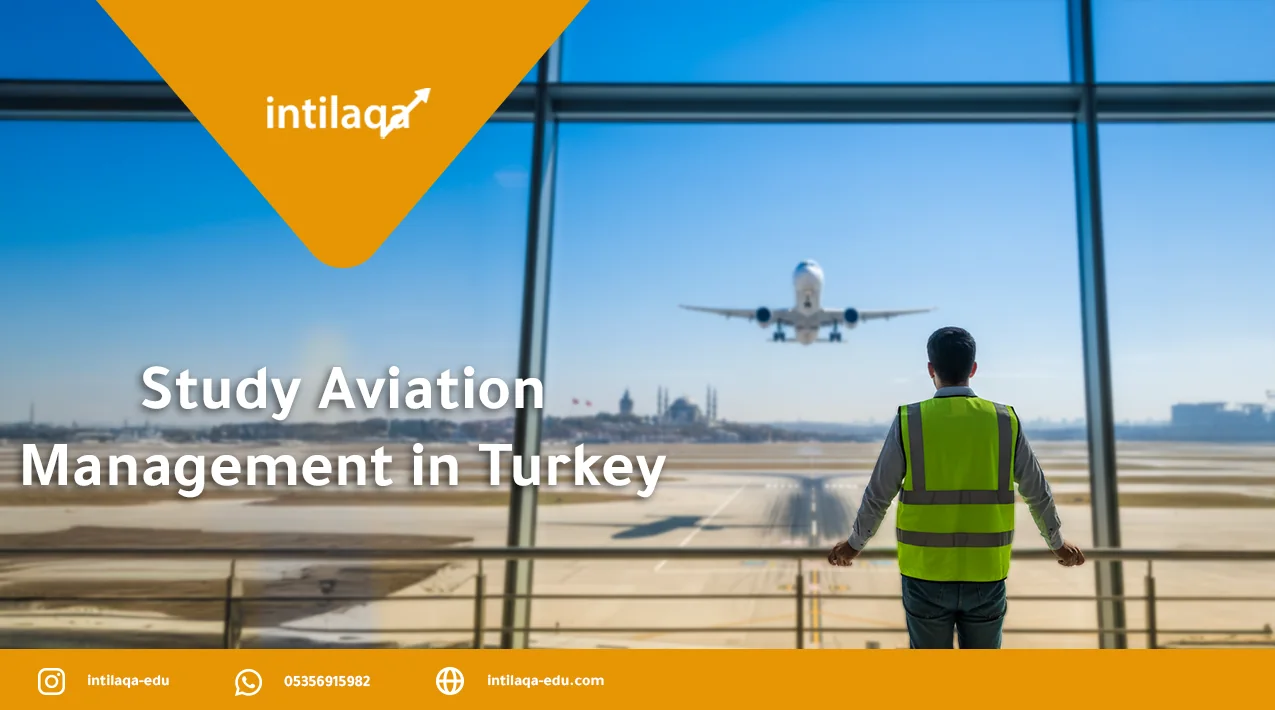
Choosing to Study Aviation Management in Turkey represents a strategic step for international students, thanks to the country’s unique geographical location connecting three continents and its booming aviation sector. If you aspire to build a future in aviation, airport management, and airlines, this major provides you with a unique blend of high-quality academic education and practical real-world experience.
What is the Aviation Management Major?
The Aviation Management major is a modern field of study that integrates the fundamental principles of business administration with the standards and systems applied in the professional aviation sector. This major aims to qualify specialists capable of managing complex operations in this industry with high efficiency, focusing on the administrative and commercial aspects rather than the technical engineering aspect.
This major covers multiple aspects, most importantly:
-
Operational Management:
This includes flight scheduling and route planning.
-
Ground Services Coordination:
Managing everything related to aircraft and passenger services on the ground.
-
Applying Safety and Security Standards:
Ensuring compliance with international and local regulations to secure flights.
-
Air Transport Economics:
Understanding pricing mechanisms, cost analysis, and corporate revenue management.
-
Aviation Services Marketing:
Promoting services and attracting customers in a competitive market.
-
Aviation Laws and Regulations:
Knowledge of agreements and laws governing international civil aviation.
Advantages of Studying Aviation Management in Turkey
Studying aviation management in Turkey is an ideal choice for international students, thanks to a set of competitive advantages that combine academic quality with promising practical opportunities. The most prominent of these advantages include:
Strategic Location and a Booming Aviation Sector:
Turkey’s position as a bridge between Asia and Europe has made it a global aviation hub. This growth, reflected in the strength of its airlines and massive projects like the new major airports, provides a rich environment of opportunities for students.
Strong Practical Training Opportunities:
Turkish universities have partnerships and agreements with major airlines and airports, allowing students to gain valuable practical training and apply what they have learned in a real work environment before graduation.
Education Quality with European Standards:
Turkish universities offer their academic programs according to European education standards, with the option to study in English, ensuring education quality and obtaining an internationally recognized degree.
Advanced Technological Infrastructure:
Universities invest in modern infrastructure, including flight simulators and specialized laboratories, enhancing the students’ educational experience and making it more realistic.
Competitive Tuition and Living Costs:
Compared to other study destinations in Europe and America, tuition and living costs in Turkey are very reasonable, making it an attractive economic choice for international students.
Disadvantages of Studying Aviation Management in Turkey
Despite the numerous advantages, students may face some challenges when studying aviation management in Turkey. It is important to consider them to make an informed decision:
The Turkish Language Barrier:
Although many universities offer the program in English, the Turkish language remains highly necessary for integration into the labor market after graduation. Most airlines and airports require proficiency in Turkish for daily communication and official dealings, which may pose an obstacle for international students who do not master it.
Intense Competition in the Labor Market:
Given that it is a vital and attractive sector, competition for jobs in the aviation field in Turkey is high, both among local and international graduates. Securing a distinguished job opportunity may require academic excellence and strong practical experiences.
Flight School Program Costs:
For students wishing to combine aviation management studies with practical flight training (obtaining a pilot’s license), the costs of flight programs attached to universities or private academies are very high and may not be within the means of all students.
What are the Courses of the Aviation Management Major in Turkey?
Aviation management programs in Turkish universities feature a comprehensive curriculum combining management sciences with specialized aviation fields. While course names may vary slightly from one university to another, the study plan generally covers the following areas:
1. Core Business and Management Courses:
These courses provide the student with a solid foundation in general business administration principles, which will be applied later in the aviation context.
- Introduction to Business
- Principles of Accounting and Finance
- Financial Management
- Human Resources Management
- Marketing
- Economics
- Organizational Behavior
2. Specialized Aviation Courses:
These are the core courses that form the essence of the major and focus directly on the aviation industry.
- Introduction to Civil Aviation
- Airline Management
- Airport Management
- Aviation Law and Regulations
- Aviation Safety and Security
- Safety Management System (SMS)
- Airline and Airport Marketing
3. Technical and Operational Courses:
This category focuses on the daily practical and technical aspects of aviation operations.
- Flight Operations
- Ground Handling and Passenger Services
- Air Cargo and Logistics
- Fleet Planning and Scheduling
- Meteorology
- Air Traffic Rules
4. Supporting Courses and Skills:
Additional courses aimed at developing the student’s analytical and technical skills.
- Introduction to Computers and IT
- Mathematics and Statistics
- Academic and Technical English
These courses are distributed over four academic years, where the student starts with basic courses and progresses to more specialized ones in advanced years, in addition to a graduation project or mandatory practical training in the final year.
How Many Years to Study Aviation Management in Turkey?
The duration of a Bachelor’s degree in Aviation Management in Turkey is four academic years.
If the student does not possess a language proficiency certificate for the language of instruction (whether English or Turkish), they need to study a language preparatory year before starting the four years of specialization. Thus, the total study duration becomes five years.
Studying a Master’s Degree in Aviation Management in Turkey
Studying a Master’s degree in Aviation Management in Turkey is an advanced step aimed at providing students with a deeper and more specialized understanding of the strategic and research aspects of the aviation industry.
1. Study Duration
The Master’s study period in Turkey is usually divided into two tracks, which affects the total duration:
- Master’s with Thesis: This is the most common track and is directed at students with research interests or those planning to complete a PhD later. The study duration for this program is two years (four semesters). The first year is dedicated to advanced coursework, while the second year is allocated for research and writing the Master’s thesis.
- Master’s without Thesis: This track focuses more on the professional and applied aspect and is suitable for aviation sector employees seeking to deepen their expertise. The study duration is shorter, typically ranging between one to one and a half years (two to three semesters). This program ends with an applied graduation project instead of a scientific thesis.
Note: As in the Bachelor’s degree, if the student is not proficient in the language of instruction, they may need an additional language preparatory year.
2. Master’s Courses
Courses at the Master’s level are deeper and more focused on strategic analysis and research compared to the Bachelor’s level. Prominent courses include:
- Strategic Management for Airlines and Airports: Analyzing long-term plans and making strategic decisions in a competitive environment.
- Advanced Air Transport Economics: In-depth study of economic models affecting the global aviation industry.
- Global Aviation Policies and Regulations: Analyzing international policies and their impact on aviation operations.
- Safety and Quality in Aviation: Focus on advanced Safety Management Systems (SMS) and Total Quality Management (TQM).
- Finance and Risk Management in Aviation: How to finance major projects (like purchasing new aircraft) and manage financial and operational risks.
- Digital Marketing and Brand Management in Aviation: Using modern digital tools in marketing aviation services.
- Scientific Research Methods: A core course in thesis-based Master’s programs, where the student learns how to conduct scientific research and analyze data.
- Sustainability and Environment in Aviation: Studying the environmental impact of the aviation sector and seeking sustainable solutions.
Studying a PhD in Aviation Management in Turkey
A PhD in Aviation Management is the highest academic degree in this major, designed to prepare high-level researchers, academics, and experts capable of contributing to knowledge development and leading the future of the aviation industry.
1. Study Duration
- Total Duration: The duration of studying for a PhD in Aviation Management in Turkey typically ranges between 3 to 5 years, and is mostly 4 years (eight semesters).
- First Stage (Coursework): Usually, the first year or two are dedicated to advanced courses and research seminars. This stage aims to provide the student with comprehensive cognitive depth in their precise field of specialization.
- Second Stage (Comprehensive Exam and Dissertation): After successfully finishing the coursework, the student takes the Comprehensive Exam. Upon passing, they attain the status of “PhD Candidate” and officially begin working on the Dissertation under the supervision of a specialized professor. This stage takes up the largest part of the study period (two to three years).
2. Courses and Research Stage
The PhD stage focuses primarily on original scientific research, and the courses are highly advanced and directed towards serving this goal.
- Seminars and Advanced Courses: Instead of traditional coursework, students participate in specialized research seminars and advanced courses such as:
- Advanced Management Theories in Aviation.
- Scientific Research Design and Quantitative and Qualitative Analysis.
- Modeling and Analyzing Air Transport Policies.
- Sustainability and Innovation in the Aviation Industry.
- Performance and Quality Management in Aviation Organizations.
- Advanced Aviation Economics and Econometrics.
- Research Stage (Dissertation): This is the core of the PhD program. The student is expected to present an original and innovative scientific contribution in the field of aviation management. The student selects a unique research topic, conducts in-depth studies, collects and analyzes data, and then writes a comprehensive scientific dissertation to be defended ultimately before a panel of experts to obtain the degree.
Best Universities to Study Aviation Management in Turkey
Below is a list of the best Turkish universities to study aviation management according to academic program quality and practical training opportunities:
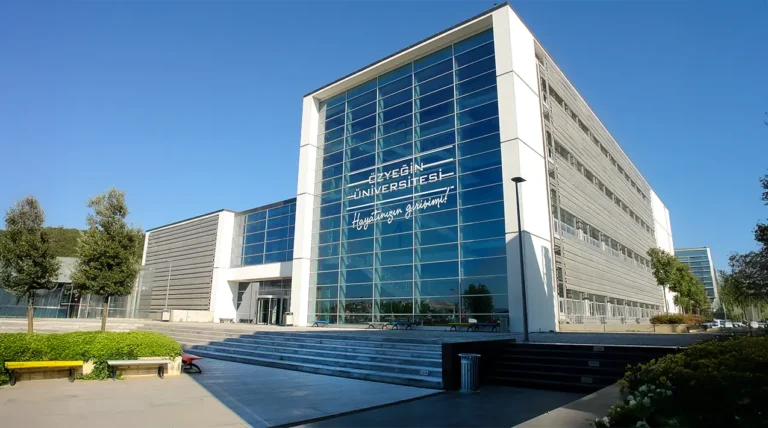
Ozyegin University:
Ozyegin University tops the list as one of the best Turkish universities in the aviation field. Its aviation management program (taught in English) is designed according to the highest international standards, and the university features modern facilities and strong partnerships with major sector companies.
Bilgi University:
Bilgi University is renowned for the strength of its management science programs. Its aviation management program focuses on commercial and strategic aspects and is taught by elite academics with industry experience.
Istanbul Aydin University:
Istanbul Aydin University is a preferred destination for international students due to its diverse programs balancing theory and practice. The university provides strong practical training and post-graduation employment opportunities.
Istanbul Gelisim University:
Istanbul Gelisim University is distinguished by its internationally accredited programs (especially from German organizations) and offers high-quality education at competitive tuition costs, with the option to study in English or Turkish.
Okan University:
Okan University has an integrated faculty of aviation sciences and provides an applied learning environment featuring advanced simulators, focusing on preparing graduates directly ready for the labor market.
Atilim University:
Located in the capital Ankara, Atilim University is famous for its rigorous academic program and an educational environment prioritizing quality and global standards in teaching aviation sciences.
Cost of Studying Aviation Management in Turkey
The costs of studying Aviation Management in Turkey are highly competitive compared to European and American universities, especially considering the quality of education and advanced infrastructure including flight simulators. Fees vary primarily based on the university, its ranking, and the language of instruction.
Bachelor’s (Annually):
The general average in most good private universities teaching in English is between $3,000 and $9,000 annually.
Master’s (Total Program):
The average cost for most Master’s programs (with thesis) is around $3,750 to $9,000 for the entire program.
Requirements for Studying Aviation Management in Turkey
The admission process to study aviation management in Turkey is clear, and its requirements vary fundamentally depending on the academic level and the type of target university.
1. Bachelor’s Degree Admission Requirements
Here, the student faces two main tracks:
- Private Universities Track: This track is characterized by easy admission, where the core condition is possessing a high school diploma with an acceptable passing grade (usually above 50%). There is no need for complex admission exams like YOS or SAT, making it the fastest and most common choice for international students.
- Public Universities Track: This track requires high competitiveness, where the student must present a high school diploma with a high GPA, and more importantly, pass the approved admission exam (YOS or SAT) with a score qualifying them to compete for limited seats.
- Additional Basic Documents: Personal photo, copy of passport.
In both tracks, proving language proficiency (English or Turkish) is a fundamental condition to start studying directly; otherwise, the student must enroll in a language preparatory year.
2. Master’s Degree Admission Requirements
For applying to graduate studies, the focus shifts from admission exams to evaluating the candidate’s academic and professional background. The applicant is expected to submit a Bachelor’s degree in a relevant major, accompanied by a transcript showing their performance. Additionally, supporting documents play a crucial role in admission, topped by recommendation letters testifying to the student’s capabilities and a Statement of Purpose explaining their goals and aspirations from the study.
- Additional Basic Documents: Personal photo, copy of passport.
3. PhD Admission Requirements
Admission at this stage represents the pinnacle of academic selectivity, as the goal is to choose candidates with exceptional research capabilities. The first condition is obtaining a distinguished Master’s degree (with thesis). After that, the applicant must prove their research merit by submitting an innovative and detailed Research Proposal. Their entire academic record is also evaluated, including any published research, and a personal interview is conducted with the department committee to ensure they possess the ability to provide a genuine scientific addition to the field.
- Additional Basic Documents: Personal photo, copy of passport.
Future of Aviation Management Graduates
The future of aviation management graduates is promising and closely interconnected with the continuous growth of the global and Turkish air transport sector. The graduate is not qualified for a single job, but for a wide range of administrative and operational roles across various aspects of this vital industry. Prominent career paths include:
-
At Airports:
The graduate can work in diverse departments such as ground operations management, airport planning and development, airport security management, or customer relations and logistics management.
-
At Airlines:
Airlines open their doors to aviation management specialists in vital areas such as network and route planning, revenue management and pricing, crew and flight scheduling, marketing and sales, and air cargo operations management.
-
At Civil Aviation Authorities and International Organizations:
Graduates can work as air safety inspectors, or in departments regulating air traffic and setting policies and legislation governing the aviation sector.
-
At Support Service Companies:
This includes working in ground handling companies, aircraft catering companies, or companies specializing in aircraft leasing and sales.
How Do I Study Aviation Management in Turkey?
Here are simplified steps to start your academic journey in Turkey step by step:
Step One:
Planning and Mapping Before anything else, determine your path. Do you prefer the flexibility of private universities or the competitiveness of public universities? Decide whether you will study in English to open up global horizons for yourself, or in Turkish to integrate more deeply into the local market. Look for universities with strong partnerships with airlines and airports, and compare their programs and fees.
Step Two:
Preparing Your Academic File Start by gathering and authenticating your basic papers (high school diploma, transcript, passport). To make your file stand out in a major that relies on passion and personal skills, it is recommended to add:
- Statement of Purpose: Explain your passion for the aviation industry and your professional ambitions.
- Additional Language Certificates: Mastering a third language is a significant advantage in the international aviation sector.
- Proof of Any Service Experience: Volunteering or work certificates in customer service, tourism, or hospitality, as they reflect the communication skills important for the major.
Step Three:
Submitting Applications You can apply directly through the official websites of your chosen universities, or use a reliable student services center like “Intilaqa” to simplify the process for you. Remember that admission to private universities depends primarily on the strength of your high school diploma and your general GPA.
Step Four:
Securing Your Study Seat After a period of application, you will receive the initial acceptance letter (Kabul Mektubu). At this stage, you must pay an initial installment of the tuition fees as a “confirmation deposit” to officially secure your seat.
Step Five:
Obtaining the Student Visa Using the official acceptance letter and payment receipt, head to the nearest Turkish embassy or consulate in your country to begin the procedures for obtaining a student visa, which is your legal gateway to study in Turkey.
Step Six:
Traveling and Completing Registration Upon arriving in Turkey, head to your university to finish the final registration process. You will submit your original documents, obtain your university card, and thus officially begin your academic journey as an Aviation Management student.
How Does the Intilaqa Team Help You?
The Intilaqa Educational Team works to assist you step-by-step in choosing the most appropriate major and university for you in Turkey, according to your academic interests and study budget.
We offer you a comprehensive free consultation that includes:
- Recommending the best Turkish universities that teach your major.
- Clarifying available costs and scholarships.
- Full follow-up in the registration process until final acceptance.
Whether you plan to study Aviation Management or any other major, you can start by learning about the details of Study in Turkey through our complete guide:
Study in Turkey