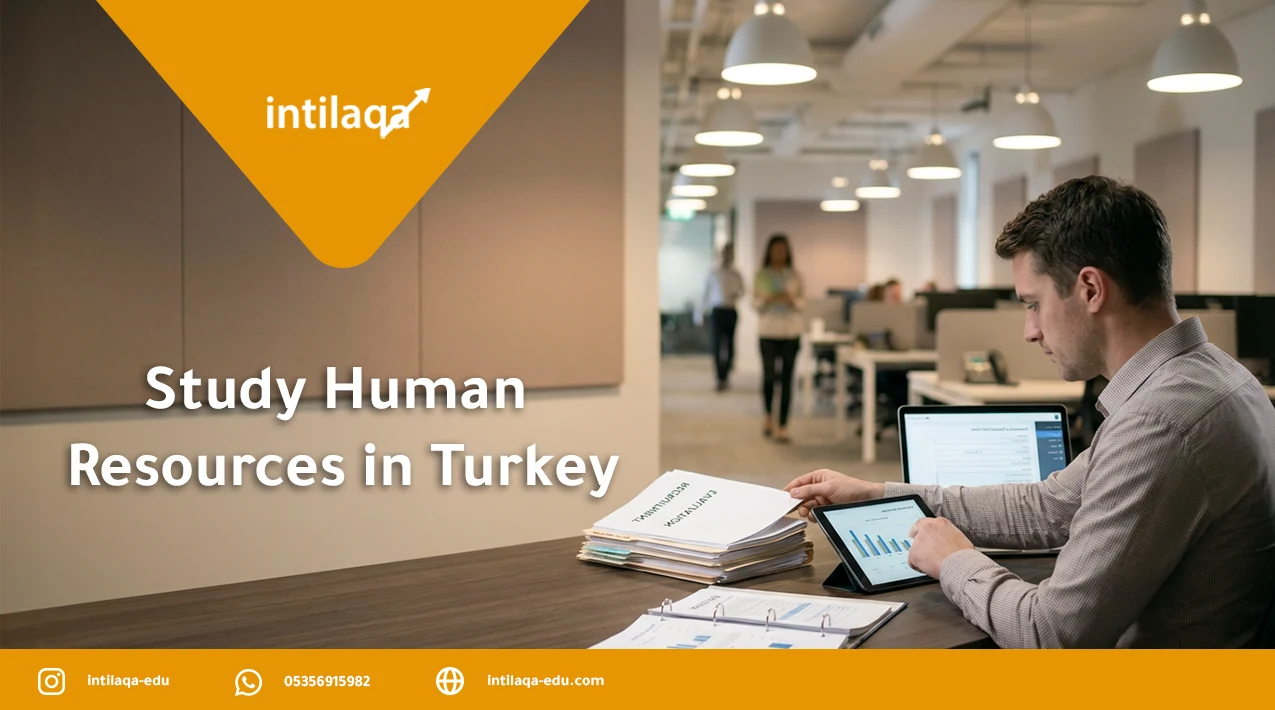
In today’s business world, a company’s success no longer depends on capital alone, but also on the strength of the people who drive it. This is where Human Resources Management stands out as a strategic function that plays a central role in every successful organization.
Choosing to study Human Resources Management in Turkey can help international students build modern leadership skills in an advanced academic environment that combines management and psychology. In this guide, you will find everything you need to know, from courses and tuition fees to admission requirements and career prospects.
What Is Human Resources Management?
This major is a driving force behind successful organizations, moving beyond routine administrative tasks to become a strategic discipline focused on managing human capital effectively. It focuses on carefully balancing a company’s profitability goals with employees’ aspirations through several core areas:
Workforce Planning and Recruitment:
This area goes beyond filling vacancies. It focuses on developing structured strategies to attract qualified professionals whose skills and values align with an organization’s culture and long-term vision, helping place the right person in the right role.
Performance Evaluation and Motivation:
This area covers the design of fair and transparent systems for regularly measuring employee performance and productivity, as well as compensation, incentives, and recognition frameworks that support employee engagement and job satisfaction.
Training and Development:
This core function focuses on continuously developing employees’ skills and knowledge so they can adapt to new technologies and rapidly changing management practices, supporting organizational growth and competitiveness.
Labor Laws and Regulations:
This area involves understanding the legal frameworks that regulate the relationship between employers and employees and protect the rights of both parties. It is an important part of studying Human Resources Management in Turkey, particularly for understanding workplace practices and compliance with local and international standards.
In short, this major prepares leaders capable of building a positive and productive work environment, making it one of the most in-demand fields in today’s growing labor market.
Benefits When You Study Human Resources Management in Turkey
Choosing to study Human Resources Management in Turkey is an ideal gateway into the modern business world, as the academic environment offers a careful balance between management theory and practical application, helping prepare graduates to lead human capital effectively. The main advantages include:
Technology-Oriented Curricula:
Human resources is no longer managed through traditional paperwork alone. Turkish universities increasingly include modern areas such as Human Resources Information Systems and HR Analytics in their curricula, helping students become familiar with the digital tools used by companies to manage performance and talent.
Programs Taught in English:
Most private universities in Turkey offer this major entirely in English, removing the language barrier for international students and preparing them professionally to work in multinational corporations and international business environments.
Practical Internship Opportunities:
Thanks to universities being located in major commercial cities such as Istanbul, students have abundant opportunities for internship opportunities in real companies, allowing them to apply recruitment and evaluation strategies and gain professional experience before graduation.
Competitive Costs and Quality:
Turkey offers education aligned with European standards at highly competitive costs compared with Western countries, along with reasonable living expenses, making an internationally recognized degree more accessible without a heavy financial burden.
Human Resources Management Courses in Turkey
When studying Human Resources Management in Turkey, students typically follow a progressive academic structure that moves from general business foundations toward specialized knowledge in managing human capital. The following are some of the main courses commonly covered throughout the program:
Year One: Management and Psychology Foundations
The first year builds a foundation in general management principles and an understanding of human behavior, both of which are essential for future HR professionals.
- Introduction to Business.
- Principles of Microeconomics and Macroeconomics.
- Introduction to Psychology.
- Communication Skills.
- Mathematics and Statistics for Social Sciences.
Year Two: Organizational Structures and Behavior
Students begin moving deeper into the major, focusing on how people behave within organizations and the legal frameworks that regulate employment.
- Organizational Behavior.
- Talent Acquisition.
- Labor Law.
- Business Ethics and Social Responsibility.
- Fundamentals of Human Resources Management.
Year Three: Applied and Technical HR Skills
This stage focuses on the practical tools HR managers use to evaluate employees, structure compensation, and support workforce development.
- Compensation and Benefits.
- Performance Management Systems.
- Training and Development.
- Human Resources Information Systems (HRIS).
- Employee Relations and Occupational Health and Safety.
Year Four: Strategy and Graduation Project
The final stage connects human resources with broader organizational objectives, examines global workforce challenges, and typically concludes with an applied graduation project.
- Strategic Human Resources Management (Strategic HRM).
- International Human Resources Management (International HRM).
- HR Analytics.
- Change Management and Organizational Development.
- Applied Graduation Project.
How Long Does It Take to Study Human Resources Management in Turkey?
A bachelor’s degree in Human Resources Management in Turkey generally follows the country’s standard university structure and takes four academic years, usually divided into eight semesters.
The total duration may extend to five years if the student needs to complete a language preparatory year.
This preparatory year is generally required only for students who cannot demonstrate sufficient proficiency through an accepted language certificate, such as TOEFL, or by passing the university’s exemption or proficiency exam.
Human Resources Management Associate Degree in Turkey
For students seeking a shorter, more applied professional pathway, Turkish universities offer two-year Human Resources Management associate degree programs through vocational schools. These programs focus more heavily on practical skills used in day-to-day business operations and typically develop competencies in the following areas:
Academic Structure and Core Courses:
Across four semesters, the program is designed to prepare graduates for entry-level HR roles through practical courses such as:
- Personnel Administration and Payroll: Practical training in payroll preparation, tax calculations, leave management, and employee records.
- Labor Law and Social Security: A detailed introduction to Turkish labor regulations, employee rights, health insurance, and retirement procedures.
- Computer Applications in Human Resources: Using office software and administrative systems to manage and archive employee information electronically.
- Executive Secretarial Skills and Business Correspondence: Learning how to prepare formal reports, organize meetings, and manage internal organizational communication.
- Principles of Occupational Health and Safety: Understanding workplace safety standards and how they are applied to protect employees.
Academic Progression to a Bachelor’s Degree:
An associate degree is not the end of the academic path in Turkey. It can serve as a smart first step, as students may continue toward a bachelor’s degree and complete the remaining two years after passing the Vertical Transfer Examination (DGS), giving them greater flexibility to develop their academic and professional future.
Master’s in Human Resources Management in Turkey
For students and professionals who want to move from routine administrative roles toward strategic people management, Turkish universities offer advanced Master’s programs in Human Resources Management in Turkey. These programs typically aim to build analytical and leadership skills and are generally available in two main tracks:
1. Thesis-Based Master’s (Tezli Yuksek Lisans)
This track is suited to students who want to pursue an academic career or continue to a PhD. It places greater emphasis on theory and scientific research methods and ends with a master’s thesis addressing an original research question. The program usually takes two years, with courses such as:
- Advanced Research Methods in Social Sciences: Training in research design and statistical tools such as SPSS for analyzing employee-related data.
- Advanced Organizational Theories: A deeper examination of organizational structures and how they develop.
- Strategic Human Resources Management (Strategic HRM): Connecting HR functions with the organization’s broader competitive objectives.
- Cross-Cultural Management: Studying how teams are managed within international and multinational organizations.
2. Non-Thesis Master’s (Tezsiz Yuksek Lisans)
This track is designed primarily for professionals and HR managers who want to strengthen their applied skills and return quickly to the workplace. It focuses on practical application and usually replaces the academic thesis with an applied graduation project addressing a real workplace challenge. The duration is shorter, typically one to one and a half years, with courses such as:
- Talent Management: Strategies for attracting, developing, and retaining high-performing employees.
- Advanced Labor Law and Employee Relations: A deeper study of employment legislation and dispute resolution within organizations.
- Compensation Systems: Designing salary structures and incentive systems that support productivity.
- Leadership and Change Management: Practical tools for leading employees through organizational transformation and periods of uncertainty.
PhD in Human Resources Management in Turkey
A PhD represents the highest academic level for those who want to become strategic experts or academic researchers in human capital management. One important point in the Turkish university system is that doctoral programs in this field rarely carry the standalone title “PhD in Human Resources Management” and are usually offered within a Business Administration PhD.
Within this structure, students can shape their specialization in human resources through two main approaches:
- Course Selection: Focusing on advanced electives directly related to the field, such as advanced organizational behavior, leadership theories, and talent management strategies.
- Doctoral Dissertation: Directing the dissertation toward an in-depth HR issue, allowing the student to develop a focused research specialization.
Program Structure and Academic Nature:
Doctoral study in Turkey is research-intensive and typically takes four years (eight semesters), moving through several structured academic stages:
- Advanced Coursework: During the first year, researchers take courses that build a strong theoretical and methodological foundation in management sciences, with emphasis on theories explaining individual and group behavior within organizations.
- Proficiency Exam (Yeterlilik Sinavi): A comprehensive written and oral examination conducted before an academic committee to assess the student’s command of management theory and readiness to begin independent doctoral research.
- Dissertation and Research Stage: After passing the proficiency stage, the researcher spends the following years preparing an original dissertation in an HR-related area, such as the impact of digital transformation on employee performance or diversity and inclusion strategies, under academic supervision.
Research Areas and Topics:
Research in this field increasingly explores contemporary workplace issues and future-oriented management questions. Common areas include:
- Artificial Intelligence in Recruitment: Examining the ethics and effectiveness of using algorithms in candidate selection.
- Remote Work and Organizational Flexibility: Developing models for leading and managing geographically distributed teams.
- Employee Well-Being: Analyzing the relationship between employee well-being and sustainable organizational productivity.
Best Universities to Study Human Resources Management in Turkey
When planning to study Human Resources Management in Turkey, choosing the right university environment plays a crucial role in shaping your professional future. The following universities stand out for strong programs that combine management theory with practical application:
Istanbul Nisantasi University
Istanbul Nisantasi University is an excellent option for students interested in the digital side of human resources. Thanks to its smart NeoTech Campus, the university provides an advanced technological environment where students can train on modern software and systems used in contemporary business management, helping them keep pace with technological transformation in the labor market.
Istanbul Okan University
Istanbul Okan University is known for its motto, “The University Closest to Business Life,” and for its distinctive CO-OP training system. This system gives Human Resources students the opportunity to gain real work experience in recruitment and management departments at major partner companies before graduation, providing practical experience and a strong advantage in employment.
Istanbul Aydin University
Istanbul Aydin University is known for its strong graduate-employment orientation and has a highly active career center with extensive partnerships with thousands of companies. For Human Resources students, this environment is ideal for understanding labor-market mechanisms, recruitment strategies, and building a strong professional network that supports them after graduation.
Istanbul Medipol University
Although it is widely known for its medical programs, Istanbul Medipol University also has highly regarded management faculties. The university focuses on rigorous educational quality and offers a strong teaching staff, giving students a solid theoretical and academic foundation, especially in the legal and ethical aspects of people management.
Istanbul Gelisim University
Istanbul Gelisim University is known for the large number of international accreditations held by its academic programs. Studying Human Resources here means learning according to European and global quality standards, helping students develop a strong understanding of quality and organizational excellence, an important skill for future managers.
Beykent University
Beykent University combines academic heritage with modern education and is distinguished by its extensive libraries and rich research resources. The university provides a solid education focused on developing students’ leadership capabilities, while its broad alumni network offers valuable support to new graduates entering the Turkish and international labor markets.
Cost to Study Human Resources Management in Turkey
Cost is one of the main considerations when choosing to study Human Resources Management in Turkey. Private universities offer a range of tuition options, with the following estimated averages:
Associate Degree (Annual):
Tuition fees range between $1,500 and $3,000, making this the most affordable academic route for students seeking a shorter path into the job market.
Bachelor’s Degree (Annual):
Average annual tuition for a bachelor’s degree is around $5,500. The exact amount may vary depending on the university and whether the program is taught in English or Turkish.
Master’s Degree (Full Program):
Tuition is generally calculated for the full program rather than annually and ranges between $3,000 and $12,000 in total, depending on whether the program is thesis-based or non-thesis and on the university.
PhD (Full Program):
Total tuition for the full research and dissertation period ranges between $6,000 and $20,000, depending on the university’s research infrastructure and academic resources.
Admission Requirements to Study Human Resources Management in Turkey
Private universities in Turkey are known for flexible admission policies and an open approach toward international students, with requirements focusing more on readiness to learn and develop management skills than on exceptionally high grades. Here is a detailed overview of the requirements for each academic level:
1. Associate Degree Requirements
Associate degree programs generally have straightforward admission requirements:
- High School Background: Applicants from different high school tracks, including science, literature, vocational, and commercial tracks, may apply.
- Academic Average: A basic passing high school average of 50% is generally sufficient to secure admission.
- Language Requirement: For English-taught programs, students may need to provide a TOEFL certificate or pass the university’s exemption exam. Similar proficiency requirements apply to Turkish-taught programs.
- Required Documents: A passport copy, translated and certified high school diploma, and academic transcript.
2. Bachelor’s Degree Requirements
Admission to management and economics faculties is generally accessible to applicants from a wide range of academic backgrounds:
- High School Background: Universities generally accept applicants from different high school tracks, including science, literature, and vocational tracks.
- Academic Average: Most private universities accept a passing high school average, often around 50% or above, to approve the application.
- Language Requirement: For English-taught programs, students may need a TOEFL certificate or must pass the university’s exemption exam. Equivalent requirements apply to Turkish-taught programs.
- Required Documents: An original and translated high school diploma and transcript, passport copy, and personal photos.
3. Master’s Degree Requirements
Applicants moving into graduate-level specialization in human resources are generally expected to meet the following requirements:
- Academic Background: Priority is often given to graduates of management and social science fields such as Business Administration, Psychology, and Sociology. Applicants from other backgrounds may also be accepted, sometimes with supplementary coursework.
- Undergraduate GPA: A minimum bachelor’s GPA of around 2.00 out of 4.00, or its equivalent, is commonly expected for application review.
- Language Proficiency: Language proficiency is particularly important for English-taught programs so students can work effectively with academic literature and research.
- Required Documents: Bachelor’s degree and transcript (translated and certified), language certificate where required, CV, and passport copy.
4. PhD Requirements
Doctoral admission standards are more selective because of the research-intensive nature of the degree:
- Previous Master’s Type: Universities generally require a prior thesis-based master’s degree (Tezli) to demonstrate previous research experience, while non-thesis professional degrees (Tezsiz) may not meet doctoral admission requirements.
- Academic Merit: A strong master’s GPA is usually expected, often around 3.00 or above depending on the university.
- Research Proposal: Applicants may need to submit a research proposal explaining the management issue they intend to study and the methodology they plan to use.
- Registration Documents: Passport copy, master’s degree and transcript (translated and certified), a copy of the previous master’s thesis, research proposal, and proof of language proficiency.
Career Prospects for Human Resources Management Graduates
Graduates of Human Resources Management in Turkey enjoy broad and evolving career prospects. People management is no longer limited to routine administrative tasks; it has become an indispensable strategic partner in organizational success. With the growth of Turkey’s business sector and increasing foreign investment, demand has risen sharply for professionals capable of building and retaining high-performing teams.
Career paths are available across private, public, and international organizations, with common roles including:
Talent Acquisition Specialist:
Responsible for sourcing candidates, conducting interviews, and selecting applicants whose skills and experience align with the company’s needs and culture.
Compensation and Benefits Manager:
Designs salary structures, incentive systems, and reward programs that support employee satisfaction and help the organization remain competitive in the labor market.
Training and Development Specialist:
Identifies employee skill gaps and plans training initiatives aimed at improving performance, productivity, and professional development.
HR Analyst:
Uses workforce data to analyze employee performance, turnover, and other HR indicators, producing reports that support management decision-making.
Employee Relations Manager:
Focuses on workplace relations, conflict resolution, labor-law compliance, and maintaining a stable and positive organizational environment.
How Do I Study Human Resources Management in Turkey?
To begin your journey to study Human Resources Management in Turkey, it is useful to follow a clear application process:
1. Choose the University and Program
Start by identifying a university that matches your academic goals and budget, and check whether the program is offered in English or Turkish. Applying early can also give you more options before available seats fill.
2. Prepare Your Academic Documents
Prepare your main application documents, including your high school diploma, transcript (translated and certified where required), and a clear copy of a valid passport.
3. Apply Through the Intilaqa Team
To help secure your admission and avoid procedural mistakes, the Intilaqa team can handle the process for you. We review your academic file, recommend the strongest universities for Human Resources Management, and submit your university application for free, while also providing exclusive tuition discounts when available.
4. Pay the Required Fees and Secure Your Seat
Once the preliminary acceptance letter is issued, you will need to transfer the first tuition installment directly to the university. This step is essential to convert your admission into final acceptance and officially reserve the seat in your name.
5. Apply for a Student Visa
After receiving the final acceptance letter, you can apply for a Student Visa through the Turkish embassy or consulate responsible for your place of residence. The visa allows eligible international students to enter Turkey for study purposes.
6. Arrive and Complete Final Registration
After arriving in Turkey, you will complete the university’s final registration procedures on campus.
How Can the Intilaqa Team Help You?
The Intilaqa Education team helps you choose the program and university that best match your academic interests and study budget in Turkey.
We provide a comprehensive free consultation that includes:
- Recommending suitable Turkish universities that offer your chosen field.
- Explaining tuition costs and available scholarships.
- Following up throughout the application process until final acceptance.
Whether you plan to study Human Resources Management or another major, you can start by learning more about Study in Turkey in our complete guide:
Study in Turkey