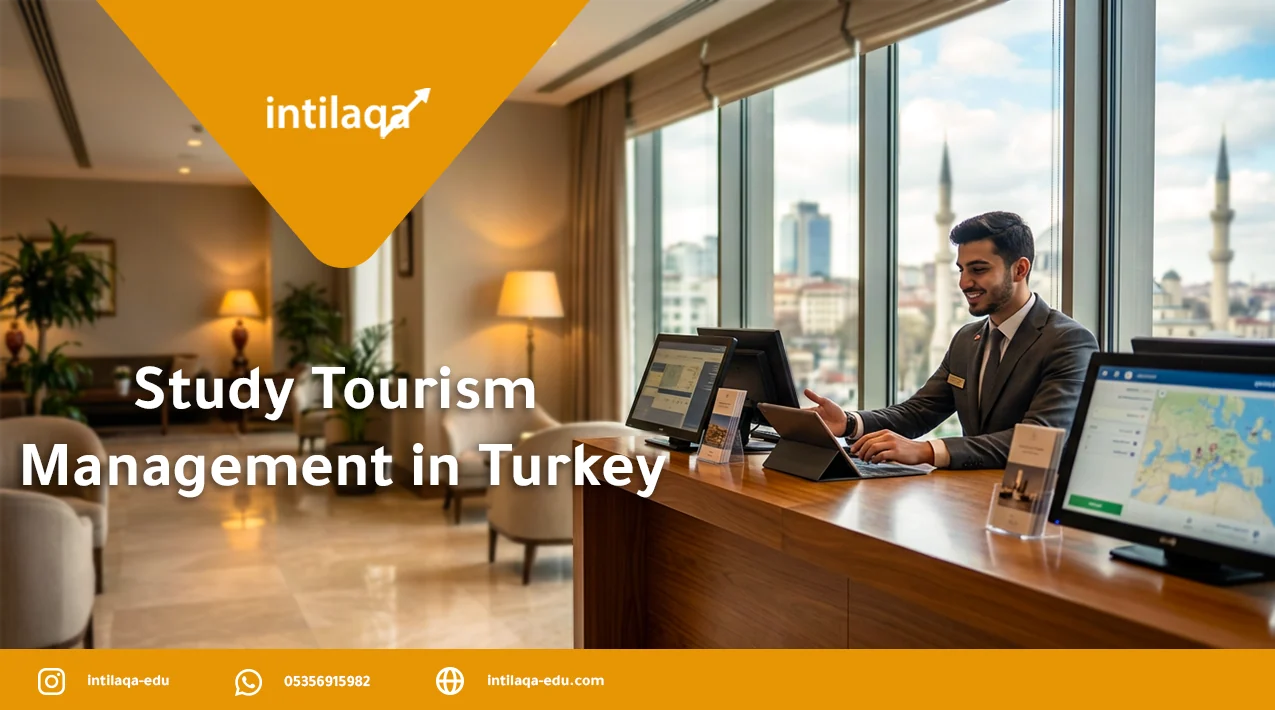
Tourism education cannot be separated from the environment in which it is studied, and this is where the competitive advantage of studying Tourism Management in Turkey becomes clear. Being in one of the world’s leading tourism destinations gives you a rare opportunity to turn academic theory into direct operational experience in major hotels and resorts instead of relying only on classroom learning.
In this guide, we provide a practical roadmap covering modern curricula, leading universities connected to the job market, tuition costs, and career opportunities in this sector.
.
What Is Tourism Management?
Simply put, Tourism Management sits at the intersection of Business Administration and tourism and hospitality. When you study Tourism Management in Turkey, you do not only learn how to book tickets or welcome guests; the field goes much deeper by focusing on the managerial and economic side of this large industry.
In general, students in this field develop knowledge and skills across several key areas:
Understanding the Tourism Ecosystem:
Learning how travel agencies, hotels, and airlines operate as interconnected parts of the same industry.
Management Mindset:
Learning how to manage Human Resources and finances within tourism establishments to support profitability and sustainability.
Communication and Language Skills:
Developing the ability to communicate across cultures and work effectively with tourists from diverse international backgrounds.
Creating Guest Experiences:
Learning how to turn an ordinary service into a memorable customer experience, which is at the heart of successful tourism management.
Planning and Problem-Solving:
Building the ability to organize events and tour groups and respond quickly to unexpected situations during travel or accommodation.
The main goal of the program is to prepare graduates who can lead and plan effectively, combining a manager’s mindset with the flexibility needed in a fast-moving industry such as tourism.
Why Study Tourism Management in Turkey?
Choosing to study Tourism Management in Turkey is more than an academic decision; it places you in one of the world’s most active tourism environments. Turkey’s main advantage is not limited to textbooks and courses, but also lies in the surrounding industry where students can observe what they study being applied every day.
The following are some of the main reasons this can be a practical choice:
A Living Practical Environment:
You study in a country that welcomes tens of millions of tourists every year, which means the theories you learn in class can be seen in practice across thousands of hotels, resorts, and tourism companies in Istanbul, Antalya, and other destinations.
Field Internship Opportunities:
Many Turkish universities require compulsory internships. Because of the scale of the tourism sector, students can find practical training opportunities in international hotels, airlines, and tourism companies before graduation.
Cultural Diversity:
Turkey connects multiple cultures and tourism markets, helping students develop the ability to work with guests and clients from diverse international backgrounds, an essential skill for successful tourism managers.
Affordable Tuition and Living Costs:
Compared with many European countries and the United States, Turkish universities offer strong tourism programs at competitive tuition rates, while living costs can remain relatively manageable for international students.
Tourism Management Courses in Turkey
Because this program is offered through vocational schools, the curriculum is intensive and highly practical, and the study plan is divided into two main stages:
Year One: Foundations and Hospitality Principles
The first year focuses on building the student’s knowledge base and introducing the fundamentals of business and tourism. Courses are generally introductory in nature:
- Introduction to Tourism Sciences: Understanding the basic concepts and different forms of tourism.
- Business Administration and General Economics: Basic principles of how companies operate and how markets function.
- Hospitality and Front Office Services (Theory): Fundamentals of guest interaction and reception protocols.
- Principles of Accounting: Learning the basics of simplified bookkeeping.
- Foreign Language (Level One): Focusing on grammar and general conversation as a compulsory requirement.
- Information Technology: Basic computer skills used in office and business environments.
Year Two: Specialization and Applied Techniques
In the second year, students move from understanding what the industry is to learning how it operates, with courses focused on management, software systems, legal frameworks, and job-market preparation:
- Tourism Marketing: Learning how hotel rooms and tourism packages are sold and promoted.
- Tourism Automation Systems: Practical training on reservation and hotel management systems such as Opera or Amadeus.
- Tourism Law and Regulations: Understanding legal rights and obligations in tourism contracts.
- Travel Agency Management: Learning how agencies operate and how trips are organized.
- Accounting for Tourism Costs: Calculating the cost of rooms or meals and determining appropriate pricing.
- Graduation Project or Field Internship: Applying what has been learned in a real work environment.
How Long Does It Take to Study Tourism Management in Turkey?
The program consists of 4 semesters (two years) covering both theoretical and practical aspects. However, there is one important factor to consider when calculating the total study duration:
Preparatory Year:
If the student does not hold a certificate proving proficiency in the language of instruction, whether Turkish or English, they may need to complete a language preparatory year before beginning the program, bringing the total duration to 3 years.
Opportunity to Continue Through DGS:
The Turkish education system gives graduates the opportunity to continue toward a bachelor’s degree in a related field by passing the Vertical Transfer Exam (DGS). In this case, the student may study only two additional years to complete the bachelor’s requirements instead of starting a four-year degree from the beginning.
Best Universities to Study Tourism Management in Turkey
When looking for a suitable place to study Tourism Management in Turkey, several private universities in Istanbul stand out for offering strong associate-degree programs in this field, often with modern facilities and a strong practical focus.
Nisantasi University:
Nisantasi University is known for its modern technology-oriented environment and NeoTech Campus. Its tourism-related education emphasizes the integration of digital technologies into management, helping students become familiar with modern reservation and hotel-management systems.
Halic University:
Halic University has an established academic environment and places emphasis on the professional side of hospitality. Its approach supports leadership development and an understanding of international hospitality standards, while its location in Istanbul provides access to a major tourism market.
Istanbul Aydin University:
Istanbul Aydin University is known for its applied approach to education. The university provides extensive facilities and practical training opportunities both on and off campus, while also placing strong emphasis on foreign-language education as part of career preparation.
Istanbul Arel University:
Istanbul Arel University offers a balanced approach combining theory and practice at competitive tuition rates. Its vocational education focuses on core skills used in front-office operations and travel agencies within a supportive student environment.
Cost to Study Tourism Management in Turkey
Budget is an important factor when deciding where to study. Turkish universities offer Tourism Management programs at competitive tuition rates compared with many European alternatives, while maintaining a strong practical component.
Tuition fees vary depending on the university, its facilities, and its academic positioning. Below are the stated annual fees for selected private universities offering this field:
| University | Annual Tuition Fee |
|---|---|
| Istanbul Kultur University | 1,925$ |
| Nisantasi University | 1,950$ |
| Istanbul Arel University | 2,500$ |
| Halic University | 3,000$ |
| Istanbul Aydin University | 3,000$ |
Requirements to Study Tourism Management in Turkey
Admission procedures at private Turkish universities for this program are generally flexible and straightforward and do not require special aptitude tests.
To apply and secure a place, you mainly need to prepare the following documents:
- High School Diploma: Accepted from different academic tracks, and very high grades are generally not required for admission to this program.
- Academic Transcript: Translated and certified.
- Passport: Valid at the time of application.
- Personal Photos.
- Language Certificate (If Available): If you hold a recognized language certificate, such as TOMER for Turkish or TOEFL for English, you may be exempt from the preparatory year. Without one, students may take the university’s placement or proficiency exam or complete a language preparatory year first.
Private universities do not require admission exams such as YOS or SAT for enrollment in this program.
Career Prospects for Tourism Management Graduates
This sector offers diverse career paths that go well beyond hotels. Thanks to the management and language skills developed during the program, graduates can pursue opportunities in several areas:
Hotel and Resort Management:
One of the most common career paths, often beginning in operational departments such as reception and guest relations, with opportunities to progress into sales management or event supervision within hotels.
Airlines and Airports:
Opportunities may include ground services, passenger lounge operations, ticketing, reservations, and administrative sales roles.
Travel and Tourism Agencies:
Work in this area focuses on planning trips, designing complete tourism programs, and coordinating with hotels and transportation companies to organize group travel.
Event and Conference Management:
A dynamic field that requires careful logistical planning for exhibitions and international conferences, from reservations through on-site event management.
Tour Guiding:
A suitable option for students who prefer field-based work, involving accompanying visitor groups and explaining tourist attractions. This career path often requires a separate professional license.
Government Institutions:
Graduates may work in tourism ministries or destination-promotion bodies, supporting tourism marketing and service-quality initiatives.
How to Study Tourism Management in Turkey?
To make your study journey easier and more organized and choose a university that genuinely supports your practical skills, follow this structured application roadmap:
1. Choose the Right University
This is the foundation of the process. The goal is to choose a university that offers a real training environment and modern facilities while balancing academic strength with suitable tuition fees. The Intilaqa team can help you filter the available options based on your priorities.
2. Prepare Your Official Documents
Do not leave document preparation until the last minute. Start with the main requirements: a translated and certified high school diploma, detailed academic transcript, valid passport, and recent personal photos.
3. Contact Your Intilaqa Advisor
Instead of managing the application details alone, contact the Intilaqa team. We can review your file, recommend suitable universities, and manage the application process free of charge while helping you access available tuition discounts.
4. Officially Secure Your Seat
Once the preliminary acceptance letter is issued, you need to transfer the first tuition payment to the university’s official account. This step is required to obtain final acceptance and secure your place before available seats are filled.
5. Travel and Student Visa Procedures
After receiving the final acceptance document, apply for a student visa through the Turkish embassy or consulate in your country. This document allows you to enter Turkey for study purposes and later complete the student residence process.
6. Arrive and Begin Your Studies
After arriving in Turkey, complete the administrative registration procedures on campus and receive your student ID so you are ready to begin the program.
How Can the Intilaqa Team Help You?
The Intilaqa Education team supports you step by step in choosing the program and university in Turkey that best match your academic interests and study budget.
We provide a comprehensive free consultation that includes:
- Recommending suitable Turkish universities that offer your chosen program.
- Explaining tuition fees and available scholarship opportunities.
- Providing full support throughout the application process until final admission.
Whether you plan to study Tourism Management in Turkey or pursue another program, you can learn more about studying in Turkey through our complete guide:
Study in Turkey]