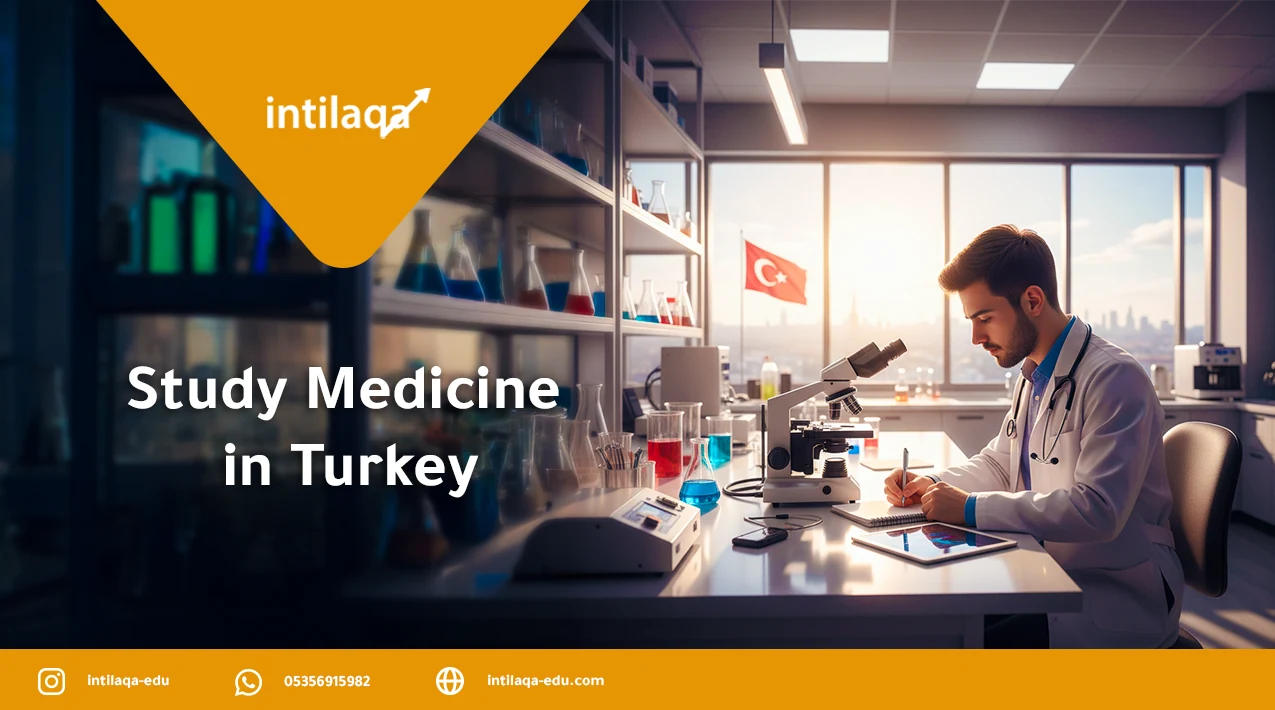
Choosing to study medicine in Turkey is one of the most sought-after academic paths for international students. Turkish universities are renowned for their rigorous medical education, equipping students with essential clinical skills alongside reasonable tuition fees.
This comprehensive guide details everything you need to know, from program duration and top universities to study medicine in Turkey, to the step-by-step application process. Keep reading to discover all the essential details.
Why Choose to Study medicine in Turkey?
There are numerous academic and professional reasons to study medicine in Turkey, most notably:
International Recognition of Medical Degrees
Public and private Turkish universities are part of the European Higher Education Area, granting their degrees full recognition across Europe.
Most universities also issue the “Blue Diploma” (Diploma Supplement), facilitating degree equivalence within the EU, alongside broad recognition across Asia, Africa, and the United States (ECFMG).
Quality of Education and Advanced Infrastructure
Turkey has invested heavily in the health and educational sectors. You will find smart classrooms, advanced medical simulation laboratories, and massive university hospitals equipped with the latest robotic and surgical technologies. Curricula follow global standards, with study options available in both English and Turkish.
Intensive Clinical Training
Due to the high population density and diverse medical cases, medical students receive extensive hands-on clinical training, building practical experience not readily available elsewhere.
Note: It is highly recommended to choose a university that owns its hospital, ensuring seamless direct training under the supervision of specialized professors.
Student Exchange Programs (Erasmus+)
The Turkish higher education system provides direct access to Europe. Through the Erasmus+ program, students can study for a semester or a full academic year at partner European universities (e.g., in Germany, Italy, Poland) with financial support.
Active Scientific Communities
Universities host vibrant campuses with numerous student clubs.
Medical students benefit significantly from scientific and research clubs that organize annual medical conferences, managed by students and attended by global surgeons and physicians.
Competitive Tuition and Living Costs
Turkey is considered the best country to study medicine in Turkey at reasonable fees; they are much lower compared to the quality provided. Furthermore, the cost of living (accommodation, food, transportation) is highly accommodating for international students.
Comfortable Cultural Environment
The country provides a safe, multicultural environment bridging European modernity and Eastern culture. As an international student, you will easily adapt to the secure and welcoming atmosphere in university cities.
This psychological stability is crucial for a medical student’s academic focus.
How Many Years is the Medical Program?
The duration to study medicine in Turkey is 6 years to obtain a Bachelor of Medicine degree, qualifying the graduate as a general practitioner.
If a student does not demonstrate proficiency in the program’s language of instruction (via an internationally recognized certificate or a university placement test), a mandatory language preparatory year is added, extending the total duration to 7 years.
Medical Curriculum Structure
The academic program encompasses basic, specialized, and clinical medical sciences. Most Turkish universities follow this structure:
Years 1 and 2 (Basic Sciences)
Focus on foundational subjects such as Biochemistry, Physiology, Anatomy, Histology, and Embryology.
Year 3 (Pathology and Diagnosis)
Introduction to diseases and clinical diagnosis, including General Surgery, Internal Medicine, Pediatrics, Obstetrics and Gynecology, Psychiatry, and Emergency Medicine.
Years 4 and 5 (Clinical Practice)
Practical training years in hospitals, where students begin interacting with and treating patients under direct medical supervision.
Year 6 (Internship)
Known as the “Internship” year, this is a phase of intensive clinical training across various hospital departments to acquire final hands-on clinical experience before graduation.
Medical Tuition Fees for 2026
The costs to study medicine in Turkey vary significantly between public and private institutions.
Private Universities Fees
Tuition fees for medical programs in private universities range between $12,000 and $44,000 annually. These rates vary by institution and are subject to annual updates.
Average Annual Fees in Top Private Universities:
| University | Annual Tuition Fee (USD) |
|---|---|
| Medipol University Istanbul | 44000 |
| Bahcesehir University Istanbul | 28000 |
| Istanbul Aydin University | 25000 |
| Altinbas University | 22500 |
| Biruni University | 21000 |
| Istinye University | 29000 |
Public Universities Fees
Tuition fees in public universities are considerably lower, generally ranging between $6,000 to $10,000 annually. However, admission is highly competitive.
Medical Scholarships for International Students 2026
There are several pathways to obtain financial aid and scholarships to study medicine in Turkey, most notably:
Ibn Sina Medical Sciences Scholarship
Dedicated to health sciences, offering international students funding for Medicine, Dentistry, Pharmacy, and Nursing. It covers tuition fees, a monthly stipend, and health insurance.
Turkiye Burslari (Turkish Government Scholarship)
A fully-funded government program covering all academic disciplines. It covers:
- Full tuition fees.
- Monthly accommodation allowance.
- Round-trip flight ticket at the beginning and end of the studies.
- Comprehensive health insurance.
- One year of free Turkish language study (mandatory).
Partial Scholarships in Private Universities
Many private universities offer partial tuition waivers for international students. You can secure these scholarships directly through authorized educational consultants like the Intilaqa team.
Best Universities for Medical Education
If you are looking for the best institutions to study medicine in Turkey, there are several top-tier options combining rigorous academics with modern clinical facilities.
These universities offer excellent programs and are top choices for international students, particularly those planning to study medicine in Turkey in English.
Medipol University Istanbul
Medipol University is renowned for its advanced medical infrastructure. Owning 10 training hospitals, it provides high-level, comprehensive clinical training using the latest medical technologies.
Bahcesehir University Istanbul
Bahcesehir University is highly distinguished by its strategic location in the heart of Istanbul and its proximity to advanced hospitals, facilitating excellent clinical exposure for students.
Istanbul Aydin University
Aydin University offers robust academic programs with a strong emphasis on scientific research and a stimulating educational environment.
Biruni University
Biruni University is highly specialized in health sciences, featuring advanced medical programs and laboratories equipped with state-of-the-art technologies.
Istinye University
Istinye University is one of the top choices for English-taught programs, strongly integrated with major hospital networks in Istanbul, ensuring exceptional clinical training.
Admission Requirements
Admission requirements to study medicine in Turkey vary depending on the university type, but generally include the following documents:
Requirements for Private Universities
- High School Diploma: A minimum GPA of 70% (some private universities may require higher averages).
- Language Proficiency: TOEFL or IELTS for English-taught programs, or TOMER for Turkish-taught programs.
- Other Documents: Passport copy, biometric photos, translated and notarized high school diploma, and academic transcripts.
Requirements for Public Universities
- High School Diploma: A minimum GPA of 90% to 97% (competition is exceptionally high).
- Entrance Exams (YÖS or SAT): International students must pass one of these two exams.
- YÖS Exam: A university entrance exam specifically for foreign students, administered by the public universities themselves.
- SAT Exam: An internationally recognized American exam accepted by some institutions.
Guide for International Students
If you are an international student planning to enroll, you must understand two fundamental aspects before taking any step:
First: Language of Instruction
Programs are strictly taught in either English or Turkish. There are no Arabic-taught medical programs. The available options are:
- English Language: This is the preferred option for the vast majority of international students.
- Turkish Language: An available option for those who master it or wish to learn it.
Second: Degree Recognition and Equivalency
While Turkey is part of the Bologna Process, you must ensure compliance with your home country’s regulations. To avoid any future obstacles, we summarize the basic procedures:
- Ministry of Higher Education
Accreditation procedures vary, so it is mandatory to check the official website of the ministry in your country:
- Gulf Countries: Often rely on updated electronic list systems (such as the “Safeer” system).
- North Africa & Levant: Rely on “Recommended University Guides”.
- Global Rankings
Many countries accredit universities based on the global ranking. Ensure your chosen university is listed among the recognized lists.
- Post-Graduation Requirements
Pay attention to the requirements of returning to your country, where you may be asked to:
- Study specific complementary subjects.
- Pass a national licensing exam to ensure competency before practicing.
Transferring to a Medical Program
Students who have commenced their medical studies abroad can transfer to Turkey, but only to private universities, as public institutions generally do not permit external transfers. The process requires:
- Contacting the target university directly.
- Submitting official transcripts of completed courses.
- Submitting detailed course descriptions for the equivalency committee.
- The university may require the student to take additional supplementary courses.
How to Apply?
Registering for medical faculties requires following an organized process to ensure successful enrollment:
1. Select the Right University
Determine your budget and academic profile early. If you lack time to prepare for the YÖS exam required by public institutions, private universities offer a faster and more accessible route. Always verify recognition in your home country.
2. Prepare Your Documents
Before application deadlines, have your official documents (diploma, transcripts, passport, photos) translated and notarized to secure partial scholarships and early registration seats.
3. Submit the Application
You can apply individually via university portals. However, for a more professional and guaranteed option, you can apply through the Intilaqa team for free.
4. Initial Acceptance and Deposit
Upon file approval, you will receive an Initial Acceptance Letter. You must promptly pay a deposit (deducted from tuition) to secure your seat.
- Tip: Do not delay paying the deposit; medical seats fill rapidly, especially in private universities.
5. Apply for a Student Visa
After obtaining Final Acceptance, apply immediately for a Student Visa at the embassy or consulate in your country. This is necessary for legal entry.
Important: Visa processing can take two weeks to two months, so start immediately upon receiving the document.
6. Travel and Final Registration
Upon arrival, submit your original documents to the Student Affairs Office to complete registration and receive your ID.
Immediately initiate the student residence permit process to avoid legal issues.
7. Language Placement
If you lack a language proficiency certificate like TOEFL or TÖMER, you will take an exemption exam.
Failing requires enrolling in the language preparatory year before starting the medical curriculum.
Why Register Through the Intilaqa Team?
The Intilaqa Educational Team assists you step-by-step in choosing the most appropriate university to study medicine in Turkey, tailored to your academic interests and budget.
We offer comprehensive free consultations including:
- Recommending the best institutions that teach your major.
- Clarifying available costs and scholarships.
- Full follow-up in the registration process until final admission.
Whether you plan to study medicine in Turkey or any other major, you can start by learning all the details in our complete guide:
Study in Turkey