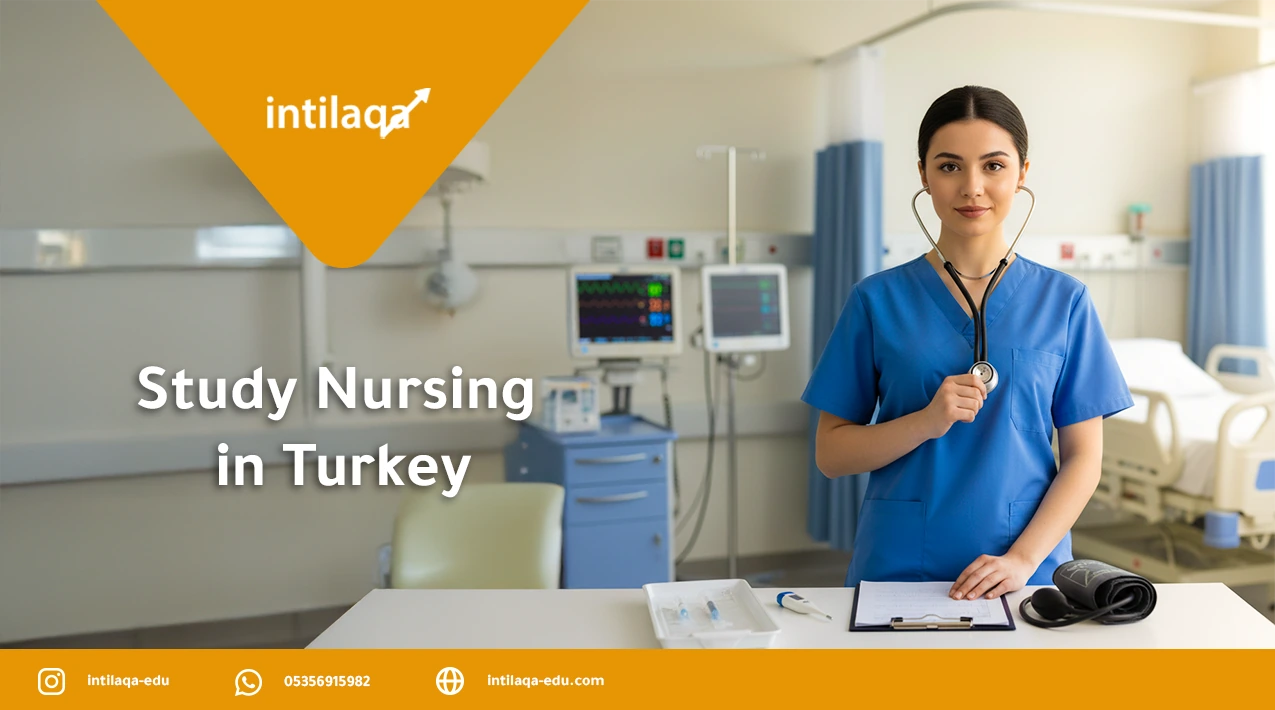
The nursing profession has transcended the traditional concept of assistance to become the backbone of modern healthcare, requiring an education that masterfully integrates precise scientific knowledge with high clinical skill. Hence, Turkish universities have become a globally preferred destination for studying this vital field.
Your decision to Study Nursing in Turkey grants you a unique opportunity to learn and train in advanced medical environments and internationally accredited hospitals. In this article, we provide a comprehensive guide covering everything you need to know—from courses and costs to the best universities and admission requirements—to confidently take your first steps toward a promising career.
What is the Nursing Major?
Nursing is a noble humanitarian profession and a precise scientific discipline that serves as an essential and complementary partner to Medicine. It aims to protect and promote individual health by providing healthcare and psychological support to patients through various stages of treatment. When choosing to Study Nursing in Turkey, the student embarks on an intensive academic and practical journey, qualifying them to become an integral part of the medical system.
This major focuses on preparing competent nurses capable of handling emergency and chronic cases. The key aspects of student training and future responsibilities include:
Direct Clinical Care:
Learning how to accurately monitor a patient’s health status, measure vital signs, and administer medications and treatments according to doctors’ instructions.
Psychosocial Support:
Acquiring effective communication skills to provide moral support to patients and their families, and educating them on disease management and prevention.
Healthcare Management:
Training in coordinating work among different medical team members to ensure the treatment plan proceeds smoothly and systematically.
Emergency Response:
Developing the ability to act swiftly and decisively in critical situations and provide life-saving first aid.
Handling Medical Technology:
Training in the use of modern medical equipment and health information systems utilized in advanced hospitals.
Advantages of Studying Nursing in Turkey
Turkish universities have become a primary destination for students wishing to enter the medical field, thanks to the comprehensive educational environment they provide, combining theory and practice. Choosing to Study Nursing in Turkey guarantees high-quality education matching global standards. The most prominent advantages include:
Advanced Medical Infrastructure:
Turkish universities boast massive university hospitals and Simulation Labs equipped with the latest technologies, allowing students to train in a realistic environment before dealing with actual patients.
Quality of Education and International Recognition:
Turkish universities follow European educational standards (Bologna Process), meaning the degree is recognized in the European Union, many Arab countries, and globally. Some universities also grant the “Blue Diploma.”
Intensive Practical Training:
Education is not limited to classrooms. There is a heavy focus on clinical practice in hospitals from the early years of study to ensure graduates possess high practical experience.
Studying in English:
Most Turkish universities (especially private ones) offer nursing programs taught entirely in English, removing the language barrier for international students.
Affordable Tuition and Living Costs:
Compared to Europe and the United States, the tuition fees to Study Nursing in Turkey and living expenses are very reasonable given the quality of education provided.
Student Exchange Opportunities:
Turkish universities open global horizons for nursing students. If a student excels and meets academic conditions, they have a golden opportunity to participate in exchange programs (like Erasmus), enabling them to study or train at prestigious European universities and hospitals for a semester or more.
Nursing Major Courses in Turkey
During the Bachelor’s phase, basic medical sciences are meticulously integrated with practical nursing practices. The curriculum relied upon by the Nursing Major in Turkey is comprehensive, covering all health aspects. While course names may vary slightly across universities, the core subjects remain consistent and include:
1. Basic Medical Sciences (First and Second Year):
This is the foundation upon which the student builds their knowledge of the human body and its functions, including:
- Anatomy.
- Physiology.
- Microbiology.
- Biochemistry.
- Pharmacology.
- Pathology.
2. Specialized Nursing Courses (Second to Fourth Year):
These courses delve into clinical work and focus on caring for specific patient groups:
- Fundamentals of Nursing.
- Internal Medicine Nursing.
- Surgical Nursing.
- Obstetrics and Gynecology Nursing.
- Pediatric Nursing.
- Psychiatric Nursing.
3. Public Health and Management Courses (Third and Fourth Year):
This stage focuses on the community and leadership role of the nurse prior to graduation:
- Public Health Nursing.
- Nursing Management.
- Nursing Ethics.
- Research Methods in Nursing.
How Many Years is the Study of Nursing in Turkey?
The official duration to Study Nursing in Turkey is 4 academic years, distributed over 8 semesters that combine theoretical education and practical application.
However, this duration may extend to 5 years if the student does not hold a language proficiency certificate (whether studying in Turkish or English). In such cases, they must complete a full “preparatory year” to learn the language before beginning their major courses.
Studying a Master’s in Nursing in Turkey
Given the high competitiveness in the healthcare sector, a Bachelor’s degree is no longer sufficient to reach the top. Deciding to pursue postgraduate studies in the Nursing Major in Turkey is the decisive step that transitions your career from routine care practice to the level of a “Specialized Expert” and decision-maker. Turkish universities offer two distinct pathways to achieve this ambition, meticulously designed to align with your future goals:
1. Master’s with Thesis (Tezli) – Academic and Research Track
This track is the golden gateway for the elite wishing to dive deep into science and those aspiring to earn a PhD and work in university academia. The focus here transcends practical application to producing new knowledge and discovering solutions to health challenges through a rigorous “scientific thesis.” Key courses distinguishing this track include:
- Research Methods in Nursing: Acquiring the tools to design scientific studies and accurately analyze their results.
- Advanced Biostatistics: The ability to read and interpret complex digital health data.
- Modern Nursing Theories: Understanding the profound philosophy upon which global care protocols are built.
- Pathophysiology: A precise analytical study of disease mechanisms and progression within the body.
2. Non-Thesis Master’s (Tezsiz) – Professional and Leadership Track
This is the ideal choice for practicing nurses aiming for rapid promotion and assuming senior management positions (such as Head of Department or Nursing Director) without lengthy involvement in theoretical research. This program focuses on honing leadership skills and solving field problems, culminating in an “Applied Project” instead of a thesis. Notable courses include:
- Health and Nursing Services Management: Learning strategies to lead medical teams and distribute resources efficiently.
- Quality of Care and Patient Safety: Applying global standards to minimize medical errors and ensure a safe environment.
- Advanced Health Assessment: Developing clinical examination and diagnostic skills beyond the level of a general nurse.
- Applied Project: Studying a real-world case from within a hospital and drafting a comprehensive development plan for it.
Studying a PhD in Nursing in Turkey
The PhD stage is the apex of the academic and professional pyramid in this field. Reaching this stage means you are no longer just a recipient of knowledge, but a researcher and producer of knowledge contributing to the global advancement of healthcare protocols. When considering studying a PhD in the Nursing Major in Turkey, you should know it is a profound research journey that typically takes 4 years, aimed at preparing high-level academic and consultative leaders.
The PhD system in Turkish universities is characterized by rigor and quality, divided into three crucial phases:
1. In-Depth Course Phase:
In the first year, the researcher studies highly advanced courses focusing not on “how to nurse” but on the “philosophy of science.” Highlights include:
- Philosophy of Science and Nursing: Analyzing the theories that form the foundation and evolution of the profession.
- Highly Advanced Biostatistics: Mastering statistical software to analyze complex research data.
- Measurement and Evaluation in Health Services: How to construct precise research tools and scientific questionnaires.
- Global Health Policies: Studying how health laws are formulated and their impact on society.
2. Comprehensive Exam (Yeterlilik Sınavı):
This is the most critical hurdle and a core differentiator in the Turkish system. After completing the courses, the student undergoes a comprehensive exam (written and oral) before a panel of professors to gauge their scientific readiness to begin writing the thesis. Passing this exam is a prerequisite to continue.
3. Research Thesis (Tez):
The fruit of years of study, where the researcher dedicates their time to preparing an original study that adds new value to the global medical library, under strict academic supervision, ending with a public defense granting them the title of “Doctor.”
Best Universities to Study Nursing in Turkey
Choosing the right university is the first and most important step in a student’s professional journey. When researching the Nursing Major in Turkey, several prestigious universities top the list, providing an educational environment that blends modernity with clinical expertise:
1. Istinye University
Istinye University is considered one of the strongest options for practical training. It was established under the umbrella of the (MLP Care) group, which owns the “Medical Park” and “Liv” hospital networks. This close association guarantees students intensive field training opportunities in a real medical environment from their early years of study.
2. Medipol University
Medipol University is distinguished by owning one of the largest educational medical complexes in Turkey (Medipol Mega), providing students with the opportunity to learn from top doctors and train on the latest medical equipment across various therapeutic specialties.
3. Bahcesehir University (BAU)
Located in the heart of Istanbul, Bahcesehir University is known for its global character and extensive international partnerships. It offers nursing programs aligned with European and American standards, with a strong focus on scientific research and providing robust student exchange opportunities with global universities.
4. Biruni University
Biruni University is known as a specialized “Health Sciences” university, dedicating all its academic resources to serving medical fields such as Pharmacy and Nursing. It houses an advanced university hospital and research labs focused on healthcare innovation.
5. Istanbul Aydin University
Istanbul Aydin University is renowned as an applied technological university, possessing a campus equipped with highly advanced Simulation Centers. These allow students to practice nursing skills with high precision before transitioning to clinical application in its affiliated hospitals.
6. Lokman Hekim University
Located in the capital, Ankara, Lokman Hekim University stands out as a university exclusively specialized in health sciences. The university is backed by the legacy of the prominent “Lokman Hekim” hospital group, granting nursing students absolute priority in field training and employment within its integrated hospital network.
Cost of Studying Nursing in Turkey
Bachelor’s Level (Annually):
Annual tuition fees at private universities typically range between $2,500 and $8,500. The final price often depends on the language of instruction (English or Turkish) and the scope of hospital partnerships the university provides for training.
Master’s Level (Full Program):
Whether you choose the academic or professional track, the total cost for a Master’s program generally falls between $3,500 and $10,000, varying based on the university’s academic standing and its accredited programs.
PhD Level (Full Program):
The average cost for the entire PhD program ranges between $4,500 and $16,000. This is an investment covering advanced academic supervision and the research resources necessary to complete the thesis.
Admission Requirements to Study Nursing in Turkey
Private Turkish universities feature a flexible and encouraging admission system. They do not impose bureaucratic obstacles on international students; instead, they focus on a passion for humanitarian fields and the desire to provide healthcare. Here are the exact admission requirements and necessary documents for each academic level when applying to Study Nursing in Turkey:
1. Bachelor’s Requirements
Admission criteria in health faculties are clear and accessible, summarized as follows:
- Academic Background: Since nursing relies on understanding biology and chemistry, the high school diploma must be in the scientific track to ensure the student can grasp basic medical subjects.
- Required GPA: Private universities offer broad opportunities; a good high school passing grade (starting from 50% or 60% and above depending on the university) is usually accepted for initial admission.
- Language Requirement: Medical professions cannot be practiced without effective communication. A language proficiency certificate must be provided, or the student must pass the university’s “exemption exam.” Otherwise, enrollment in a mandatory preparatory year is required.
- Required Documents: A copy of the passport, transcript, high school diploma (translated and notarized), and personal photos.
2. Master’s Requirements
To transition to the clinical or administrative specialization level, the following criteria must be met:
- Previous Major: Absolute priority is given to those holding a Bachelor’s degree in Nursing or directly related health sciences (like Midwifery or Paramedics in some cases).
- Cumulative GPA: The Bachelor’s graduation GPA must be academically acceptable, with a minimum of 2.00 out of 4.00 (or equivalent) for the file to be accepted.
- Proof of Language: Submitting an official document proving the student’s proficiency in the program’s language (English or Turkish) is a prerequisite for registration, or entering a language preparatory year.
- Required Documents: A copy of the passport, Bachelor’s degree certificate and transcripts (translated and notarized), language certificate, and personal photos.
3. PhD Requirements
Criteria at this stage are stringent because it aims to prepare health scientists and researchers:
- Type of Master’s: This is the core condition; universities exclusively accept students with a Master’s degree under the “Thesis” (Tezli) system as conclusive evidence of their scientific research skills.
- Academic Excellence: A high cumulative GPA in the Master’s phase (often no less than 2.50 or 3.00) is required to prove scientific merit.
- Language Requirement: Proof of proficiency in a foreign language (like English) through international tests (such as TOEFL or YDS) is often required to ensure the researcher can follow modern global medical research.
- Research Proposal: Submitting a preliminary draft explaining the health or nursing issue the student intends to study, which is the basis for the academic supervisor’s approval.
- Required Documents: A copy of the passport, Master’s degree and transcripts (translated and notarized), a copy of the previous Master’s thesis, language certificate, research proposal, and personal photos.
Is Studying Nursing in Turkey Worth the Investment?
When viewing education as an investment for the future, the direct answer is: Yes, strongly.
Choosing to study Nursing in Turkey is not just an academic decision; it is a smart strategic step for several fundamental reasons that guarantee a return on this investment:
1. Massive Demand and Job Security:
The world is currently suffering from a severe shortage of nursing staff, making graduates of this major a rare and highly demanded asset in the job market, whether inside Turkey, in the Gulf countries, or across all global health systems.
2. Degree with International Standards and Accreditations:
Turkish universities apply European quality standards and frequently grant the “Blue Diploma,” giving your degree legal strength and recognition that facilitates equivalency procedures and working abroad without complex hurdles.
3. Quality vs. Cost:
You receive medical training in hospitals that rival their American and European counterparts in terms of equipment and technology, but at a significantly lower tuition and living cost.
4. Diverse Career Paths:
Nursing is no longer confined to hospital wards alone; it opens doors to work in health administration, academic teaching, school health, and international organizations.
How Do I Study Nursing in Turkey?
To ensure an organized start free of administrative hurdles, we have laid out a clear and practical roadmap to secure your seat in the best health faculties. Follow these steps in order:
1. Choosing a University with an Integrated Medical Environment
Since nursing is a purely applied major, the top priority is choosing a university that owns advanced hospitals and Simulation Labs. Contact us to recommend universities that provide a real training environment qualifying you for efficient field work, rather than relying solely on theoretical study.
2. Preparing the File and Official Documents
Start preparing your documents early to ensure smooth procedures. You will primarily need your high school diploma (preferably the scientific track) officially translated and notarized, transcripts, a copy of a valid passport, and recent personal photos with a white background.
3. Academic Consultation (with Intilaqa)
To ensure you choose the most appropriate path, let the “Intilaqa” team handle the organizational side. We will review your academic file, recommend the university that best suits your budget and GPA, and handle all application procedures on your behalf professionally and free of charge, while working to secure the best available discounts and partial scholarships.
4. Securing Initial Registration
After submitting the application, you will receive an “Initial Acceptance” letter. Given the high demand and limited seats in medical and nursing faculties, you must transfer the first installment of the tuition fees to the official university account to secure your seat definitively, after which you will immediately receive the “Final Acceptance Document.”
5. Obtaining a Student Visa
Once you receive the final acceptance document, head directly to the Turkish embassy or consulate in your country of residence to apply for a “Student Visa.” This step is an essential legal procedure allowing you to enter and reside in Turkey legally for study purposes.
6. Arrival and Starting the Academic Journey
Welcome to Turkey! Upon your arrival, we will be waiting to guide you to the university’s student affairs office to complete the final administrative registration and receive your university ID, immediately launching your scientific journey in the world of nursing.
How Does the Intilaqa Team Help You?
The Intilaqa Educational Team works to assist you step-by-step in choosing the most appropriate major and university for you in Turkey, according to your academic interests and study budget.
We offer you a comprehensive free consultation that includes:
- Recommending the best Turkish universities that teach your major.
- Clarifying available costs and scholarships.
- Full follow-up in the registration process until final acceptance.
Whether you plan to Study Nursing in Turkey or any other major, you can start by learning about the details of Study in Turkey through our complete guide:
Study in Turkey