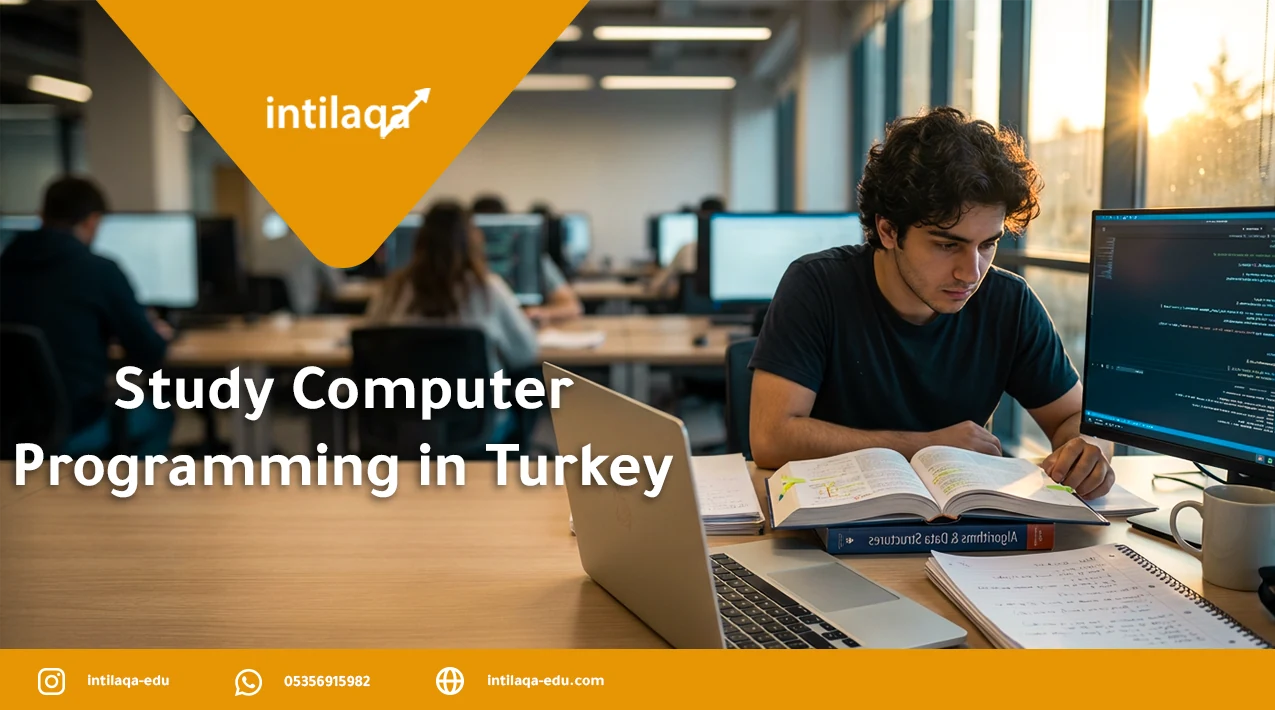
Hiring standards in the technology sector have shifted from long theoretical degrees toward direct, practical skills. From this perspective, choosing to study Computer Programming in Turkey through a two-year vocational diploma can be a practical pathway designed to move beyond complex engineering theory and focus directly on programming languages and software development skills required in the job market.
In this guide, we cover the universities and technical institutes offering strong learning environments, tuition fee structures, and the steps needed to secure your place and begin your professional path in a relatively short period.
What Is Computer Programming?
Computer Programming is an academic program taught at Turkish vocational schools (MYO) as a two-year diploma. Unlike Computer Engineering, which lasts four years, this pathway focuses intensively on applied and technical skills rather than complex engineering theory. Its goal is to prepare programmers with the practical abilities needed to enter the job market after graduation.
During the program, students learn how to build software systems from the ground up. The focus is not simply on memorizing code; students learn:
- Algorithms and Programming Logic: How to think logically, solve complex problems, and organize programming steps in a structured sequence.
- Full Software Development: Building websites through Front-end & Back-end development, as well as creating desktop and mobile applications.
- Database Management: How to design and connect SQL databases so information can be stored and retrieved efficiently and securely.
With rapid technological development, Turkish universities have also begun incorporating modern concepts into their curricula, including the fundamentals of Data Science, where students learn introductory principles for collecting, analyzing, and using data in software-related decision-making.
As a result, studying Computer Programming in Turkey can prepare you directly for technical work by providing practical tools and programming languages that enable you to build applications and systems and contribute effectively to technology projects.
Why Study Computer Programming in Turkey?
Turkey has a strong technical infrastructure across many of its universities, making the decision to study Computer Programming in Turkey an option that combines practical technical education with academic flexibility. Key advantages include:
Modern Technology Environment (Technoparks):
Many established Turkish universities operate technology zones known as Technoparks or Teknokent. These areas host numerous software startups and technology companies, helping diploma students find real internship opportunities and gain direct exposure to the job market while studying.
Opportunity to Continue into Engineering (Subject to Requirements):
The Turkish education system provides a pathway known as the Vertical Transfer Exam (DGS). This system can allow diploma graduates to continue toward a bachelor’s degree in Computer Engineering or Software Engineering, with approximately two additional years of study.
However, it is important to note: This pathway is not automatic for every graduate. Students must pass the competitive DGS exam and achieve a strong score, making it an option for high-performing students who want to advance their academic qualifications.
Advanced Computer Laboratories:
Because the program is strongly application-based, universities provide computer laboratories equipped with modern hardware and software and may give students the licenses needed to use international development tools for their academic projects.
Market-Oriented Curricula:
Curricula at Turkish vocational schools are regularly updated to include programming languages and technologies that are in demand among employers, such as mobile application development and modern web technologies, with the aim of preparing technically skilled graduates for employment.
Affordable Cost:
Tuition fees for Computer Programming diploma programs at private Turkish universities are relatively affordable compared with the cost of engineering degrees, making this pathway a lower-cost entry point into the technology field.
Computer Programming Diploma Courses in Turkey
When you enroll in a Computer Programming diploma at a Turkish university, the curriculum is designed to be highly practical. Intensive theoretical subjects typically associated with engineering degrees are reduced in favor of programming languages and direct applications.
The main courses you can expect during the two years include:
Programming Fundamentals and Algorithms:
These are the foundations of programming, teaching logical thinking, flowchart design, and basic coding in languages such as C or Python.
Web Programming – I & II:
One of the key subjects, typically divided into two areas:
- Front-end: Learning HTML, CSS, and JavaScript to build and design website interfaces.
- Back-end: Learning languages and technologies such as PHP or ASP.NET for server-side development.
Database Management:
A core subject covering SQL, table design, and how databases are connected to applications to store and retrieve information efficiently.
Object-Oriented Programming (OOP):
An advanced programming concept widely used to build modern systems, often taught using powerful languages such as Java or C#.
Mobile Programming:
A practical course aligned with current market needs, focusing on the fundamentals of building Android applications and, in some cases, iOS applications.
Graphics and Animation:
Students learn the fundamentals of Graphic Design and tools such as Photoshop, as programmers benefit from understanding how to work with images and graphical interfaces.
How Long Does It Take to Study Computer Programming in Turkey?
The official duration of the Computer Programming program at Turkish vocational schools is two academic years (4 semesters). The total duration may become three years if the student needs to complete a language preparatory year. The program also includes a compulsory summer internship (Staj) at a technology company to support practical job readiness.
Best Universities to Study Computer Programming in Turkey
When choosing where to study this technical program, it is important to focus on universities with strong technology infrastructure and modern computer laboratories. Below are some of the notable Turkish universities offering Computer Programming diploma programs:
OSTIM Technical University:
OSTIM Technical University is located in the heart of Ankara’s industrial district and is described as Turkey’s first industrial university. Its professional education model integrates students with the job market and real technology projects from the beginning of their studies.
Istanbul Topkapi University:
Istanbul Topkapi University has expanded its vocational programs (MYO) and places strong emphasis on intensive practical training designed to prepare technically skilled graduates for the job market, alongside its location in Istanbul.
Istanbul Aydin University:
Istanbul Aydin University is known for its technology-oriented educational environment and operates a major Technopark, giving programming students opportunities to train and interact with technology companies.
Nisantasi University:
Nisantasi University is known for its NeoTech smart campus, provides advanced computer laboratories, and places strong emphasis on applied digital learning.
Istanbul Gelisim University:
Istanbul Gelisim University is described as one of the Turkish universities with a large number of internationally accredited programs, including ABET-accredited engineering programs, and offers strong programs in information technology and computer-related fields with attention to curriculum quality and continuous development.
Istinye University:
Although widely known for its medical programs, Istinye University also has growing engineering and technology faculties and provides a learning environment influenced by artificial intelligence and modern technologies.
Istanbul Medipol University:
Istanbul Medipol University has strong infrastructure and modern laboratories and provides technical education alongside its well-established medical and health programs.
Cost to Study Computer Programming in Turkey
A Computer Programming diploma in Turkey is relatively economical compared with studying Computer Engineering, providing intensive technical education at a more accessible cost. In general, annual tuition fees range between $1,450 and $5,000.
Below is the stated tuition fee list for the selected universities:
| University | Language of Instruction | Annual Tuition Fee |
|---|---|---|
| Istanbul Topkapi University | Turkish | 1,450$ |
| Nisantasi University | Turkish | 1,950$ |
| Istanbul Okan University | Turkish | 2,250$ |
| OSTIM Technical University | Turkish | 2,700$ |
| Istanbul Gelisim University | Turkish | 2,750$ |
| Istanbul Gelisim University | English | 3,000$ |
| Istanbul Aydin University | Turkish / English | 3,000$ |
| Istanbul Medipol University | Turkish | 3,500$ |
| Istanbul Medipol University | English | 4,000$ |
| Istinye University | Turkish | 5,000$ |
Requirements to Study Computer Programming in Turkey
Private Turkish universities generally provide a flexible admission process for international students applying to Computer Programming diploma programs. The stated basic requirements are:
1. High School Diploma:
The main requirement is a high school diploma from any track, including science, humanities, or vocational education. At private universities, an average of 50% or above is generally sufficient.
2. No Admission Tests Required (YOS/SAT):
Unlike public universities, the private universities mentioned above, including Aydin, Nisantasi, and Gelisim, do not require YOS or SAT scores. Admission is based primarily on the high school diploma.
3. Language Requirement:
- For Programs Taught in Turkish: A TOMER certificate is preferred. If you do not have one, you can take the university’s language placement exam.
- For Programs Taught in English: A TOEFL certificate is preferred, or students can take the university’s Exemption Exam.
Note: If the student does not pass the language exam, they complete a one-year preparatory program (Hazirlik) before beginning the Computer Programming program.
4. Official Registration Documents
- A valid passport.
- High school diploma, translated and certified.
- Academic transcript, translated and certified.
- A personal photo with a white background.
Career Prospects for Computer Programming Graduates
Computer Programming is positioned as a practical pathway into today’s technology job market, as organizations across healthcare, education, commerce, and industry rely on programmers and computer technicians to operate and maintain their systems.
After earning a Computer Programming diploma in Turkey, graduates can pursue several career paths, including:
Web Developer:
Working as a Front-end, Back-end, or Full Stack developer for software companies, digital businesses, or marketing agencies.
Mobile Application Developer: Building and updating Android and iOS applications for startups and larger organizations.
IT Support Technician:
Working in banks, hospitals, schools, and other organizations to solve technical problems and maintain systems and networks.
Database Management and Development:
Working with organizations that manage large volumes of data in roles related to Data Entry & Database Administration to support secure and efficient access to information.
Freelance Work:
One of the major advantages of this field is the possibility of working remotely with clients in different countries, providing greater flexibility in location and working hours.
In short, graduates with strong practical programming skills can compete for a wide range of technology roles and projects after completing their studies.
How to Study Computer Programming in Turkey?
To secure your place and begin your plan to study Computer Programming in Turkey in an organized way, follow these steps:
1. Choose the Right Technical University
The first step is to choose a university with strong computer laboratories and technical infrastructure. Because options and tuition fees vary, the Intilaqa team can help you compare suitable technology-focused universities based on your goals and budget. Applying early can also help when program seats are limited.
2. Prepare the Required Documents
Prepare your application file early. The main documents are your high school diploma and academic transcript, translated and certified, along with a copy of a valid passport.
3. Apply for Free Through Intilaqa
Instead of managing the application process alone, the Intilaqa team can submit your file to the university officially and free of charge and help you access available tuition discounts.
4. Pay the Fees and Confirm Your Seat
Once the preliminary acceptance letter is issued, you need to transfer the first tuition payment directly to the university’s bank account. This step is required to confirm final admission and secure your seat before the available places for international students are filled.
5. Apply for a Student Visa
After receiving the final acceptance document, apply for a student visa through the Turkish embassy or consulate in your country. This visa allows you to enter Turkey for study purposes.
6. Arrive and Complete Final Registration
After arriving in Turkey, the Intilaqa team can assist you with completing university registration procedures and obtaining your student ID so you can begin your studies.
How Can the Intilaqa Team Help You?
The Intilaqa Education team supports you step by step in choosing the program and university in Turkey that best match your academic interests and study budget.
We provide a comprehensive free consultation that includes:
- Recommending suitable Turkish universities that offer your chosen program.
- Explaining tuition fees and available scholarship opportunities.
- Providing full support throughout the application process until final admission.
Whether you plan to study Computer Programming in Turkey or pursue another program, you can learn more about studying in Turkey through our complete guide:
Study in Turkey]