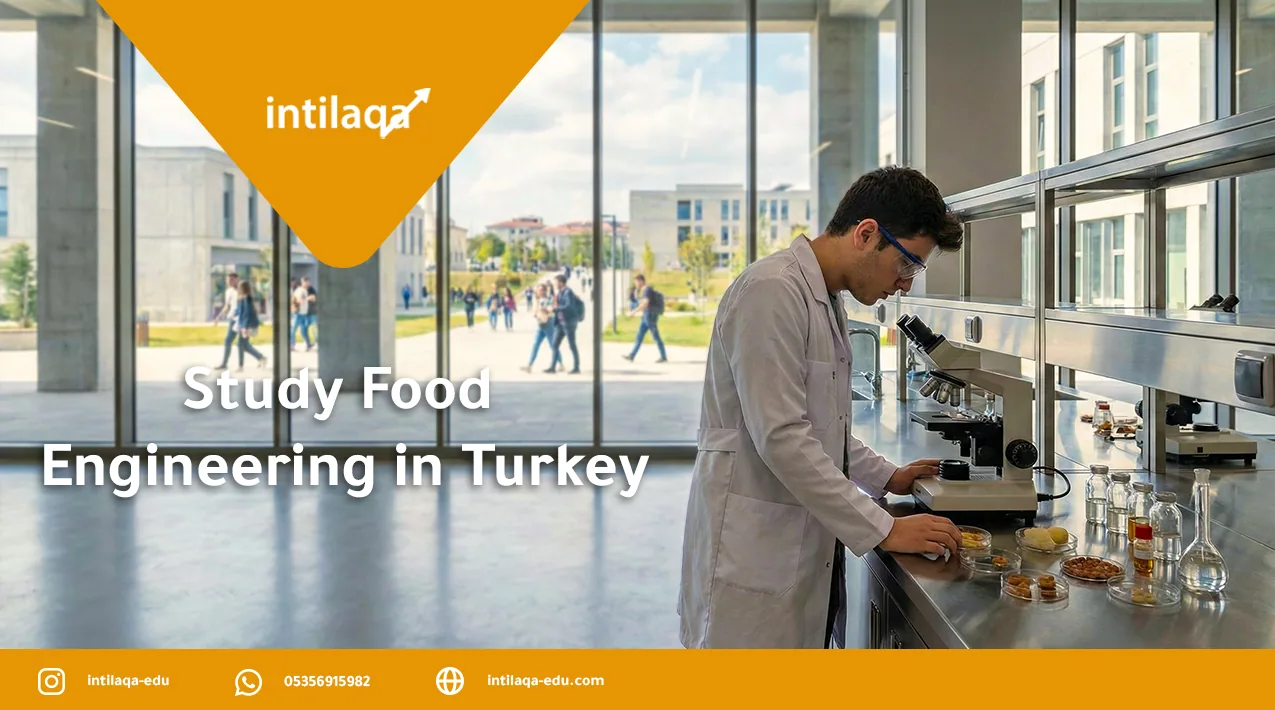
In an era when food is no longer simply a commodity but a matter of national security, the need for engineers capable of developing sustainable food-processing solutions continues to grow. Choosing to study Food Engineering in Turkey provides access to this rapidly developing field, as Turkey combines academic education with a large food and agricultural industry that offers strong opportunities for practical application.
In this comprehensive guide from Intilaqa, you will find everything you need to know about admission requirements, top universities, tuition fees, study duration, courses, and career opportunities in Food Engineering.
What Is Food Engineering?
Food Engineering is an interdisciplinary Engineering field that combines Food Science with Engineering and technological applications. It prepares engineers to manage and develop every stage of food processing, from receiving raw materials to delivering the final product to consumers while maintaining high standards of quality and safety.
When you study Food Engineering in Turkey, you learn how physical, chemical, and biological processes affect food. The field is built around several major areas:
Combining Engineering and Biological Sciences:
Food Engineering connects Chemical Engineering, Microbiology, Biochemistry, and other scientific disciplines to develop safe and nutritious food products.
Designing and Developing Production Lines:
The role of a Food Engineer is not limited to food inspection. It also includes designing machinery and equipment used in food factories to improve production efficiency and reduce waste.
Food Safety:
The field places strong emphasis on sterilization, preservation, and packaging technologies designed to prevent food spoilage and protect consumers from foodborne diseases.
Research and Development (R&D):
Food Engineers contribute to the development of new products and the improvement of existing products, including gluten-free foods, vitamin-fortified products, and other solutions designed to meet changing market needs.
In short, Food Engineering is responsible for transforming agricultural raw materials into ready-to-consume food products through safe, economical, and sustainable processes.
Why Study Food Engineering in Turkey?
Turkey has a strong food and agricultural industry, making the decision to study Food Engineering in Turkey attractive for international students. Turkish universities combine theoretical Engineering education with laboratory work and industrial applications.
High-Quality Education and International Accreditation:
Turkish universities follow the European Bologna Process, and several Engineering programs hold MUDEK accreditation, supporting academic quality and the international comparability of Engineering qualifications.
Advanced Infrastructure and Laboratories:
Universities provide Food Science and Engineering laboratories equipped with technologies used for food analysis, giving students opportunities to perform practical experiments and participate in scientific research during their studies.
Strong Practical Training:
Turkey’s large food industry provides students with internship opportunities in food factories, beverage companies, and other local and international manufacturers operating in Istanbul and major industrial cities.
English-Taught Programs:
Several Turkish universities offer Food Engineering programs in English, allowing international students to study the field without relying entirely on Turkish as the language of instruction.
Affordable Tuition and Living Costs:
Compared with many universities in Europe and the United States, tuition and living costs in Turkey can be relatively affordable while students still have access to modern Engineering facilities.
Student Exchange Opportunities (Erasmus):
Many Turkish universities maintain exchange agreements with European institutions, allowing qualified Food Engineering students to spend a semester or academic year abroad through programs such as Erasmus.
Food Engineering Courses in Turkey
The curriculum for students who study Food Engineering in Turkey progresses from fundamental Sciences and Mathematics toward advanced Engineering applications and food-processing technologies. Course titles may vary slightly between universities, but the curriculum is generally structured as follows:
1. First Year: Scientific Foundations
The first year focuses on building a strong foundation in Mathematics and Natural Sciences.
- Mathematics and Calculus: Developing the mathematical skills required for advanced Engineering calculations.
- Physics and General Chemistry: Understanding the scientific principles behind material behavior and reactions.
- Introduction to Food Engineering: Learning the basic principles of the field and professional ethics.
- Computer-Aided Technical Drawing: Learning how to read and prepare Engineering drawings and technical plans.
2. Second Year: Engineering Fundamentals
Students begin studying more advanced Engineering and Chemical Sciences.
- Organic and Analytical Chemistry: Understanding the chemical composition of food and methods used for laboratory analysis.
- Thermodynamics: Studying energy and heat transfer, which are essential for cooking, sterilization, refrigeration, and other industrial processes.
- Fluid Mechanics: Studying the behavior of liquids such as milk and juice and how they move through pipes and processing systems.
- Material and Energy Balances: Calculating the quantities of materials and energy entering and leaving production processes.
3. Third Year: Specialized Food Engineering
The third year is one of the most intensive stages of the program, as students begin studying Food Science and its Engineering applications in greater depth.
- Food Chemistry: Studying proteins, carbohydrates, fats, vitamins, and the changes they undergo during processing.
- Food Microbiology: Studying beneficial microorganisms such as yeast as well as harmful bacteria and fungi that may cause food poisoning.
- Heat and Mass Transfer: Understanding heating, evaporation, drying, and other industrial transfer processes.
- Unit Operations in Food Engineering: Studying industrial processes such as grinding, mixing, separation, and filtration.
4. Fourth Year: Technology and Practical Application
The final year focuses on technologies used in specific food sectors and on applying Engineering knowledge through practical projects.
- Dairy, Meat, and Grain Technology: Specialized processing technologies for different food sectors.
- Quality Control: Studying ISO standards and food-safety systems such as HACCP.
- Food Factory Design: Learning how to plan production facilities and arrange machinery efficiently and safely.
- Graduation Project: Applying Engineering knowledge to solve an industrial problem or develop a new food product.
How Long Does It Take to Study Food Engineering in Turkey?
The standard duration to study Food Engineering in Turkey is four academic years, divided into eight semesters.
The total duration may extend to five years if the student does not meet the required Turkish or English language proficiency and needs to complete a preparatory language year before beginning the main academic program.
Master’s Degree in Food Engineering in Turkey
A Master’s degree allows Food Engineers to move beyond standard production supervision toward advanced Research and Development, technical analysis, and quality management. Students pursuing a Master’s degree in Food Engineering in Turkey generally have two main options:
1. Thesis Master’s (Tezli Yuksek Lisans):
This track is designed primarily for engineers planning to pursue academic careers, work in advanced research centers, or continue toward a Ph.D. The program normally takes two academic years and focuses on scientific research and laboratory experimentation.
Courses may include:
- Experimental Design and Data Analysis: Learning how to build statistical experimental models for product and process improvement.
- Advanced Food Chemistry and Technology: Studying molecular interactions within food systems in greater depth.
- Food Biotechnology: Using enzymes and microorganisms in food production.
- Research Thesis: Conducting original scientific research related to an industrial problem, food-processing technology, or preservation method and defending the work before an academic committee.
2. Non-Thesis Master’s (Tezsiz Yuksek Lisans):
This professionally oriented track is designed for practicing engineers working in factories and companies who want to improve their technical and management skills without following a long academic research pathway.
The program generally takes three semesters, or approximately one and a half years, and focuses on practical industrial applications such as:
- Food Safety and Quality Systems Management: Advanced study of ISO 22000 and HACCP systems.
- Industrial Process Engineering: Improving production-line efficiency and reducing energy consumption.
- Food Supply Chain Management: Transportation, storage, and logistics strategies for sensitive food materials.
- Applied Graduation Project: Preparing a practical study designed to solve a real problem in a food factory or develop a production plan for a food company.
Main Master’s Research Areas and Specializations:
Turkish universities provide opportunities to specialize in advanced fields related to modern food technologies, including:
- Food Biotechnology: Developing functional foods, fortified products, yeasts, and bacterial starter cultures.
- Food Packaging and Preservation Technology: Studying smart packaging materials designed to extend shelf life and protect food from deterioration.
- New Product Development (NPD): Developing healthier food products such as plant-based alternatives and gluten-free foods.
- Food Safety and Toxicology: Analyzing microbiological and chemical risks and developing methods for detecting potential hazards.
Ph.D. in Food Engineering in Turkey
A Ph.D. represents the highest academic level in Food Engineering. It is designed to prepare researchers capable of producing original scientific knowledge, developing new industrial technologies, and creating solutions to complex global food challenges.
The program generally takes 4 years and includes three major stages:
1. Advanced Scientific Coursework:
The first year focuses on strengthening the student’s research and scientific foundation through advanced subjects that examine the deeper principles behind industrial food processes.
- Food Process Modeling and Simulation.
- Advanced Instrumental Analysis and Engineering Statistics.
- Food Physics and Material Properties.
2. Comprehensive Qualifying Exam:
After completing the required coursework, students take the comprehensive qualification examination known as Yeterlilik. The examination generally includes written and oral components before an academic committee and evaluates whether the student has developed the scientific maturity required to formulate hypotheses, defend research ideas, and begin independent doctoral work.
3. Dissertation and Research Phase:
During this stage, doctoral students spend several years conducting laboratory research and preparing a dissertation that must provide an original scientific contribution.
Research areas may include:
- Nanotechnology applications for improving food quality and safety.
- Sustainability strategies and efficient use of agricultural waste.
- Modern preservation technologies such as high-pressure processing and electric-field applications as alternatives to conventional heat treatment.
- Engineering enzymes and microorganisms for the development of innovative healthier foods.
Best Universities to Study Food Engineering in Turkey
Turkish universities provide modern infrastructure that supports Food Engineering education and industrial applications. Students planning to study Food Engineering in Turkey can consider universities that combine academic education with laboratory research and practical training.
1. Istanbul Aydin University
Istanbul Aydin University provides a technology-oriented academic environment with a strong emphasis on practical education. Its Food Engineering program holds MUDEK accreditation and provides students with access to food-analysis laboratories and industry partnerships that support practical training.
2. Istanbul Sabahattin Zaim University
Istanbul Sabahattin Zaim University provides a strong research environment and hosts a specialized center focused on Halal Food Research. The university also provides modern laboratory infrastructure and an academic environment suitable for students interested in advanced research, food quality, and Research and Development.
Cost to Study Food Engineering in Turkey
The cost to study Food Engineering in Turkey at private universities can be relatively competitive compared with similar Engineering programs in Europe or the United States. Tuition varies according to the university, language of instruction, and available laboratory and industrial facilities.
Bachelor’s Degree: Annual Tuition Fees
Annual bachelor’s tuition fees generally range between 3,500$ and 6,000$. English-taught programs may have higher tuition fees, while costs may also vary according to the university’s academic reputation and the quality of its laboratories and industrial facilities.
Master’s Degree: Total Program Cost
The average total tuition cost for a complete Master’s program is approximately 8,000$, whether the student follows a thesis-based research track or an applied professional track.
Ph.D. Degree: Total Program Cost
The average total tuition cost of a Ph.D. program lasting approximately four years is around 12,000$.
Requirements to Study Food Engineering in Turkey
Private Turkish universities generally provide relatively flexible admission procedures for international students who want to study Food Engineering in Turkey. Requirements vary according to the academic level.
1. Bachelor’s Degree Requirements
- High School Background: Applicants should generally hold a high school diploma from the Science or Technical track because Food Engineering relies heavily on Mathematics, Chemistry, Physics, and other Scientific subjects.
- Academic Average: A high school average of approximately 50% to 60% is generally sufficient for admission to many private universities.
- Language Requirement: Students holding an accepted language proficiency certificate may begin their academic program directly. Applicants without one may take the university’s internal language examination and complete a preparatory year if they do not meet the required level.
- Required Documents: Valid passport copy, high school diploma and academic transcript translated and certified when required, and a recent personal photo.
2. Master’s Degree Requirements
- Academic Background: Applicants should hold a bachelor’s degree in a closely related scientific or Engineering field such as Food Engineering, Chemical Engineering, Nutrition and Food Science, or Biochemistry.
- Bachelor’s GPA: A GPA of approximately 2.00 out of 4.00 is generally sufficient for postgraduate application at many private universities.
- Language Requirement: Some universities allow students to take an internal language proficiency examination instead of requiring an international language certificate before admission.
- Required Documents: Passport copy, bachelor’s diploma and university transcript translated and certified when required, and a personal photo.
3. Ph.D. Requirements
- Master’s Degree Type: Applicants must hold a thesis-based Master’s degree (Tezli). Professional non-thesis Master’s programs do not qualify graduates for direct doctoral study in Engineering fields.
- Master’s GPA: A relatively strong Master’s GPA of approximately 3.00 out of 4.00 may be required.
- Foreign Language Requirement: Applicants generally need a minimum YDS score of 55 or an accepted internationally recognized equivalent.
- Required Documents: Valid passport copy, bachelor’s and Master’s diplomas and transcripts translated and certified when required, official language examination result, preliminary Research Proposal, and academic recommendation letters.
Career Opportunities for Food Engineering Graduates
Food Engineering is closely connected to food security, industrial production, quality assurance, and sustainable food systems. Graduates who study Food Engineering in Turkey can pursue careers across several sectors.
1. Food Manufacturing and Production
Food Engineers can supervise production lines from the arrival of raw materials through processing and final packaging. They may work in dairy, beverage, meat, bakery, and other food factories to improve production efficiency and reduce industrial waste.
2. Quality Assurance and Quality Control
Food Engineers can work in Quality Assurance and Quality Control to ensure products comply with health and industrial standards. Responsibilities may include laboratory testing for microbiological or chemical contamination and monitoring compliance with sterilization and food-safety procedures.
3. Research and Development (R&D)
Graduates interested in innovation can work on developing new products, creating new flavors, improving nutritional value, producing gluten-free or sugar-free alternatives, and developing safe technologies that extend product shelf life.
4. Government and Regulatory Authorities
Food Engineers may work with government institutions, health authorities, and food-control organizations responsible for market safety. Their work may include inspecting food facilities, evaluating imported and exported food shipments, and checking compliance with applicable safety regulations.
5. Technical Sales and Marketing
This career path combines scientific knowledge with commercial skills. Food Engineers may work as technical representatives for companies supplying production lines, raw materials, food additives, or processing technologies, explaining complex technical features to factories and industrial clients.
How to Study Food Engineering in Turkey?
To begin your journey to study Food Engineering in Turkey in an organized way, you can follow these steps:
1. Choose the Right University
The first step is selecting a university that provides the technical environment, laboratories, and academic program that match your professional goals and study budget. The Intilaqa team can help you compare available universities and identify suitable options.
2. Prepare Your Official Documents
Prepare your documents early to avoid unnecessary delays. Your application file generally includes your high school diploma and academic transcript translated and certified when required, along with a valid passport copy and recent personal photo.
3. Apply Through Intilaqa
Instead of managing individual applications alone, the Intilaqa team can review your academic profile, recommend suitable Food Engineering programs, and handle your university application free of charge while helping you access available partial scholarships and tuition discounts.
4. Secure Your University Seat
After receiving preliminary acceptance, you generally need to transfer the required first tuition installment directly to the university’s official bank account. This step secures your seat and allows the university to issue the final acceptance document.
5. Apply for a Student Visa
After receiving final acceptance, students who require a visa can apply through the Turkish embassy or consulate responsible for their country or place of residence.
6. Complete Final Registration and Begin Your Studies
After arriving in Turkey, complete final university registration by submitting the required original documents to the Student Affairs Office. The Intilaqa team can support you through the final registration process until you receive your student card and officially begin your studies.
How Can the Intilaqa Team Help You?
The Intilaqa Education team supports you step by step in choosing the program and university in Turkey that best match your academic interests and study budget.
We provide a comprehensive free consultation that includes:
- Recommending suitable Turkish universities that offer your chosen program.
- Explaining tuition fees and available scholarship opportunities.
- Providing full support throughout the application process until final admission.
Whether you plan to study Food Engineering in Turkey or pursue another program, you can learn more about studying in Turkey through our complete guide: