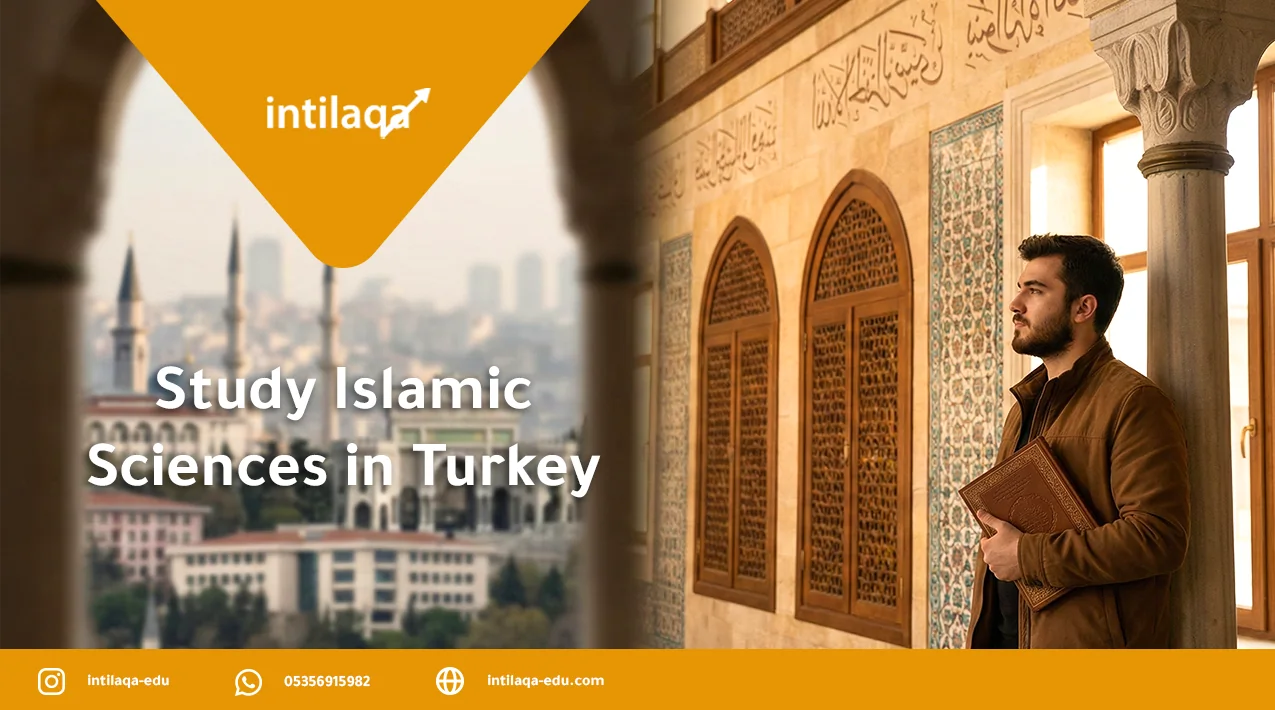
Turkey is a unique civilizational bridge connecting the richness of Islamic heritage with modern academic research methods, making Study Islamic Sciences in Turkey an attractive option for students seeking both academic and spiritual development. At Turkish universities, students do not simply study Islamic sciences; they experience an integrated academic environment that combines the study of classical texts with an understanding of contemporary issues, benefiting from a rich historical setting and libraries containing rare manuscripts.
What Is Islamic Studies?
Islamic Studies is a comprehensive field of knowledge designed to develop an academically aware and analytical mindset. It goes beyond memorizing religious texts and encourages students to analyze them critically and connect the Islamic heritage with the needs and challenges of the modern world.
Study Islamic Sciences in Turkey combines spirituality with academic research, helping students move from traditional learning toward analytical interpretation, reasoning, and independent research.
In general, the academic path is built around several key areas designed to develop the student’s intellectual and academic abilities:
Understanding Islamic Legal Methodology:
Students learn how legal rulings and regulations developed within Islamic civilization and how logical reasoning and methodological tools can be used to address contemporary issues rather than simply memorizing historical religious rulings.
Linguistic and Textual Analysis:
The program emphasizes strong linguistic skills that allow students to study classical texts in depth and analyze them accurately to understand the meanings and objectives behind the words.
Historical and Civilizational Awareness:
Students study historical developments and how Islamic societies emerged and evolved, allowing them to understand the social and political contexts that influenced religious thought throughout history.
Critical and Moderate Thought:
The program aims to develop students’ ability to engage in constructive criticism, distinguish between authentic and weak information, and reject extremism through an understanding of Islamic principles centered on tolerance and moderation.
Connecting Religion With Contemporary Life:
Students are trained to apply ethical and religious principles to contemporary daily life, allowing them to contribute positively to their communities and provide thoughtful responses to modern questions.
Why Study Islamic Sciences in Turkey?
Study Islamic Sciences in Turkey has a distinctive position because it combines academic education with an environment that preserves centuries of Islamic and cultural heritage. This provides students with opportunities that may not be available in many other countries.
1. Combining Tradition and Modernity:
Faculties of Theology and Islamic Studies at Turkish universities combine the teaching of classical Islamic heritage with modern academic research methods, helping students develop an open and analytical academic mindset.
2. Studying in Arabic:
Many Turkish public and private universities offer Islamic Studies programs taught entirely in Arabic or with 30% Arabic instruction. This makes it easier for Arab students to adapt while also giving international students an opportunity to develop their understanding of the language of the Quran.
3. Access to Sources and Manuscripts:
Turkey is home to an extensive collection of Islamic heritage. Students can access major libraries and rare Ottoman manuscripts, opening broad opportunities for academic research and the study of primary historical sources.
4. International and European Recognition:
Turkish universities are part of the European higher education system through the Bologna Process, supporting the international recognition of their degrees and providing students with opportunities to continue postgraduate studies at universities in Europe and the United States.
5. Moderate Academic Environment:
Turkish society and its academic environment are characterized in the program by an emphasis on moderate Islamic thought, providing students with an environment for discussion, dialogue, and academic exchange.
6. Affordable Tuition and Living Costs:
Compared with many European countries and some Arab countries, university tuition and living costs in Turkey are relatively affordable for a wide range of students. Government and private student housing options are also available at supported prices.
Islamic Sciences Courses in Turkey
The curriculum for studying Islamic Sciences in Turkey generally follows a progressive and cumulative system. Students build their knowledge step by step, as advanced subjects depend on a strong understanding of the foundational subjects taught during the early years. The general structure commonly found in Faculties of Theology and Islamic Sciences is as follows:
First Year: Foundations and Arabic Language
The first year focuses on developing the student’s Arabic language foundation and introducing the main Islamic disciplines:
- Quran (1): Recitation, Tajweed, and memorization of selected portions.
- Arabic Language (Grammar and Morphology): Intensive study to understand classical Islamic texts.
- Introduction to Islamic Jurisprudence: An introduction to the major schools of Islamic jurisprudence and their development.
- History of Hadith: The compilation of Hadith and its main sources.
- Prophetic Biography (Seerah): Studying the Meccan and Medinan periods.
- Introduction to Islamic Creed.
- Ottoman Turkish: A distinctive subject in Turkey that helps students read historical archives and manuscripts.
Second Year: Methodology and Foundations
Students move from introductory subjects toward the principles and methodologies used to understand Islamic rulings:
- Principles of Islamic Jurisprudence (Usul al-Fiqh): The principles used to derive Islamic rulings.
- Hadith Sciences: Hadith terminology, authentication, and evaluation.
- History of Quranic Interpretation and Methods of Exegesis.
- Islamic Theology (Ilm al-Kalam): Discussing questions of faith through reason and transmitted sources.
- Logic: Developing tools for sound and structured reasoning.
- Religious Psychology.
- Quran (2): Continuing Quran memorization and recitation.
Third Year: Expansion and Rational Sciences
Students begin integrating Islamic sciences with Humanities and Philosophy while expanding their research skills:
- Quranic Text Interpretation: Practical application of Quranic interpretation methods.
- Hadith Texts: Reading and analyzing Hadith from the six major Hadith collections.
- Islamic Philosophy: Studying Peripatetic philosophers, the Mu’tazila, and later Islamic philosophers.
- Religious Sociology: Studying religious phenomena within society.
- History of Islamic Schools of Thought.
- History of Religions: Studying Judaism, Christianity, and religions of the Far East.
- Islamic Arts: Including calligraphy, illumination, and architecture.
Fourth Year: Application and Contemporary Issues
The final year focuses on applying the knowledge students have gained to contemporary issues and academic research:
- Contemporary Islamic Jurisprudential Issues: Such as modern financial transactions and medical issues.
- Sufism: Its history and terminology.
- Philosophy of Religion.
- Teaching Methods and Religious Education: Preparing students for educational careers.
- Graduation Project: A structured academic research project.
- Elective Courses: Such as Inheritance Jurisprudence, Islamic Economics, or Eastern languages such as Persian.
Note: Course titles may vary slightly from one university to another, but the overall structure remains generally similar across many Turkish universities.
How Long Does It Take to Study Islamic Sciences in Turkey?
The standard duration for a Bachelor’s degree when you Study Islamic Sciences in Turkey is 4 academic years. However, the total duration may extend to 5 years if the student needs to complete a preparatory year to learn the language of instruction, whether Arabic or Turkish.
Students who already have the required language proficiency may take the university’s exemption examination and begin their main academic courses directly without an additional preparatory year.
Master’s Degree in Islamic Sciences in Turkey
Postgraduate study is an advanced stage for students who want to move from general knowledge toward specialized academic research. Studying Islamic Sciences in Turkey at the Master’s level provides access to a research environment supported by large collections of manuscripts and academic references available in Turkish libraries.
Master’s programs in Turkish universities generally follow two main tracks:
1. Thesis Master’s (Tezli):
This is the academic pathway preferred by students who plan to continue toward a Ph.D. or pursue academic careers.
- Duration: Two academic years, or 4 semesters.
- Structure: The first year focuses on advanced courses and Research Methodology, while the second year is dedicated mainly to preparing, writing, and defending the Master’s thesis.
2. Non-Thesis Master’s (Tezsiz):
This pathway focuses more on academic knowledge and professional development than on intensive research.
- Duration: Usually one year to one and a half years, or 3 semesters.
- Structure: Students attend courses and complete examinations before preparing an applied graduation project instead of a traditional research thesis.
Main Master’s Specializations:
At this stage, students can specialize in a specific field such as:
- Quranic Interpretation (Tafsir).
- Hadith Studies.
- Islamic Jurisprudence and Its Principles.
- Sufism.
- History of Islamic Schools of Thought.
- Islamic Philosophy.
Ph.D. in Islamic Sciences in Turkey
A Ph.D. represents the highest academic stage in this field. It allows students to move from being researchers who study existing knowledge toward becoming scholars capable of producing original academic and intellectual work and addressing contemporary issues from a specialized Islamic perspective.
The program generally takes 4 years and consists of three major stages:
1. Methodological Foundation and Coursework:
The first year, consisting of two academic semesters, is dedicated to developing advanced research skills. Students study advanced subjects designed not simply to increase information but to build critical methodology and the ability to analyze complex texts.
- Advanced Research Methods in Islamic Studies and Manuscript Editing.
- Philosophy of Islamic Jurisprudence and the Objectives of Sharia in the Contemporary Context.
- Advanced Hadith Criticism and Comparative Orientalist Studies.
- Issues of Islamic Creed and Thought in Response to Modern Philosophical Trends.
2. Comprehensive Proficiency Exam (Yeterlilik Sinavi):
After completing the coursework, students take the comprehensive proficiency examination. This is a written and oral assessment before a committee of senior academics designed to evaluate the student’s intellectual maturity, knowledge of Islamic sciences, research methodology, and ability to defend academic arguments with evidence.
3. Research and Dissertation Stage (Tez Asamasi):
During this stage, the researcher focuses intensively on work in libraries and archival collections for several years to prepare a doctoral dissertation that provides an original academic contribution to Islamic scholarship.
Research may involve areas such as:
- Islamic Jurisprudential Adaptation of Contemporary Issues: Such as digital currencies and Biomedical issues.
- Re-examining Ottoman Heritage: Studying and editing rare manuscripts that have not previously been published.
- Comparative Studies: Comparing Islamic jurisprudence with modern international legal systems.
- Religious Sociology: Studying the impact of cultural changes on religious practice in the modern era.
Best Universities to Study Islamic Sciences in Turkey
When discussing opportunities to study Islamic Sciences in Turkey, two universities stand out in this guide for offering Arabic-language programs and established academic environments:
1. Istanbul Sabahattin Zaim University
Istanbul Sabahattin Zaim University is particularly attractive to Arab students because it offers an Islamic Studies program taught entirely in Arabic. The university combines a historic campus environment with a research-oriented academic setting that includes the CIGA center and a large library, with academic emphasis on Islamic Economics and comparative intellectual studies.
2. Fatih Sultan Mehmet Vakif University
Fatih Sultan Mehmet Vakif University was established by Turkish foundations and offers an Islamic Studies curriculum taught 100% in Arabic. Its faculties are located in historically significant buildings, creating a distinctive academic environment for students. The university focuses on Islamic sciences and connects them with Islamic Arts, making it a suitable environment for research into heritage and primary sources.
Cost to Study Islamic Sciences in Turkey
Studying Islamic Sciences in Turkey combines academic depth with relatively manageable costs. Turkish universities, particularly foundation universities, can provide heritage-oriented academic environments with competitive tuition fees compared with many other destinations.
Bachelor’s Degree: Annual Tuition Fees
Annual tuition fees generally range between 3,500$ and 6,000$. The difference depends mainly on the university, its location, and the language of instruction, whether Arabic or Turkish. Partial scholarship opportunities may also reduce tuition costs significantly.
Master’s Degree: Total Program Cost
The total tuition cost for the complete Master’s program generally ranges between 6,000$ and 9,000$. This covers both thesis and non-thesis tracks and may include academic supervision, research seminars, and access to academic libraries and references.
Ph.D. Degree: Total Program Cost
The average total cost of the four-year Ph.D. program generally ranges between 8,000$ and 12,000$. This provides researchers with an opportunity to work under academic supervision and access rare manuscripts and research resources.
Requirements to Study Islamic Sciences in Turkey
Faculties of Islamic Studies and Theology at Turkish private universities generally follow relatively flexible admission policies and welcome students interested in Islamic heritage and religious studies. The main requirements vary according to the academic level.
1. Bachelor’s Degree Requirements
- High School Diploma: Applicants from all high school tracks can generally apply. Graduates of Imam Hatip Schools or religious schools may find the curriculum easier to adapt to, but the program is open to students from different academic backgrounds.
- Academic Average: At private universities, a high school average of approximately 50% to 60% is generally sufficient for admission.
- Language (Arabic and Turkish): Because of the nature of the field, Arabic is an important foundation. Students who already meet the required language level can begin their studies directly. Others may take the university’s exemption examination and, if they do not pass, complete a preparatory language year before starting the main Islamic Studies courses.
- Required Documents: Valid passport copy, original high school diploma and academic transcript translated and certified when required, and a recent personal photo.
2. Master’s Degree Requirements
- Academic Background: Applicants are generally preferred to hold a Bachelor’s degree in Islamic Studies, Theology, Religious Studies, or Arabic Language.
- Bachelor’s GPA: Academic grades are generally not a major obstacle at private universities, where applicants may be accepted with a GPA of at least 2.00 out of 4.00, with greater emphasis placed on the student’s research interest.
- Language Flexibility: Universities may provide flexible language procedures for postgraduate applicants. An international language certificate is not always required in advance, as students may take the university’s internal language examination and begin the program after passing.
- Required Documents: Passport copy, Bachelor’s degree certificate and university transcript translated and certified when required, and a personal photo.
3. Ph.D. Requirements
- Master’s Degree Type: Applicants are required to hold a thesis-based Master’s degree (Tezli). Professional non-thesis Master’s programs generally do not qualify graduates for direct doctoral study at Turkish universities.
- GPA: Because of the intensive research nature of the doctoral stage, a strong Master’s GPA of at least 3.00 out of 4.00 is generally expected.
- Foreign Language Requirement: The foreign language requirement is generally mandatory for doctoral students under the applicable higher education rules. Applicants may need a minimum YDS score of 55 or an accepted international equivalent such as TOEFL.
- Required Documents: A complete academic file including passport copy, Bachelor’s and Master’s diplomas and transcripts translated and certified when required, proof of meeting the language requirement, preliminary doctoral dissertation proposal, and academic recommendation letters.
Career Opportunities for Islamic Studies Graduates
The career opportunities available after studying Islamic Sciences in Turkey extend beyond traditional religious roles. Graduates develop intellectual, linguistic, and research skills that can support careers across several sectors.
Official Religious Institutions
This is one of the main career paths for graduates. Opportunities may include institutions such as Turkey’s Directorate of Religious Affairs or Ministries of Religious Endowments in other countries. Roles can include working as a religious researcher, participating in Fatwa committees, or working in Islamic guidance, preaching, and mosque-related roles.
Academic and Educational Careers
Graduates who complete postgraduate studies can pursue university teaching. They may also work as Islamic Studies and Arabic teachers in public and private schools, particularly Imam Hatip schools and similar educational institutions.
Islamic Banking and Islamic Economics
With the global expansion of participation and Islamic banking, there is increased demand for specialists familiar with Islamic Commercial Jurisprudence. Graduates may work within Sharia supervisory boards, compliance functions, or Islamic Finance advisory and auditing departments.
Diplomatic Work and International Organizations
Humanitarian and relief organizations may recruit Islamic Sciences graduates to manage charitable projects and understand the cultural context of Muslim communities. Graduates may also pursue diplomatic roles such as religious attachés at embassies and consulates or work in institutions focused on interfaith and intercultural dialogue.
Media and Publishing
Graduates can use their linguistic and academic background in Media by preparing and presenting religious programs through television channels and digital platforms. They may also work in specialized publishing houses, editing classical Islamic texts and reviewing Islamic books and academic references before publication.
How to Study Islamic Sciences in Turkey?
To begin your journey to Study Islamic Sciences in Turkey in an organized way, you can follow these practical steps:
1. Choose the Right University
Start by selecting a university that matches your academic interests in Islamic Studies and your study budget. The available options can include Arabic- and Turkish-taught programs, allowing students to choose the academic environment that best suits their goals.
2. Prepare Your Official Documents
Prepare your application file early to avoid unnecessary delays. The main documents generally include your high school diploma and academic transcript translated and certified when required, along with a valid passport copy.
3. Apply Through Intilaqa
Instead of managing the application process alone, you can contact the Intilaqa team. We review your academic profile, recommend a suitable university, and manage the university application process free of charge while helping you access available partial scholarships and tuition discounts.
4. Confirm Final Enrollment
Preliminary acceptance is not enough to secure your university seat. You generally need to transfer the required first tuition installment directly to the university’s official account. This step allows you to receive the final acceptance and officially secure your place.
5. Apply for a Student Visa
After receiving the final acceptance document, students who require a visa can apply through the Turkish embassy or consulate responsible for their country or place of residence to obtain a Student Visa.
6. Arrive and Begin Your Studies
After arriving in Turkey, visit the university’s Student Affairs Office to complete the administrative registration process and receive your student card. The Intilaqa team can support you during this stage to help complete the procedures smoothly and begin your academic journey.
How Can the Intilaqa Team Help You?
The Intilaqa Education team supports you step by step in choosing the program and university in Turkey that best match your academic interests and study budget.
We provide a comprehensive free consultation that includes:
- Recommending suitable Turkish universities that offer your chosen program.
- Explaining tuition fees and available scholarship opportunities.
- Providing full support throughout the application process until final admission.
Whether you plan to Study Islamic Sciences in Turkey or pursue another program, you can learn more about studying in Turkey through our complete guide: