Turkey is a unique meeting point between authentic Eastern melodies and Western harmonies, making it an ideal stage to achieve your academic and artistic dream. Choosing to Study Music in Turkey is a direct investment in your talent and future, and this comprehensive guide is designed to be your compass every step of the way.
We will review everything you need to know, from the advantages of the major and the best universities to costs and admission requirements, paving the way for your success in this creative field.
What is the Music Major?
The music major is a comprehensive academic program aimed at transforming artistic passion into deep knowledge and professional skill. It goes beyond merely playing an instrument or singing, delving into the theoretical, practical, and historical aspects of music, giving the student an integrated understanding of this art as a global language and cultural phenomenon.
Fundamentally, the music major combines three main pillars:
1. Musical Performance (Practical Skills):
This includes developing skills in playing a specific instrument (such as the piano, violin, or traditional Turkish instruments) or refining vocal performance (singing). It focuses on technique, artistic expression, and solo and group performance within musical bands or orchestras.
2. Music Theory and Analysis:
This is the scientific aspect of music, where students learn the rules of musical language, including harmony, counterpoint, reading and writing musical notation (solfeggio), and analyzing the structural composition of various musical pieces.
3. Musicology (History and Science of Music):
This pillar covers the development of music across different eras and cultures, from Western classical music to traditional Turkish music and other global folk music. It helps the student understand the historical and social context in which major musical works were formed.
In addition, modern programs expand to include contemporary fields such as Music Technology, which covers audio recording arts and music production using software and digital equipment, and Music Business Management, which qualifies graduates to work in managing artistic events and projects.
In short, studying music academically is a journey combining artistic creativity and scientific discipline, aiming to graduate artists, musicians, and researchers capable of performing, composing, critiquing, and contributing to enriching the cultural scene.
Advantages of Studying Music in Turkey
1. A Unique Cultural and Musical Blend
Thanks to its geographical location bridging Asia and Europe, Turkey enjoys a rich and diverse musical history. A student can delve into Western classical music while simultaneously discovering the treasures of traditional Turkish music with its various branches, such as Turkish art music, Anatolian folk music, and the complex Makam system. This diversity grants a broad artistic vision and contributes to forming an authentic and innovative musical identity.
2. Prestigious Music Academies and Conservatories
The Turkish government and private sector pay great attention to the arts, which is reflected in the quality of education in universities and conservatories. Turkey houses numerous established conservatories offering strong academic programs supervised by veteran artists and academics. These institutions focus on refining solo and group performance skills and provide a modern infrastructure of studios, training rooms, and equipped theaters.
3. Specialization in Turkish Musical Instruments
Studying in Turkey offers an unparalleled opportunity to learn and master traditional musical instruments that form an essential part of the Eastern musical heritage, such as the Oud, Qanun, Ney, Classical Kemence, and Baglama (Saz). These instruments are taught by master professors specialized in preserving and developing authentic playing styles.
4. Competitive Tuition and Living Costs
Compared to European and American universities offering high-quality music programs, tuition and living costs in Turkey are reasonable and suitable for international students, making premium music education accessible to a broader segment of students.
5. Performance and Practical Training Opportunities
Major Turkish cities like Istanbul, Ankara, and Izmir feature a vibrant artistic and cultural scene. Students have the opportunity to participate in numerous concerts, festivals, and workshops, allowing them to apply their academic learning in reality and build a strong professional network in the music industry.
6. Modern and Integrated Study Programs
Studying music in Turkey is no longer limited to the traditional aspect alone; it has expanded to include modern specializations such as Music Technology, Sound Engineering, Music Composition for Film and Theater, and Jazz, opening wide professional horizons for graduates in the global labor market.
What are the Courses of the Music Major in Turkey?
The Bachelor’s curriculum for the music major in Turkey consists of an integrated set of theoretical and practical courses. Although course names and study plans may vary slightly between universities, the core content remains similar.
First Year: Foundation Year
This year focuses on building a solid base in theoretical and practical music fundamentals.
- Music Theory and Harmony (1 and 2): Learning the basic principles of music.
- Ear Training and Solfeggio (1 and 2): Developing the musical ear and sight-reading.
- Principal Instrument or Voice Study: Intensive individual lessons focusing on technique and performance.
- Piano Proficiency: A mandatory course for students whose principal instrument is not the piano.
- Ensemble Performance (Choir or Orchestra): The student’s first experience playing or singing within a group.
- Introduction to Music History: An overview of different musical eras.
- General University Courses: Such as the Turkish Language and the History of the Turkish Republic.
Second Year: Building and Expansion Year
Building upon what the student learned in the first year while introducing more specialized courses.
- Music Theory and Harmony (3 and 4): Studying complex harmonic progressions.
- Ear Training and Solfeggio (3 and 4): Advanced levels in auditory discrimination and sight-reading.
- Principal Instrument or Voice Study: Continuing individual lessons with a focus on performing more difficult pieces.
- History of Western Music: In-depth study of specific periods like the Baroque and Classical eras.
- Turkish Music Theory and Makams: An introduction to the world of Makams and Eastern melodic systems.
- Chamber Music: Beginning training for performance in small groups.
- Ensemble Performance: Continued participation in the university’s main ensemble.
Third Year: Specialization and In-depth Year
This year begins shaping the student’s career path through elective and specialized courses.
- Counterpoint and Musical Form Analysis: Advanced study in the structure and composition of music.
- Principal Instrument or Voice Study: Preparing for a professional performance level.
- History of 20th-Century and Contemporary Music: Exploring modern musical trends.
- Conducting: An elective course to learn the basics of orchestra conducting.
- Introduction to Music Technology: An elective course covering the principles of digital recording and production.
- Music Pedagogy: For students wishing to work in the education field.
- Chamber Music and Ensemble Performance: Continuing and deepening the performance experience.
Fourth Year: Artistic Maturity and Graduation Year
The culmination of efforts, where the student focuses on their graduation project and refining their artistic identity.
- Graduation Project (Recital): The student prepares and presents a full graduation concert on their principal instrument or with their voice.
- Principal Instrument or Voice Study: Full focus on preparing for the graduation recital.
- Advanced Specialized Courses: Such as advanced composition, orchestration, or ethnomusicology.
- Music Business Management: An elective course covering the professional and marketing aspects for musicians.
- Research Seminar or Graduation Thesis: Some universities may require a written research project alongside the musical recital.
- Ensemble Performance: Final participation as an experienced member of the university ensembles.
How Many Years to Study Music in Turkey?
The duration of a Bachelor’s degree in Music in Turkey is four academic years.
The duration may increase to five years if the student needs to study a language preparatory year (whether Turkish or English), depending on the language of instruction at the chosen university.
Studying a Master’s Degree in Music in Turkey
Studying for a Master’s in Music represents a stage of intellectual and artistic maturity, designed for talented musicians and serious researchers looking to deepen their artistic vision and specialize in precise tracks qualifying them for leadership roles in academic or professional artistic circles. Master’s programs in Turkish universities aim to refine performance skills and equip students with advanced research and critique tools within a rich and inspiring cultural environment.
Master’s Tracks:
- Master’s with Thesis (Tezli): The first track, lasting two years, focuses on rigorous academic research, where the student prepares a scientific dissertation (thesis) on a specialized topic like musicology or analysis theories. This option is optimal for students planning to complete PhD studies or work in academic research and teaching.
- Master’s with Art Project (Tezsiz/Sanat Projesi): The second track, also lasting two years, is concerned with refining performance and professional skills. Instead of a thesis, the student completes advanced courses and presents an artistic graduation project, which is usually a solo concert (Recital) at a professional level. This option is ideal for performers and instrumentalists seeking to reach the highest levels of artistic performance.
Specialized In-depth Courses:
Master’s courses transition from general knowledge to specialized research and deep dives into precise fields, including advanced topics such as:
- Graduate Studies in Musical Performance
- Musicology and Research Methods
- Advanced Music Theory and Analysis
- Advanced Composition and Orchestration
- Ethnomusicology and Global Music Cultures
- Criticism and Aesthetics in Music
This advanced academic level grants its graduates exceptional artistic and research depth, opening wide doors to prestigious professional and academic paths in the global music world.
Studying a PhD in Music in Turkey
The PhD stage is the pinnacle of the musical specialization journey, designed for distinguished researchers and artists with deep vision and a desire to make an original and innovative contribution to the field of music. PhD programs in Turkish universities aim to prepare independent researchers and creative artists at the highest level, capable of leading intellectual and academic dialogue and shaping the future of music through their research and creative works.
PhD Tracks:
- Research PhD (Doktora): The first track, typically lasting four years, focuses on original scientific research in areas such as theoretical or historical musicology or ethnomusicology. This track culminates in submitting a written dissertation representing a new and important cognitive addition to the field, making it the ideal choice for those aspiring to careers as academics and researchers in universities and research centers.
- Proficiency in Art (Sanatta Yeterlik): The second track, parallel to a PhD and also lasting four years, is concerned with advanced artistic and performance creativity. Instead of focusing solely on a research dissertation, the student presents a massive creative project (like a series of professional concerts or composing a major musical work) supported by a written research paper analyzing the theoretical aspect of the work. This track is ideal for performers and composers seeking to combine artistic excellence with academic standing.
Advanced Research and Study Axes:
At this stage, study goes beyond the traditional course system to focus on independent research and specialized seminars aimed at deepening the student’s critical vision. Key axes include:
- Seminars in Contemporary Music Theories
- Advanced Research Methods in Musicology
- Practical Performance Studies and Analysis
- Experimental Music Composition Workshops
- Philosophy and Aesthetics of Music
- The Interaction between Music, Technology, and Culture
Obtaining a PhD or Proficiency in Art represents the highest degree of expertise, qualifying its holder to become a beacon of knowledge and innovation, and opening doors to becoming a university professor, a leading researcher, or a globally influential artist.
Best Universities to Study Music in Turkey
When deciding to study music in Turkey, students find a wide range of distinguished universities, especially within the private education sector. Each university is characterized by different strengths and specializations. Below, we review a selection of the most prominent private universities renowned for their music programs:
-
Okan University
Okan University is distinguished by offering programs in Turkish and Western classical music, with a strong focus on preparing academic musicians and teachers specialized in the field of music education.
-
Halic University
Halic University is considered one of the strongest universities in this field due to housing a conservatory specialized in traditional Turkish music. The university offers deeply rooted programs to study the origins and performance of classical Turkish music.
-
Bahcesehir University
Bahcesehir University focuses on the modern aspect of music, offering specialized programs in sound technology and music design for electronic games and digital media, connecting art with modern technology.
-
Nisantasi University
The music department at Nisantasi University offers a contemporary vision focusing on music production and sound technology alongside performance. It aims to graduate artists capable of keeping pace with the demands of the modern music industry.
-
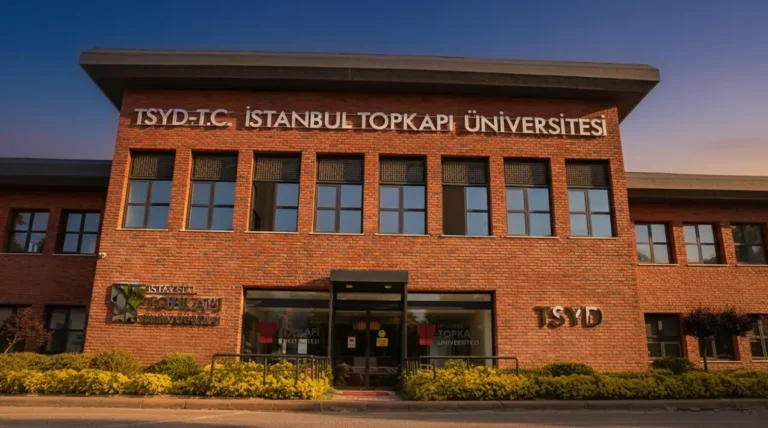
Topkapi University
The music department at Topkapi University is distinguished by integrating traditional Turkish music with Western styles, aiming to preserve and develop musical heritage through a comprehensive academic approach.
-
Bilgi University
Bilgi University is renowned for its innovative music program, heavily focusing on jazz, contemporary music, composition, and music production. It is considered an ideal destination for students interested in modern musical paths.
Cost of Studying Music in Turkey
Studying music is an investment in talent and the artistic future. Costs in Turkey are influenced by various factors such as the chosen university (especially since most distinguished music programs are concentrated in private universities) and the level of the academic program. Private Turkish universities offer diverse fee packages reflecting the quality of education and the specialized infrastructure of studios and training halls they provide.
-
Bachelor’s Stage (Annually):
Annual tuition fees for studying a Bachelor’s in Music at private universities range between $1,950 and $12,000. This variation is due to the prestige of the conservatory or music department, the experience of the teaching staff, and the available technical equipment.
-
Master’s Stage (Total Program):
The cost of Master’s programs depends on the nature of the chosen track (research-based with a thesis or artistic with a project). Generally, the total program cost ranges between $3,500 and $12,000.
-
PhD Stage (Total Program):
For the highest academic degrees in music, whether a Research PhD or a Proficiency in Art degree, the full program fees range between $7,000 and $40,000.
Requirements for Studying Music in Turkey
Admission to arts and music majors differs from other disciplines, as it primarily focuses on the student’s talent and artistic passion alongside academic requirements. General conditions based on the academic degree can be summarized as follows:
1. Bachelor’s Stage Requirements
Admission at this stage relies on proving talent alongside basic documents, where talents compete as much as GPAs. The main requirements are:
- High School Diploma: Private universities do not require high GPAs; obtaining 50% or above is usually sufficient as a basic condition to enter the aptitude test.
- Grade Transcript: Includes the last 3 academic years and must be signed by the school administration.
- Language Proficiency Proof (if available): TOEFL for English programs or TÖMER for Turkish programs. If unavailable, the student studies a language preparatory year before starting the major.
- Basic Documents: A copy of a valid passport and personal photos.
2. Master’s Stage Requirements
At this advanced stage, the student’s academic and practical musical background is evaluated. Requirements include:
- Bachelor’s Degree and Transcript: Must be in the music major or one of its branches (performance, music education, composition, etc.).
- Recommendation Letters: Submitting letters from university professors or professional musicians is usually required.
- Basic Documents: A copy of a valid passport and personal photos.
3. PhD Stage Requirements
This is the stage requiring complete artistic and research maturity. Key requirements:
- Master’s Degree and Transcript: Must be in a musical discipline, with an absolute preference for those holding a Master’s degree with a thesis (scientific research) or a major artistic project.
- Research Proposal or Art Project: Submitting a detailed plan for an original research project in musicology, or a plan for a major creative project (a massive musical work or a series of professional concerts).
- Basic Documents: A copy of a valid passport and personal photos.
Future of Music Graduates
In the past, it was believed that studying music was limited to only two paths: either becoming a performer (instrumentalist or singer) or a teacher. Today, thanks to technological advancement and the branching of creative industries, the future of a music graduate has become broader and more diverse than ever before. A music graduate carries a unique set of skills combining precise discipline, artistic creativity, and teamwork, making them qualified to work in multiple sectors.
The main career paths can be divided as follows:
1. Performance and Creativity
- Professional Musician: Playing in symphony orchestras, classical Turkish music ensembles, jazz bands, or as a soloist.
- Music Composer or Arranger: Writing music for films (soundtracks), series, theater, advertisements, or video games, in addition to arranging melodies for various musical bands.
- Conductor (Maestro): Conducting orchestras or choirs in concerts and live shows.
2. Academia and Education
- University Professor or Researcher: Completing graduate studies (Master’s and PhD) and working in teaching music or conducting musicology research at universities.
- Music Teacher: Teaching music in public, private, and international schools, or in specialized conservatories.
- Private Music Instructor: Giving individual lessons in playing a specific instrument or in singing.
3. Technology and Industry
- Sound Engineer or Music Producer: Working in recording studios to oversee the recording and production of music albums and artistic projects.
- Sound Designer: Innovating sound effects and music for electronic games, applications, and digital media.
- Music Technology Specialist: Working in companies developing software and digital musical instruments.
4. Management and Culture
- Artist Manager: Managing the careers of musicians and bands, and organizing their tours and concerts.
- Music Festival and Event Organizer: Working in planning and managing major music festivals and concerts.
- Music Critic: Writing in specialized newspapers, magazines, or websites to analyze and critique musical works.
How Do I Study Music in Turkey?
Enrolling in a prestigious conservatory or academic department in Turkey is an achievable dream. You can turn your artistic passion into a promising career path by following this roadmap:
1. Step One: Determine Your Artistic Direction
Before anything else, listen to your musical ambition. Does your heart lean towards the melodies of traditional Turkish music, does your ear turn to the grandeur of Western classical music, or are you perhaps drawn to the freedom of jazz and modern production? Determining your path will help you choose the university or conservatory that will refine your talent.
2. Step Two: Prepare Your Academic File
Begin gathering the documents that will showcase your talent and abilities. You will essentially need your high school diploma and transcript (translated and notarized), along with a valid passport and personal photos. Most importantly, prepare your Artistic Portfolio, which may include high-quality video recordings of your performance.
3. Step Three: Contact an Educational Consultant
Applying for artistic majors involves intricate details. To ensure your application stands out professionally, you can rely on the expertise of a specialized educational agent like “Intilaqa”, which will guide you through the requirements of each university and help you present your artistic portfolio in the best possible way.
4. Step Four: Obtain Initial Acceptance
After successfully passing the aptitude test and reviewing your documents, the university will send you an initial acceptance letter. You will need to pay an initial installment of the tuition fees to confirm your seat reservation, after which you will receive the final acceptance letter.
5. Step Five: Start Student Visa Procedures
Using the final acceptance letter, head to the Turkish consulate or embassy in your country to apply for a student visa. This visa is your official permit to begin your artistic and academic journey in Turkey.
6. Step Six: Travel to Turkey to Complete Registration
Upon your arrival, head to your university to submit your original documents and complete your final registration. You have then begun the first chapter in your inspiring journey to becoming a professional musician on Turkish soil.
How Does the Intilaqa Team Help You?
The Intilaqa Educational Team works to assist you step-by-step in choosing the most appropriate major and university for you in Turkey, according to your academic interests and study budget.
We offer you a comprehensive free consultation that includes:
- Recommending the best Turkish universities that teach your major.
- Clarifying available costs and scholarships.
- Full follow-up in the registration process until final acceptance.
Whether you plan to study Music in Turkey or any other major, you can start by learning about the details of Study in Turkey through our complete guide:
Study in Turkey