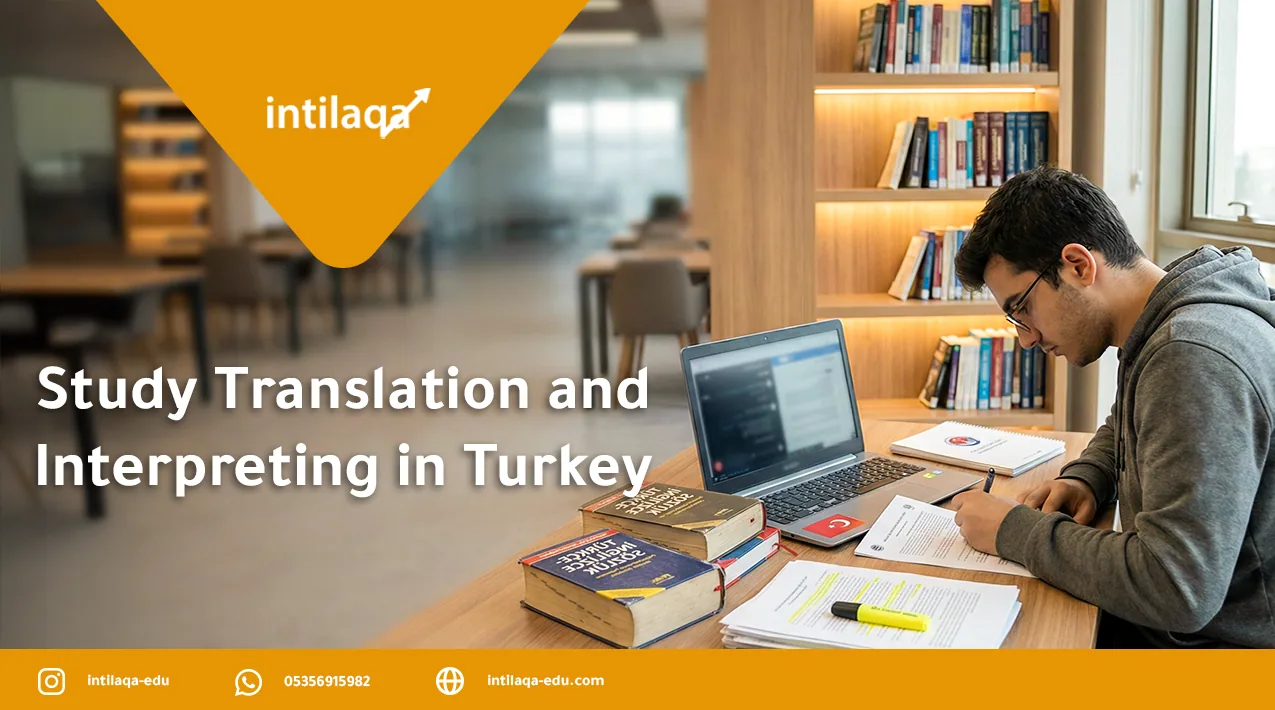
In an increasingly connected world, Study Translation and Interpreting in Turkey offers students the opportunity to develop professional cross-cultural communication skills. Turkish universities combine academic foundations with modern digital translation technologies, preparing graduates to work across languages and compete in an international job market.
In this guide, we cover everything you need to know about the field, from universities and tuition fees to career opportunities, helping you understand the academic and professional path of translation studies in Turkey.
What Is Written Translation?
Written Translation is a vital bridge between cultures. It is both an art and an academic discipline concerned with transferring written texts accurately and faithfully from a source language into a target language while preserving the original meaning, context, and intent.
Translation is not simply a matter of replacing words with their equivalents. It is a complex intellectual and linguistic process that requires translators to act almost as a “second writer” of the text, supported by professional skills that include:
Building Cultural Bridges
Understanding the cultural and social backgrounds of both languages to ensure that implied meanings and cultural nuances are not lost.
Mastering Specialized Fields
Students learn to translate legal, medical, technical, and literary texts, each of which requires its own terminology and writing style.
Using Translation Technology
Modern technology is integrated into the translation process through training in Computer-Assisted Translation (CAT) tools and terminology management software. Turkish universities place significant emphasis on these skills to prepare students for the international translation market.
In short, the field prepares translators to become effective “second writers” who can reformulate ideas skillfully so that the translated text reads as though it were originally written in the target language.
Why Study Translation and Interpreting in Turkey?
Choosing to Study Translation and Interpreting in Turkey offers several academic and professional advantages. Turkey’s geographic position, multilingual environment, and growing use of translation technologies provide students with an active setting in which to develop their skills.
Turkey’s Position as a Cultural and Commercial Bridge
Located between East and West, Turkey is an important center for international trade, tourism, and diplomacy. This creates continued demand for the translation of commercial, legal, and literary materials and gives students exposure to a broad range of translation contexts.
Focus on Translation Technology
Turkish universities go beyond traditional translation methods by integrating training in translation-memory software and CAT tools such as Trados and MemoQ into their curricula. These technical skills have become increasingly important in the international translation industry.
Learning a Third Language
Many translation programs in Turkey extend beyond the main language pair, such as English and Turkish, by requiring students to study an additional foreign language to an advanced level. This can broaden graduates’ professional opportunities.
Studying in the Target Language
Some Turkish universities allow students to receive instruction and attend lectures in the same foreign language in which they specialize. This creates an immersive language environment and helps students develop their linguistic and professional abilities more quickly.
Diverse Academic Staff
Faculties of arts, languages, and translation in Turkey include Turkish and international academics, including native speakers. This exposes students to different linguistic perspectives and gives them direct interaction with speakers of the languages they study.
Translation and Interpreting Courses in Turkey
Programs for students who Study Translation and Interpreting in Turkey generally follow a progressive academic structure, beginning with core language skills and moving toward specialized professional translation.
The following are some of the main subjects typically studied during each academic year:
1. First Year: Language and Academic Foundations
The first year focuses on strengthening language skills and establishing a solid academic foundation:
- Advanced reading and writing skills in both the source and target languages.
- Introduction to Translation Studies.
- General Linguistics.
- Vocabulary development and comparative sentence structures.
- Beginning a second foreign language, either as an elective or a compulsory subject depending on the university.
2. Second Year: Translation Theory and Practical Foundations
Students begin exploring the discipline in greater depth and developing an understanding of translation theory:
- Contemporary Translation Theories.
- Translation into and from the native language using general and social texts.
- History of Translation and Civilizations.
- Comparative Analysis.
- Advanced levels of the second foreign language.
3. Third Year: Specialization and Translation Technology
The third year represents the core stage of the program, with greater emphasis on specialized translation and technical tools:
- Legal & Diplomatic Translation.
- Economic & Commercial Translation.
- Technical & Scientific Translation.
- Computer-Assisted Translation (CAT) Tools and terminology management.
- Translation of European Union texts, a commonly offered subject in Turkey.
4. Fourth Year: Professional Preparation and Graduation Project
The final year prepares students more directly for professional translation work:
- Literary translation, including poetry, short stories, and novels.
- Audiovisual Translation, including subtitling and dubbing.
- Translation Criticism & Editing.
- Professional ethics in translation.
- Graduation Project: Translation of a complete work or completion of an applied research project.
How Long Does It Take to Study Translation and Interpreting in Turkey?
The official duration for students who Study Translation and Interpreting in Turkey at the bachelor’s level is four academic years.
However, the total duration may extend to five years if the student needs to complete a language preparatory year.
Universities normally conduct a language exemption or proficiency examination after admission. Students who do not pass the exam enroll in an intensive one-year language program before beginning the four-year undergraduate curriculum.
Master’s Degree in Translation Studies in Turkey
Graduate studies move translators beyond general professional practice toward specialization and academic research.
Students pursuing a master’s degree in Translation Studies in Turkey, often under the academic title Çeviribilim (Translation Studies), generally encounter two main study tracks:
1. Master’s Degree with Thesis (Tezli Yuksek Lisans)
This track is primarily designed for students interested in academic careers or continuing to a PhD.
The program lasts two years and focuses on research theory and critical textual analysis. Courses may include:
- Research methodologies and criticism in Translation Studies.
- Contemporary translation theories and issues of equivalence.
- History of translation and linguistic approaches.
- Completion of an original research thesis addressing a specific translation-related issue.
2. Master’s Degree Without Thesis (Tezsiz Yuksek Lisans)
This track is intended for translators who want to strengthen their professional skills for the job market rather than pursue an academic research career.
It normally lasts three semesters and focuses more directly on applied and technical aspects of translation, including:
- Computer-Assisted Translation (CAT) Tools.
- Specialized translation, including legal, medical, and technical translation.
- Machine translation post-editing and quality assurance.
- An applied graduation project involving the translation of a selected work accompanied by an analytical report.
Key Research Areas and Specializations
Graduate Translation Studies programs may allow students to specialize in areas such as:
- Legal and Political Translation: Translating contracts and international documents.
- Literary Translation: Transferring creative texts while preserving their cultural dimension.
- Website and Software Localization: Adapting digital content for specific audiences.
- Audiovisual Translation: Subtitling and dubbing for screen-based content.
PhD in Translation Studies in Turkey
A PhD is the highest academic stage in the field of Translation Studies in Turkey and is intended to prepare researchers capable of contributing to translation theory and academic work.
At this level, the academic term Çeviribilim (Translation Studies) becomes particularly prominent.
The program generally lasts four years and combines theoretical depth with applied research through three main stages:
1. Advanced Academic Foundation: Coursework
The first year is dedicated to developing the researcher’s theoretical and academic foundation.
Rather than teaching translation practice itself, courses focus on analyzing and critically evaluating the structure and theory of translation. Major areas may include:
- Contemporary Translation Theories and Criticism: Studying the philosophical approaches that influence the transfer of meaning between languages.
- Research Methods in Translation Studies: Qualitative and quantitative methods for analyzing translated texts.
- Translation and Culture: Examining the translator’s role as a cultural mediator and the influence of ideology on translated texts.
2. Research Proficiency Examination
After successfully completing the required coursework, PhD students take the Proficiency Exam (Yeterlilik).
The examination generally includes written and oral components before an academic committee. Its purpose is not simply to assess memorized information but to evaluate the researcher’s intellectual maturity in Translation Studies, ability to defend academic ideas, and capacity to propose an original scholarly contribution.
3. Thesis and Research Stage
Students then move into the main research stage of the PhD program, focusing on original academic work.
Key aspects may include:
- Selecting the Academic Path: At universities that do not offer a dedicated PhD program in Translation Studies, students may enroll in an English Literature program while directing their dissertation entirely toward translation theory.
- Applying Different Languages: Since Translation Studies provides a broader theoretical framework, students may study theories in English or Turkish while applying their dissertation research to their native language. For example, a dissertation may examine problems in translating from Chinese into Turkish.
Best Universities to Study Translation and Interpreting in Turkey
Turkey has several private universities that provide academic and technological environments for students who want to Study Translation and Interpreting in Turkey.
The following are among the notable universities offering translation-related programs:
Istanbul Aydin University
Istanbul Aydin University is known for its applied academic programs and international connections. It offers translation programs involving several languages, including English and Russian.
Okan University
Okan University has a strong focus on language education and offers specialized translation programs in international languages such as Chinese and Russian, alongside English.
Istinye University
Despite being a relatively young institution, Istinye University has developed a technology-oriented academic environment, with particular attention to translation in the digital era.
Uskudar University
Uskudar University offers an English translation program supported by the university’s wider academic strengths in the humanities, communication, and psychology, providing students with a broad cultural and academic background.
Beykent University
Beykent University has extensive experience in teaching translation, including English and Russian. Its curriculum places considerable emphasis on professional practice and the use of modern translation technologies.
Atilim University
Located in Ankara, Atilim University has a research-oriented academic environment that supports advanced study in Translation Studies and the English language.
Istanbul Topkapi University
Istanbul Topkapi University offers a curriculum focused on practical and field-based skills, with the aim of preparing graduates for direct entry into the professional translation market.
Cost to Study Translation and Interpreting in Turkey
Choosing to Study Translation and Interpreting in Turkey can be financially accessible compared with studying at many Western universities.
Private Turkish universities offer programs based on modern academic approaches and technological infrastructure, with tuition fees varying according to the institution, language of instruction, and program.
Bachelor’s Degree: Annual Tuition Fees
Annual tuition fees range from 2,500$ to 8,000$.
The difference in tuition costs depends primarily on the language of the program, with English-taught programs often costing more, as well as the university’s ranking and the facilities available in its translation centers.
Master’s Degree: Total Program Cost
The total cost of a master’s program ranges from 3,500$ to 7,000$.
Whether the program follows an academic thesis track or a professional non-thesis track, these fees generally cover the academic courses and research supervision costs.
Requirements to Study Translation and Interpreting in Turkey
Faculties of arts and humanities at private Turkish universities generally offer flexible admission policies that accommodate students from different academic backgrounds.
The following are the main requirements according to the level of study:
1. Bachelor’s Degree Requirements
- High School Diploma: Translation programs generally accept students from different secondary-school backgrounds, including scientific, literary, religious, and vocational tracks.
- Required Grade: A high school average of approximately 50% to 60% is generally sufficient for admission to most private universities.
- Language Requirement: Students who already hold a recognized certificate demonstrating proficiency in the language of instruction may begin their academic program directly. Otherwise, they take the university’s language placement or proficiency examination. Students who pass begin the degree program, while those who do not pass enroll in a language preparatory year.
- Required Documents: A copy of a valid passport, the original high school diploma and transcript translated and officially certified, and a recent personal photograph.
2. Master’s Degree Requirements
- Academic Background: Applicants are preferably expected to hold a bachelor’s degree in a language-related field such as Translation, English Literature or the relevant language, Linguistics, or Educational Sciences.
- Bachelor’s GPA: Private universities generally provide some flexibility regarding undergraduate grades, with applicants commonly expected to have a GPA of at least 2.00 out of 4.00.
- Language Requirement: An international language certificate is not always required in advance, as students may be allowed to take the university’s own language examination during admission. Students who pass can begin their program directly.
- Required Documents: A passport copy, bachelor’s degree certificate and transcript translated and officially certified, and a personal photograph.
3. PhD Requirements
- Type of Master’s Degree: Applicants must hold a thesis-based master’s degree (Tezli). Professional non-thesis master’s programs do not qualify graduates to continue to doctoral studies at Turkish universities.
- GPA Requirement: Due to the research-intensive nature of Translation Studies at this level, universities commonly require a strong master’s GPA of approximately 3.00 out of 4.00.
- Foreign Language Requirement: This is a central requirement under the YOK foreign-language criteria. Applicants are required to achieve a minimum score of 55 on the YDS foreign-language examination or provide an accepted equivalent international examination result.
- Required Documents: A comprehensive academic application file including a passport copy, bachelor’s and master’s certificates and transcripts translated and officially certified, proof of meeting the foreign-language requirement, a preliminary PhD research proposal, and academic recommendation letters.
Career Prospects for Translation Graduates
With the rapid development of artificial intelligence, the translation profession is undergoing significant change rather than simply disappearing.
Graduates are increasingly moving beyond the traditional role of transferring text from one language to another and taking on responsibilities involving linguistic quality, cultural adaptation, technology, and specialized communication.
Career paths include:
Localization Expert
Localization is a growing area in which translators do more than translate websites, applications, and games. They also adapt digital products culturally and technically to suit the expectations of the target audience.
Machine Translation Post-Editor (MTPE Specialist)
Many professional translators now work on reviewing and editing machine-generated translations rather than producing every translation entirely from scratch.
Their role is to ensure accuracy, logical consistency, readability, and appropriate use of language, requiring strong critical and linguistic judgment.
Freelancing
Translation offers considerable geographical flexibility.
Professional translators can work remotely with international companies and publishing houses, giving them access to employment opportunities beyond their immediate location.
Diplomatic and Institutional Translation
International trade and diplomatic relations continue to create demand for professional translators in embassies, consulates, import and export companies, and other institutions where contracts, agreements, and official documents require careful linguistic and legal handling.
How Can I Study Translation and Interpreting in Turkey?
If you are planning to Study Translation and Interpreting in Turkey, the admission process can be divided into several main steps:
1. Choose the Right University
The first step is to identify a university offering a strong program in the language in which you want to specialize.
Rather than comparing universities without a clear framework, you can narrow your options according to your budget, preferred language, and professional goals.
2. Prepare Your Application Documents
Start by preparing the main documents required for your application.
These generally include your high school diploma and transcript, translated and officially certified where required, together with a clear copy of your valid passport.
3. Benefit from Intilaqa’s Experience
You can contact the Intilaqa team to have your academic profile reviewed and receive recommendations for translation programs that match your academic background and goals.
The team can assist with obtaining university admission free of charge and help identify available partial scholarships and tuition discounts.
4. Confirm Your University Place
After receiving initial approval, you will need to complete the necessary administrative step to confirm your place at the university.
Initial admission alone does not reserve the place permanently. Students are generally required to confirm registration by transferring the first tuition payment to the university account, after which the university issues the final admission document confirming enrollment.
5. Apply for a Student Visa
After securing your university place and receiving the final admission document, you should contact the Turkish consulate responsible for your place of residence to apply for a Student Visa.
This is an important legal step for students who require a visa to enter Turkey for educational purposes.
6. Arrive and Begin Your Studies
After arriving in Turkey, the final registration stage normally involves visiting the university’s Student Affairs office, submitting the original documents, and completing the remaining administrative procedures.
The Intilaqa team can continue assisting you through this stage until you receive your university student card and begin your studies.
How Can the Intilaqa Team Help You?
The Intilaqa Education team helps students choose a suitable field of study and university in Turkey based on their academic interests and study budget.
Our free consultation service includes:
- Recommending Turkish universities that offer your chosen field.
- Explaining tuition fees and available scholarship opportunities.
- Providing support throughout the application process until final admission.
Whether you are planning to Study Translation and Interpreting in Turkey or another academic field, you can learn more about the process through our complete guide: