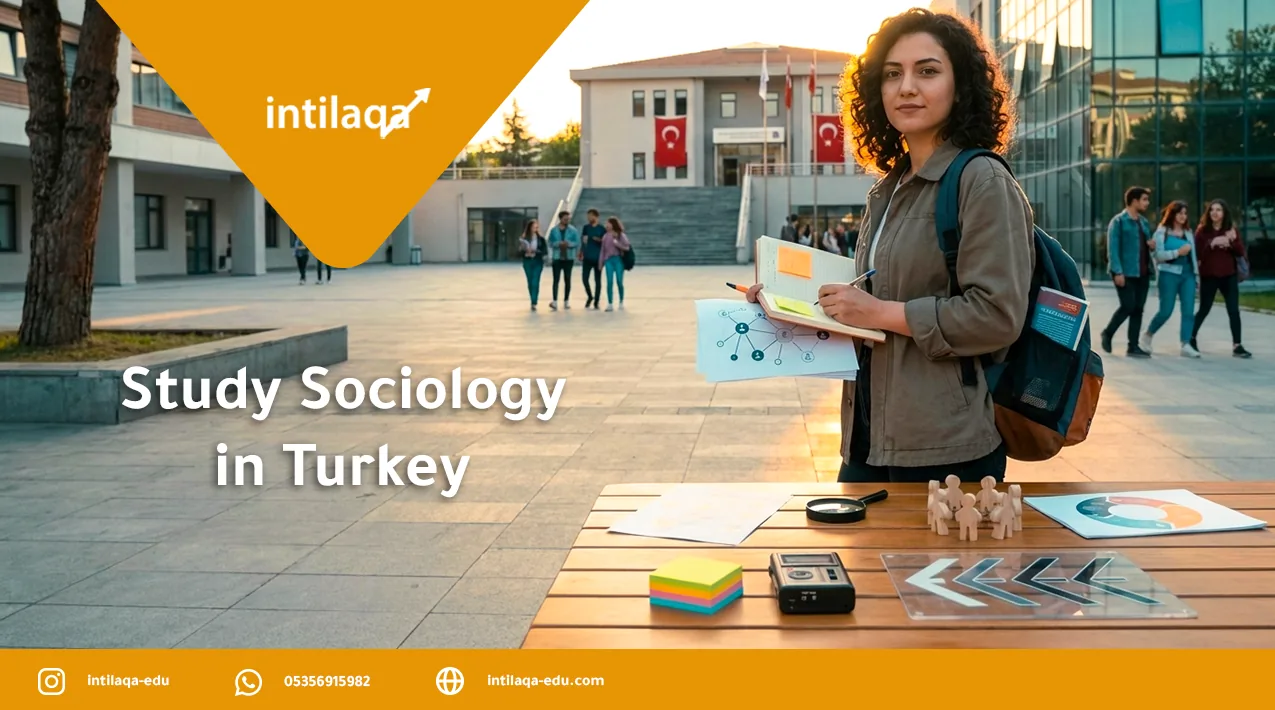
Sociology is the fundamental tool for understanding society and its transformations. The decision to Study Sociology in Turkey gains an additional advantage; given the massive cultural and social diversity in the country, it provides the student with an excellent opportunity to connect academic theories with practical reality and witness their impacts up close.
In this guide, we provide you with a comprehensive reference covering all aspects: starting from study plans and the most prominent universities, through fees and registration conditions, up to the available career fields for graduates in research institutions and international organizations.
What is the Sociology Major?
Sociology is the scientific lens through which we can understand the complexities of human life; it is the academic discipline concerned with studying society, social patterns, human interactions, and the culture of daily life systematically and analytically. This science does not merely observe phenomena, but rather investigates “why” and “how” societies form and change over time.
When discussing this major, we are talking about a science that connects the individual with their environment, where students and researchers focus on several core axes:
Social Structure:
Studying the institutions that shape society such as family, education, religion, and the economy, and how these systems affect individual behavior.
Social Interactions:
Analyzing how humans communicate and build their relationships, starting from small groups up to massive social movements.
Societal Issues:
Researching contemporary challenges such as inequality, migration, crime, and cultural changes resulting from technology.
Choosing to pursue your path to Study Sociology in Turkey specifically means that you will dive into a vast sea of classical and modern theories explaining collective behavior, granting you strong critical tools to understand the rapid transformations today’s world is undergoing. It is the ideal major for those wishing to understand the roots of problems and provide realistic solutions based on precise data and statistics.
Advantages of Studying Sociology in Turkey
The decision to Study Sociology in Turkey gains a special and distinctive character that you do not find in many other countries; Turkey itself is considered a “living social laboratory” combining Eastern traditions and Western modernity, providing the student with a fertile environment for observation and analysis.
Here are the most prominent points that make Turkish universities an ideal destination for this precise major:
Multicultural Environment:
Turkey is a country rich in ethnic, cultural, and religious diversity, in addition to migration and asylum movements and rapid urban change. All these factors make the student a field researcher who sees the theories they study manifested daily in the Turkish street.
Quality of Education and Modern Curricula:
Turkish universities (public and private) adopt study curricula keeping pace with the latest global social theories, and adhere to strict academic standards guaranteeing the graduation of students fully capable of using research and analysis tools.
Studying in English:
Many Turkish universities offer sociology study programs entirely in English, making it easy for international students to engage in global scientific research and access foreign sources and references easily and without a language barrier.
Reasonable Study and Living Costs:
Compared to European or American countries, Turkey offers high-quality education with low tuition fees and appropriate living costs for students, with availability of various scholarships and discounts in private universities.
What are the Courses for the Sociology Major in Turkey?
The study program in Turkish universities is based on providing the student with critical thinking and systematic analysis tools. Instead of memorization and rote learning, courses center around four main axes covering all years of study:
Theoretical and Intellectual Foundations:
Including the study of the history of social thought, and discussing classical theories (such as the theories of Ibn Khaldun, Marx, and Weber) leading up to modern theories explaining the complexities of the contemporary world.
Research Methods and Social Statistics:
The student trains here on “how to conduct research,” combining qualitative research methods (interviews and observation) and quantitative research (questionnaires), in addition to learning statistical data analysis software (such as SPSS).
Social Structure of Turkey:
A core course studying the transformations of Turkish society, cultural and political changes, and issues of migration and urbanization, linking theoretical study with lived reality.
Branches of Applied Sociology:
A group of courses dealing with specific sectors of life, most prominently: Sociology of the Family, Social Psychology, Political Sociology, Criminology, and Urban and Rural Sociology.
How Many Years is the Study of Sociology in Turkey?
The duration to study the sociology major in Turkish universities for the Bachelor’s stage is 4 years of study, divided into 8 semesters (ECTS credit system).
The duration may increase by an additional year known as the “Language Preparatory Year”, in case the student does not possess a language proficiency certificate or does not pass the exemption exam provided by the university (whether the study is in Turkish or English), making the total duration 5 years.
Studying a Master’s in Sociology in Turkey
Master’s programs constitute a qualitative leap in the path to Study Sociology in Turkey, moving the student from the stage of general theoretical comprehension to the level of in-depth social analysis and precise field research. Turkish universities, through their solid academic curricula, work to graduate cadres of social researchers and Social Analysts, equipped with advanced critical and statistical tools qualifying them to lead research centers, work in international organizations, or embark toward the global academic path.
Master’s study typically takes 2 years (4 semesters). Turkish universities provide two main options characterized by flexibility:
Master’s with Thesis (Tezli)
This track places its full focus on systematic scientific research and knowledge production, where the student must prepare a scientific thesis (dissertation) discussing a social phenomenon or an intellectual dilemma in depth. This option is the ideal path for students wishing to complete PhD studies or work as academics and lecturers in universities. Students can direct their research in the thesis toward precise and contemporary issues such as:
- Sociology of migration and integration (given Turkey’s geographical location).
- Urban transformations and the impact of gentrification (class change) in major cities.
- Digital sociology and the impact of social networks on collective behavior.
- Gender studies and changing dynamics within the modern family.
Non-Thesis Master’s (Tezsiz)
This track is specifically designed for professionals already working in the sectors of human resources, media, or non-governmental organizations (NGOs), who wish to develop their analytical skills without dedicating time to lengthy academic research. The program focuses on the applied aspect and developing managerial and social skills, where the student completes intensive coursework along with a professional graduation project analyzing a realistic issue. This track targets experts seeking to raise their professional efficiency in applied fields such as:
- Social institution management and developmental project planning.
- Public relations and measuring public opinion trends.
- Organizational behavior and human resources management in companies.
- Designing and evaluating social policies in government institutions.
Studying a PhD in Sociology in Turkey
The PhD stage is considered the pinnacle of the knowledge pyramid in the path to Study Sociology in Turkey, aiming to graduate an elite group of thinkers and sociologists capable of deconstructing complex phenomena and producing new explanatory theories. Turkish universities focus at this stage on creating “strategic researchers” possessing deep critical and philosophical tools, qualifying them to hold high academic positions, or lead research and strategic studies centers, and international institutions concerned with public policies.
PhD study typically lasts for 4 years (8 semesters). To guarantee academic quality, the program is divided chronologically and structurally into two sequential phases, neither of which can be dispensed with:
1. Knowledge Foundation and Competency Exam Phase (Coursework & Proficiency)
This phase constitutes the rigorous gateway before entering the world of independent research. The student undergoes an intensive program of philosophical and methodological courses reshaping their research mindset, concluding with a pivotal stage called the “Comprehensive Competency Exam” (Yeterlilik Sınavı) deciding the student’s eligibility to hold the title of “Doctor” in the future. This part is designed to ensure the researcher possesses a solid grounding in the philosophy of science and analysis methods, focusing on courses such as:
- Philosophy of science and advanced research methods (Epistemology & Methodology).
- Contemporary sociology and postmodern theories.
- Advanced statistical analysis for big data social systems.
- Designing and evaluating social and strategic policies.
2. Original Research and Dissertation Phase
After successfully passing the competency exam, the researcher transitions to the core of the PhD, where their role shifts from consuming knowledge to producing it. This track focuses on conducting original field or theoretical studies contributing to bridging a knowledge gap in the global library. The student is expected at this stage to publish research papers in peer-reviewed journals, and prepare a rigorous dissertation addressing deep societal dilemmas. The compass of research often steers toward qualitative issues such as:
- Dynamics of social and political change in the Middle East region.
- Sociology of identity, ethnicity, and integration issues under globalization.
- Gender studies and demographic transformations of the family.
- Digital sociology and the impact of technology on the value structure of society.
Best Universities to Study Sociology in Turkey
When making the decision to Study Sociology in Turkey, the university choice plays a pivotal role in shaping the student’s mindset. Private Turkish universities are distinguished by providing a contemporary educational environment, programs in English, and strong international partnerships.
Here is a list of the most prominent of these universities and what distinguishes the study of sociology in each:
1. Ibn Haldun University
This university is considered the “icon of social sciences” in Turkey; it bears the name of the founder of sociology, “Ibn Khaldun,” and dedicates most of its resources to human and social sciences. It features a unique educational system focusing on comparative research, providing an elite environment for students wishing for deep philosophical and research engagement, with multilingual programs (Arabic, English, and Turkish).
2. Bahcesehir University (BAU)
Renowned for its strategic location in the heart of Istanbul and its extensive international relationships, Bahcesehir University offers sociology students a golden opportunity to understand cultural diversity up close. The university is distinguished by its focus on “Global Sociology,” allowing students to engage in strong student exchange programs and understand social issues from an international perspective.
3. Uskudar University
Known for being the leading university in the field of “Behavioral Sciences” and mental health, studying sociology at Uskudar University gains a distinctive character merging psychology and sociology. This makes it the ideal choice for students interested in the psychological aspects of social phenomena, criminology, or family and community counseling.
4. Istanbul Aydin University
Istanbul Aydin University is considered one of the most attractive universities for international students, creating a multicultural campus resembling a “micro-society” ideal for study and observation. The Faculty of Arts and Sciences focuses on the applied aspect, encouraging sociology students to participate in social responsibility projects and field training through its broad network of relationships.
5. Istanbul Gelisim University
Istanbul Gelisim University is renowned for its strict adherence to quality standards and international accreditations (AQAS and others). Its sociology department provides updated curricula keeping pace with the rapid changes in the structure of society, with a noticeable focus on contemporary issues such as technology and society, and sustainable development.
6. Beykent University
One of the long-standing universities possessing a long history in private education. Its sociology department features a seasoned academic staff and solid classical curricula guaranteeing the student a strong theoretical foundation, while providing a calm study environment equipped with libraries and research centers supporting the student throughout their path.
7. Nisantasi University
This university adopts the “New Generation” (NeoTech) slogan, integrating technology into all its majors. Studying sociology at Nisantasi University focuses on digital and modern skills, making it suitable for students interested in “digital sociology,” social data analysis, and the impact of technology on human behavior.
Cost of Studying Sociology in Turkey
The financial cost to Study Sociology in Turkey varies based on a package of criteria, most importantly the study program’s language (English is usually more expensive), the university’s academic ranking, and its geographical location (Istanbul universities vs. other cities). Generally, studying humanities and social sciences is classified within the economic category appropriate for most budgets. Below is the average price range at private universities:
Bachelor’s stage (Annually):
Fees range between $1,750 and $4,800, and differ according to the language of study (English is often higher) and the strength of the university’s international partnerships.
Master’s Level (Full Program):
The tuition is paid for the full program, and the total cost ranges between $4,300 and $9,000, depending on the university’s status and track type (with or without thesis).
PhD Level (Full Program):
The cost for the four years typically ranges between $4,500 and $12,000. However, fees may exceed these numbers in “elite” universities providing a global research environment and exceptional partnerships.
Admission Requirements to Study Sociology in Turkey
Private Turkish universities feature high flexibility in welcoming international students, as admission criteria focus on research passion and intellectual readiness more than focusing on “astronomical” grades. Here is the detailed guide to admission requirements for each academic stage:
1. Bachelor’s Level Requirements
The gateway is wide and open to everyone in this foundational stage, and the conditions include:
- High School Diploma Type: Turkish universities do not place restrictions on your educational background; whether you are a graduate of the Scientific, Literary, Sharia, or Vocational track, you have the right to apply to study sociology directly.
- Academic Average: Competitiveness here is highly acceptable; most universities are satisfied with a basic passing average ranging between 50% and 60% in the high school diploma to guarantee your admission.
- Language Condition: In case you choose studying in English, you are required to submit a (TOEFL) certificate or pass the “exemption exam” at the university. As for the Turkish language, a (TÖMER) certificate is requested or joining the preparatory year.
- Required Documents: An original and translated copy of the high school diploma and transcripts, a copy of the passport, and personal photos.
2. Master’s Level Requirements
To transition to the level of specialization and in-depth analysis, the following must be met:
- Academic Background: Priority is for those holding a Bachelor’s degree in Humanities and Social Sciences (Psychology, Philosophy, Political Science).
- University GPA: It is required that the graduation average in the Bachelor’s degree is good, with a minimum of 2.00 out of 4.00 for file acceptance.
- Language Proficiency: A fundamental pillar that cannot be dispensed with; proficiency in the study language (whether English or Turkish) must be proven to guarantee the student’s ability to read complex research references and write scientific papers.
- Required Documents: The university graduation certificate and transcripts (translated and notarized), language certificate, and a copy of the passport.
3. PhD Level Requirements
Criteria here feature high precision and selectivity, given the nature of the research degree:
- Previous Master’s Type: This is a core condition; universities require that the Master’s degree be under the “Thesis” (Tezli) system, to ensure the student possesses previous research experience qualifying them for the PhD project. A professional Master’s is usually not accepted.
- Academic Merit: The cumulative GPA in the Master’s must be high (no less than 2.50 or 3.00 depending on the university) to indicate scientific competence.
- Foreign Language Mastery: Even in programs taught in Turkish, proving proficiency in a foreign language (like English) is often requested to enable the researcher to access global sources and international publishing.
- Research Proposal: Submitting a research project draft explaining the idea you intend to study and the proposed methodology. This is the deciding criterion for the academic supervisor’s acceptance of your file.
- Required Documents for Registration: A copy of the passport, the Master’s degree and transcripts (translated and notarized), a copy of the previous Master’s thesis, the research proposal, and the language certificate.
Future of Sociology Graduates in Turkey
Choosing to Study Sociology in Turkey is no longer merely a gateway to academic work or teaching as prevalent in the traditional image. Today, with the complexity of social structures and the intersection of data with human behavior, the “Sociologist” has become an essential element in institutions relying on understanding the public and analyzing data.
The graduate finds ahead a diverse and flexible job market, including the following sectors:
International and Humanitarian Organizations (NGOs):
Given Turkey’s location as a regional hub for humanitarian work, migration files, and asylum, organizations (such as the United Nations, the Red Crescent, and refugee care organizations) are among the largest employers of sociology graduates, to work as project coordinators, field researchers, or social integration officers.
Human Resources (HR) and Public Relations Sector:
Major companies seek those who understand “group dynamics.” A sociology graduate is the most capable of managing corporate culture, resolving workplace conflicts, and understanding employee behavior, making them a strong candidate for managing human resources departments.
Market Research and Marketing Companies:
Before launching any product, companies need to understand consumer behavior and community trends. Graduates work here as data analysts (Data Analysts) reading market trends and converting abstract numbers into successful marketing strategies.
Government Institutions and Municipalities:
The Ministry of Family and Social Policies and Turkish municipalities (Belediye) work closely with sociologists in family support centers, elderly homes, and urban planning to guarantee an urban environment that suits the population’s needs.
Media and Investigative Journalism:
The ability to analyze and critique makes a sociology graduate an outstanding journalist, capable of writing in-depth reports that go beyond superficiality to treat the roots of societal problems.
Academic and Research Path:
For those wishing to continue, universities and strategic studies centers (Think Tanks) open their doors to researchers to provide policy papers and consultations that countries rely on in making decisions.
How Do I Study Sociology in Turkey?
1. Choosing a University with a Fertile Intellectual Environment
The first and most important step is identifying the university distinguished by an active “sociology” department, possessing massive libraries and research centers supporting critical thinking; not all universities are equal in humanities disciplines. Instead of searching randomly, you can communicate with us to put before you a list of universities known for the strength of their academic staff and cultural openness, ensuring you an education going beyond traditional books.
2. Preparing the Academic File
Start early by preparing your core documents to ensure smooth procedures: you will primarily need an original copy (translated and notarized) of the high school diploma with transcripts, in addition to a clear copy of a valid passport and recent personal photos with a white background.
3. Consulting Experts
To save your time and guarantee choosing the most appropriate path, let the “Intilaqa” team handle the mission. We are here to study your file, recommend the university aligning with your research ambition and financial budget, and then handle the process of submitting your file to the university professionally and entirely for free, while guaranteeing you obtain the best available scholarships and discounts.
4. Confirming University Enrollment
After submitting your documents through us, you will receive the “Initial Acceptance” document from the university within a short time. To secure your seat, you must transfer the first installment of tuition fees to the university’s official bank account, which is a necessary step to obtain the “Final Acceptance Letter” proving your status as an official student.
5. Obtaining a Student Visa
Once you receive the final acceptance, head immediately to the Turkish embassy or consulate in your country to begin the procedures for obtaining the “Student Visa,” which is the official document granting you the right to enter and reside in Turkey for the purpose of study.
6. Arrival and Beginning the Knowledge Journey
Welcome to Turkey! Upon your arrival, we will be by your side to help you complete the administrative registration procedures on campus and receive your university card, immediately after which you will start your first steps in this deep and enjoyable major.
How Does the Intilaqa Team Help You?
The Intilaqa Educational Team works to assist you step-by-step to choose the most appropriate major and university for you in Turkey, according to your academic interests and study budget.
We offer you a comprehensive free consultation that includes:
- Recommending the best Turkish universities that teach your major.
- Clarifying available costs and scholarships.
- Full follow-up in the registration process until final acceptance.
Whether you plan to study Sociology in Turkey or any other major, you can start by learning about the details of Studying in Turkey via our complete guide:
Study in Turkey