Choosing to Study Chemistry in Turkey is one of the distinguished academic options for students wishing to embark on a deep scientific experience in one of the most developed countries in the fields of research and technology. Chemistry is not merely an experimental science; it is a gateway to understanding the secrets of matter and life around us—from pharmaceutical manufacturing and energy to the development of modern materials and environmental protection.
Turkish universities provide their students with a comprehensive educational environment that combines theoretical and practical aspects through advanced laboratories and research facilities equipped with the latest technologies. Furthermore, programs are offered in either English or Turkish according to the student’s preference, alongside competitive tuition fees and real internship opportunities within the industrial sector.
What is the Chemistry Major?
The chemistry major is one of the fundamental branches of natural sciences and is often referred to as the “central science.” This major focuses on the study of matter and everything related to it: its composition, properties, structure, and the behaviors it exhibits when undergoing chemical reactions, in addition to the energy released or absorbed during these processes.
This field aims to understand the world at the molecular and atomic levels. Through chemistry, we can comprehend how raw materials are transformed into everyday products, how medicines function within our bodies, and how energy is produced.
When studying the chemistry major, students delve into several primary branches, including:
Organic Chemistry:
Focuses on the study of carbon-containing compounds, which are the foundation of life and synthetic compounds like plastics and pharmaceuticals.
Inorganic Chemistry:
Studies the properties and reactions of inorganic compounds, including metals and minerals found in the Earth’s crust.
Physical Chemistry:
Applies the principles of physics to understand how chemical reactions occur and the energy associated with them.
Analytical Chemistry:
Concerned with developing methods and techniques to measure and identify the components of materials, widely used in quality control and forensics.
Biochemistry:
Studies the chemical processes that occur within living organisms.
In summary, the chemistry major equips students with the necessary knowledge and tools to analyze materials, invent new compounds, and contribute to solving major global challenges in the fields of energy, health, environment, and industry.
Advantages of the Choice to Study Chemistry in Turkey
The chemistry major in Turkey offers a unique blend of high academic quality and competitive costs, making it a preferred destination for many international students. Studying in this country is distinguished by several key strengths:
Quality of Education and Infrastructure:
Turkish universities, especially major technical and research universities, invest heavily in modernizing their laboratories and research centers. This is vital for the chemistry major, which relies fundamentally on experimentation and analysis. This guarantees that students receive robust practical training that aligns with international standards.
English-Taught Study Programs:
Recognizing the importance of attracting international students, many prestigious Turkish universities offer chemistry programs entirely in English, which removes the language barrier and facilitates academic integration.
Tuition Fees and Living Costs:
Compared to popular study destinations in Europe and North America, tuition fees at Turkish universities (both public and private) are highly reasonable and competitive. Additionally, living costs in Turkey remain relatively low, providing a comfortable study environment without significant financial pressure.
International Recognition and Student Exchange:
Most Turkish universities follow the European Credit Transfer System (ECTS) and are part of the “Bologna Process.” This means that Turkish degrees are recognized throughout Europe and worldwide. Student exchange programs (like Erasmus+) also offer students the opportunity to spend a semester or more at partner European universities.
Connection with the Industrial Sector:
Turkey possesses a strong and active industrial sector, encompassing pharmaceuticals, petrochemicals, plastics, textiles, and food. This close connection between universities and industry provides students with valuable opportunities for practical training (Internships) during their studies and increases their employability immediately upon graduation.
What are the Courses of the Chemistry Major in Turkey?
The study plan is similar across most prestigious Turkish universities and is designed to provide the student with a solid scientific foundation in the first year, followed by an in-depth exploration of the main branches of chemistry, concluding with elective courses and a graduation project.
Here is an overview of the core subjects in the Bachelor’s degree program for the chemistry major in Turkey:
First Year: Foundation Phase
This year focuses on building a solid base in natural sciences and mathematics, which are essential for understanding advanced chemical concepts.
- General Chemistry I & II: Covers the fundamental principles of matter, atomic structure, chemical bonding, reactions, and chemical calculations (Stoichiometry).
- General Chemistry Lab I & II: Practical application of theoretical concepts and learning basic laboratory techniques.
- General Physics I & II: The study of classical mechanics, electricity, and magnetism.
- Calculus I & II: The fundamental mathematics required for physical chemistry and kinetics.
- Introduction to Computers: Programming basics and the use of computers in data analysis.
- Academic English: To develop research reading and writing skills.
Second Year: Core Subjects
The student begins to delve into the main branches of chemistry.
- Organic Chemistry I & II: The study of carbon compounds, their structures, nomenclature, and reactions (one of the most important subjects in the major).
- Organic Chemistry Lab: Preparation and identification of organic compounds in the laboratory.
- Analytical Chemistry: The principles of quantitative and qualitative chemical analysis.
- Analytical Chemistry Lab: Application of titration and gravimetric analysis techniques.
- Physical Chemistry I: Beginning the study of thermodynamics to understand energy in reactions.
- Differential Equations: An advanced mathematics course that serves physical chemistry subjects.
Third Year: Advanced Topics
Subjects become more specialized and focused on advanced theoretical and practical aspects.
- Inorganic Chemistry I & II: The study of the properties and reactions of inorganic elements and compounds (metals, transition metals).
- Physical Chemistry II: Focuses on reaction kinetics and quantum mechanics.
- Physical Chemistry Lab: Conducting experiments to measure physical properties and perform energy calculations.
- Instrumental Analysis: One of the most important practical courses, covering how advanced instruments (e.g., GC, HPLC, Spectroscopy) operate and are used.
- Instrumental Analysis Lab: Intensive practical training on analytical devices.
- Biochemistry: The study of the chemistry of biomolecules such as proteins, nucleic acids, and enzymes.
Fourth Year: Specialization and Graduation Project
The final year is dedicated to elective courses, practical training, and a graduation project in which the student applies everything they have learned.
- Graduation Project / Thesis: An independent research project under the supervision of a university professor, which is a core requirement for graduation.
- Industrial Internship (Staj): Mandatory practical training in a factory or laboratory outside the university to gain hands-on experience.
- Elective Courses: The student chooses a set of subjects based on their interests, such as:
- Polymer Chemistry.
- Industrial Chemistry.
- Medicinal Chemistry.
- Environmental Chemistry.
- Nanochemistry.
- Electrochemistry.
How Long Does It Take to Study Chemistry in Turkey?
The duration of study to obtain a Bachelor’s degree in the chemistry major in Turkey is four academic years.
It is important to note that this duration does not include the “language preparatory year.” If the student is not proficient in the language of instruction (Turkish or English, depending on the university and program), they will need to spend an additional year studying the language before starting the chemistry program, making the total study duration five years in this case.
Master’s Degree in Chemistry in Turkey
Studying a Master’s in chemistry represents a stage of intellectual maturity and scientific specialization, designed for outstanding chemists and specialized researchers looking to deepen their understanding of chemical sciences and specialize in precise tracks that qualify them for leadership roles in the industrial sector, academia, or the field of research, development, and innovation.
Master’s programs in Turkish universities aim to refine advanced laboratory skills and equip students with tools for scientific research and analysis within an environment rich in advanced infrastructures and specialized laboratories.
Master’s Tracks:
- Master’s with Thesis (Tezli): This is the research track, lasting two years and focusing on in-depth academic research. The student prepares a scientific thesis on a specialized topic such as advanced organic chemistry, quantum chemistry, nanomaterials science, or environmental chemistry. This option is ideal for students planning to complete PhD studies or work in the field of research, materials development, and university teaching.
- Non-Thesis Master’s (Tezsiz): This is the professional track, typically lasting one and a half years. This track is concerned with developing advanced professional skills. Instead of a thesis, the student completes specialized coursework and presents an applied graduation project, which could be developing a new analytical method, a plan to improve quality control in a factory, or a comprehensive literature review for a specific industrial application. This option is perfect for chemists and quality managers seeking to reach senior technical or managerial positions in applied industrial sectors.
Examples of Specialized Subjects:
Coursework in the Master’s program shifts from general practice to specialized research and deep dives into precise fields, including advanced topics such as:
- Advanced Spectroscopy Techniques.
- Organometallic Chemistry.
- Quantum Chemistry and Statistical Thermodynamics.
- Chemistry of Polymers and Advanced Materials.
- Industrial Chemistry and Catalysis Applications.
- Advanced Biochemistry and Protein Chemistry.
This advanced academic level grants its graduates exceptional scientific and analytical depth, opening wide doors to prestigious professional and academic career paths in the world of science and industry.
Studying a PhD in Chemistry in Turkey
Studying a PhD in chemistry represents the pinnacle of scientific research and academic specialization, designed for distinguished researchers who have demonstrated depth and research capability during their Master’s phase. This level aims to qualify scientists to produce original and innovative scientific knowledge, lead major research projects, and contribute radically to the development of science. Doctoral programs in Turkish universities rely on advanced infrastructure and cutting-edge research centers, allowing students to conduct world-class research and compete in international scientific publishing.
PhD Tracks:
PhD programs in Turkey follow a single research track (with a dissertation), but can be entered via two methods:
- Doctorate after MSc: This is the traditional and most common track. The program usually takes 4 years and is divided into two phases: the advanced coursework phase (one year) followed by passing the Qualifying Exam, and then the dissertation phase which spans three years. This track focuses on producing original and innovative scientific research that adds qualitative value to science.
- Integrated PhD (Bütünleşik Doktora): This is a special track offered by some major Turkish public universities for highly outstanding Bachelor’s students with excellent GPAs, allowing them to enroll directly in the PhD program without obtaining a Master’s degree. This program typically takes 5 years and involves intensive coursework (equivalent to both Master’s and PhD combined) before beginning the dissertation phase. This option is ideal for those with a clear and early research orientation.
Examples of Specialized Subjects:
Courses at this stage transition to the elite research level and focus on highly precise topics that serve the student’s research direction, such as:
- Computational Modeling and Molecular Simulation.
- Advanced Drug Design and Molecular Synthesis.
- Surface Chemistry and Advanced Nanomaterials.
- Advanced Organic Reaction Mechanisms.
- Special Topics in Quantum Chemistry.
- Advanced Organometallic Chemistry.
Obtaining a PhD grants graduates the deepest level of scientific specialization and research independence. This qualification opens doors for them to become university faculty members (professors), senior researchers and scientists in advanced Research and Development (R&D) centers within major industrial sectors, or high-level scientific consultants.
Best Universities to Study Chemistry in Turkey
Turkey hosts a number of distinguished private universities that offer Bachelor’s, Master’s, and PhD programs in the chemistry major with high educational quality and advanced research infrastructure. Prominent among these universities are:
Atilim University:
Atilim University is considered one of the leading universities in applied and scientific fields. Its modern research laboratories and programs that combine theoretical study with practical application provide students with a strong foundation to pursue graduate studies or work in the chemical and pharmaceutical industries.
Istinye University:
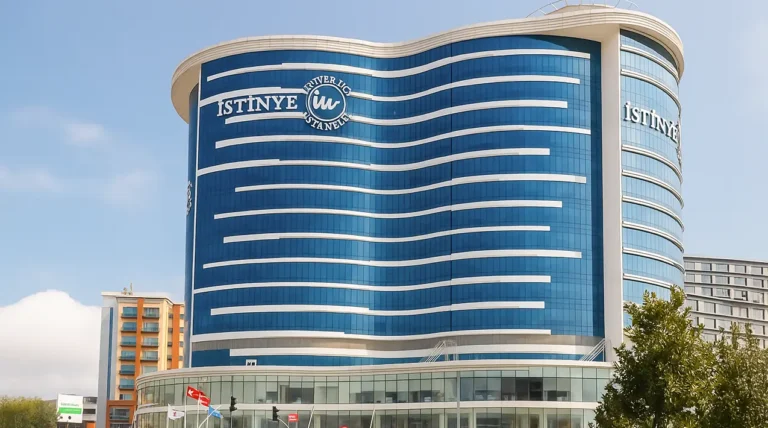
Istinye University offers an advanced chemistry program focusing on medical and industrial applications, with research opportunities inside the university’s advanced scientific centers. It is also distinguished by its collaboration with hospitals and research centers within the Istinye health network, granting students exceptional practical experience.
Atlas University:
Atlas University is one of the modern universities that has emerged due to the quality of its health and natural science programs. Its chemistry department provides a modern educational environment focused on research and development, offering students the chance to participate in research projects in analytical, pharmaceutical, and environmental chemistry.
Cost of Studying Chemistry in Turkey
Studying the chemistry major is a scientific investment in understanding matter and its broad applications in medicine, industry, and energy. The cost of studying the chemistry major in Turkey depends on the chosen university and the academic level, as private universities offer distinguished programs with varying fees that reflect the quality of their laboratories and research capabilities.
Bachelor’s Level (Annually):
Annual tuition fees for studying a Bachelor’s in Chemistry at private universities range from $2,500 to $9,000. This variance is due to differences in laboratory capabilities, the level of academic supervision, and the nature of practical training in analytical, pharmaceutical, and industrial fields.
Master’s Level (Full Program):
The cost of a Master’s varies depending on whether the program is research-oriented with a thesis or applied without a thesis. Generally, the total cost ranges between $3,000 and $8,000, encompassing advanced classes in organic, physical, and analytical chemistry, along with research opportunities within specialized laboratory projects.
PhD Level (Full Program):
This stage is considered the highest degree of academic specialization, focusing on producing original scientific research that contributes to the advancement of industry and research. The total fees for a PhD program in chemistry range from $5,000 to $12,000, depending on the university’s standing, research infrastructure, and the support provided to students for scientific publishing and applied projects.
Admission Requirements to Study Chemistry in Turkey
Studying the chemistry major in Turkey involves a set of academic conditions and criteria that vary depending on the degree level. Below are the requirements for each university degree:
1. Bachelor’s Degree Admission Requirements:
Turkish universities at the Bachelor’s level focus on qualifying students with a passion for science, research, and experimentation, and the general conditions are accessible and straightforward:
- High School Diploma: Private universities typically require a minimum average of 50% in the high school diploma to apply, while some prestigious universities may require higher averages.
- Proof of Language Proficiency (if applicable): A TOEFL certificate for programs taught in English or a TÖMER certificate for programs in Turkish. If unavailable, the student can enroll in a language preparatory year.
- Core Documentation: A copy of a valid passport, personal photographs, and the high school diploma with transcripts, officially translated and notarized.
2. Master’s Degree Admission Requirements:
At this stage, universities focus on a solid academic background and the capacity for scientific research and analysis. Core requirements include:
- Bachelor’s Degree: Must be in the Chemistry major or a closely related field such as Biochemistry or Materials Science.
- University Transcript: Detailing all courses studied by the student and the grades achieved.
- Core Documentation: Passport, personal photos, and the Bachelor’s degree certificate with transcripts, translated and notarized.
3. PhD Degree Admission Requirements:
This stage represents the pinnacle of the academic pathway, requiring applicants to have a strong research background and a clear vision for their scientific project. Prominent conditions include:
- Master’s Degree: In the chemistry major or an associated research field such as physical, analytical, or organic chemistry, and the Master’s must be thesis-based.
- Research Proposal: This is the most critical element for admission, where the student is required to present an original, applicable research idea demonstrating the scientific value of their contribution to the field of chemistry.
- Academic CV: Including research experience and scientific publications (if any).
- Core Documentation: Passport, personal photos, and Bachelor’s and Master’s certificates alongside transcripts, translated and notarized.
Future of Chemistry Graduates in Turkey
The chemistry major is considered a field with broad professional horizons both in Turkey and abroad, thanks to its close connection to scientific research, industry, health, and energy sectors. With the boom in pharmaceutical, petrochemical, and research industries in Turkey, the need for specialized competencies in this field is increasing.
Career Fields for Chemistry Graduates:
- Pharmaceutical and medical product companies.
- Petrochemical, paint, and textile factories.
- Public and private laboratories for materials and product analysis.
- Research and Development (R&D) centers in universities and industrial companies.
- Environmental institutions and water and waste treatment centers.
- Food and cosmetics companies.
- Schools, universities, and educational institutions.
Common Job Titles:
- Analytical Chemist.
- Pharmaceutical Chemist.
- Researcher in Biochemistry or Organic Chemistry.
- Quality and Specifications Assurance Engineer.
- Chemical Laboratory Specialist.
- Materials, Paints, and Nanomaterials Developer.
- University Lecturer or Academic Researcher.
- Scientific Consultant or Industrial Development Expert.
Studying chemistry in Turkey opens global professional doors and distinct research opportunities for graduates that keep pace with continuous scientific and technological advancement.
How Do I Study Chemistry in Turkey?
Enrolling in one of the prestigious chemistry programs in Turkey is a clear and straightforward process. You can achieve your academic dream and launch towards a promising scientific future by following this roadmap to Study Chemistry in Turkey:
1. Step One: Determine Your Academic Direction
Before selecting a university, consider the type of program that suits you. Do you prefer studying chemistry in English at a private university with modern laboratories, or do you lean towards studying in Turkish at a lower cost? This decision will help you pinpoint your options accurately.
2. Step Two: Prepare Your Official Documents
Begin gathering the required documents, which include your high school diploma and transcripts, translated and notarized, along with a valid passport and recent personal photos.
3. Step Three: Submit Your Application
You can apply directly via the university’s website, but to ensure a professional and swift application, it is preferable to utilize the expertise of a reliable educational consultant like Intilaqa, which handles the registration procedures and follows up on admission until it is issued.
4. Step Four: Fulfill Admission Requirements
Most private universities do not require high averages or entrance exams and accept students based solely on their high school diploma. Conversely, public universities typically demand a higher average and passing the YÖS or SAT exam.
5. Step Five: Obtain Initial Acceptance
After reviewing your application, the university will issue an initial acceptance letter (Kabul Mektubu). To secure your academic seat, pay the first installment of the tuition fees, after which you will receive the final acceptance.
6. Step Six: Issue the Student Visa
Use the final acceptance letter to apply for a student visa from the Turkish embassy or consulate in your country, which is the official step allowing you to begin your studies in Turkey.
7. Step Seven: Travel to Turkey and Complete Your Registration
Upon your arrival, head to your university to submit the original documents and complete final registration procedures. With this step, your academic journey in the world of chemistry begins within an advanced scientific environment full of research opportunities.
How Does the Intilaqa Team Help You?
The Intilaqa Educational Team works to assist you step-by-step in choosing the most appropriate major and university for you in Turkey, according to your academic interests and study budget.
We offer you a comprehensive free consultation that includes:
- Recommending the best Turkish universities that teach your major.
- Clarifying available costs and scholarships.
- Full follow-up in the registration process until final acceptance.
Whether you plan to study Chemistry in Turkey or any other major, you can start by learning about the details of Study in Turkey through our complete guide:
Study in Turkey