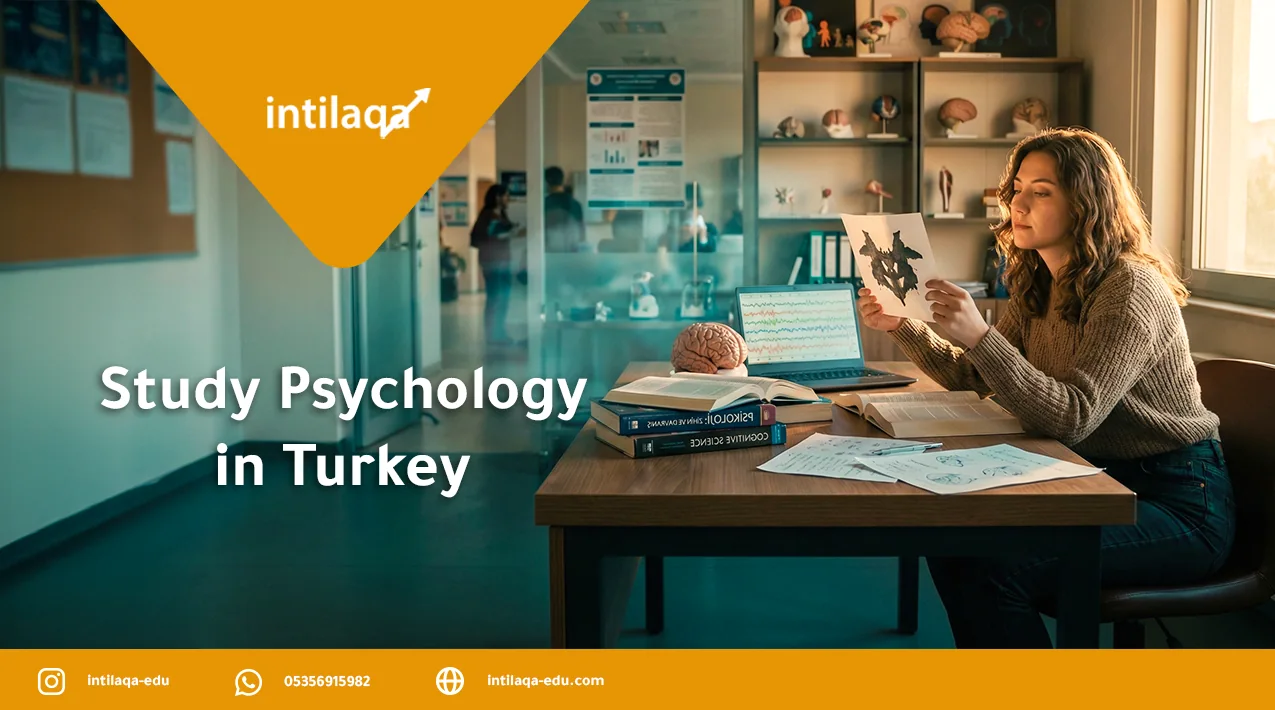
Interest in mental health is no longer a passing trend, but has become a fundamental pillar in building modern societies and understanding the complexities of the human psyche. Your decision to enter this profound humanitarian field places a significant responsibility on you. When it comes to choosing the most appropriate study environment, the decision to Study Psychology in Turkey emerges as one of the most distinguished academic choices for international students, where the heritage of philosophical analysis meets the latest Western clinical therapy techniques in an advanced university environment.
What is the Psychology Major?
The Psychology Major in Turkey is the science that delves into the depths of the human psyche to understand behavior, mental processes, and emotions. The study is not limited to abstract theories, but aims to graduate specialists capable of understanding the complex dynamics governing human actions and interactions with their surroundings.
Key Aspects Focused on by the Major:
- Understanding Human Behavior: Analyzing why people act in certain ways in different situations.
- Mental Processes: Studying perception, memory, learning, and logical thinking.
- Psychotherapy: Learning methods for diagnosing mental disorders and providing appropriate treatment plans.
Main Branches Studied by the Student:
- Clinical Psychology: Direct interaction with patients and diagnosing mental and behavioral disorders.
- Developmental Psychology: Studying human development and psychological and physical growth from childhood to old age.
- Social Psychology: Investigating how others influence an individual’s thoughts and behavior. This is the major that directly intersects with Sociology in studying societal phenomena and group behavior.
- Industrial and Organizational Psychology: Aims to improve the work environment, raise employee efficiency, and select appropriate talent for organizations.
Why Choose Turkey to Study Psychology?
Turkish universities are an ideal environment for international students, as the Psychology Major in Turkey integrates strong theoretical education with practical application, making it a preferred destination for several reasons.
International and European Recognition
Turkish universities follow the European “Bologna Process,” granting the graduate a globally recognized “Blue Diploma.” The Turkish degree is also distinguished by its strong accreditation in most Arab countries, facilitating the student’s ability to work in their home country or complete postgraduate studies abroad without obstacles.
Practical and Field Training Opportunities
Universities focus heavily on the applied aspect, providing modern psychology laboratories on campus, in addition to cooperation agreements with major hospitals and health centers. This guarantees the student real field training and direct contact with actual cases.
Studying in English
Most private universities offer full study programs in English, which breaks the language barrier for international students, facilitates their access to the latest global scientific references, and qualifies them for international job opportunities without requiring mastery of the Turkish language.
Cultural Diversity and Social Environment
Being a bridge between East and West, Turkey provides a fertile environment for psychology students to understand different personality patterns. This immense cultural diversity helps the student comprehend human behaviors in multiple, varying social contexts.
Affordable Study and Living Costs
Turkey offers an excellent equation combining high educational quality with low costs compared to European and American universities. Living and housing costs are also considered very acceptable for international students, alleviating financial burdens during the study years.
Courses of the Psychology Major in Turkey
The curricula for the psychology major in Turkey are designed to graduate an “expert” capable of scientifically analyzing human behavior, not merely a memorizer of theories. The study plan integrates understanding the biological and social roots of humans with modern diagnostic tools. The academic journey is usually divided into two main phases:
1. Foundation Years and Building a Researcher’s Mindset (First and Second Year)
In this phase, the student does not immediately dive into mental illnesses. Rather, their “scientific base” is established to understand how the brain works and how a normal human thinks, through:
Supporting Sciences and Research Tools:
- Statistics in Psychological Sciences (SPSS) – to learn how to analyze behavioral data.
- Scientific Research Methods (How do you design a psychological experiment?).
- Physiology and Neuroscience (The organic basis of behavior).
- Sociology and Anthropology (The human in their environment).
Basic Psychology Introductions:
- Introduction to Psychology (History of psychological schools).
- Developmental Psychology (The journey of growth from childhood to old age).
- Social Psychology (The influence of the group on the individual).
- Psychology of Learning and Cognition.
2. Deepening and Clinical Practice Years (Third and Fourth Year)
Here, the student transitions from “understanding normal behavior” to “diagnosing and treating disordered behavior,” where courses become highly specialized and precise, simulating what happens inside clinics:
Diagnostic and Disorder Courses:
- Psychopathology – studying depression, anxiety, and psychosis.
- Clinical Psychology (The core of the major).
- Theories of Personality (Analyzing different human patterns).
- Psychometrics (How to apply and score intelligence and personality tests).
Applied and Professional Fields:
- Cognitive Behavioral Therapy (Introduction to therapeutic techniques).
- Industrial and Organizational Psychology (To analyze work environments).
- Professional Ethics (Confidentiality and dealing with the patient).
- Graduation Project – a case study or integrated field research.
Important Note: Course names may vary slightly between universities, but the scientific essence remains constant and in accordance with the standards of the Turkish Council of Higher Education (YÖK).
Duration of Study for the Psychology Major in Turkey
The official duration to obtain a Bachelor’s degree in the Psychology Major in Turkey is 4 years (8 semesters).
The duration may extend to become 5 years if the student is required to enter a “Preparatory Year” to learn the language (Turkish or English) when they lack a language proficiency certificate or fail the language exemption exam.
Studying a Master’s in Psychology in Turkey
The Master’s stage is the most important step in the career path for anyone wishing to practice “Psychotherapy” legally and professionally, as a Bachelor’s alone is often insufficient to open a clinic or deal deeply with patients. Master’s programs in Turkish universities aim to transform the student from a “student of theories” into an “expert practitioner” or an “academic researcher.” The study usually takes two academic years divided into two main tracks:
1. Master’s with Thesis (Tezli) – Academic Research Track
This track is directed at students aspiring to complete a PhD or work in university teaching and research centers. The program focuses intensively on scientific research methodologies and in-depth statistical analysis, concluding with the preparation of a “Scientific Thesis” discussing a psychological or behavioral phenomenon and offering a new addition to the scientific library. Key courses focused upon:
- Advanced Research Methods in Psychology: Mastering experiment design and the use of statistical analysis software (SPSS/R).
- Cognitive and Neuropsychology: An in-depth study of how the brain works, memory processes, and cognition.
- Advanced Theories of Personality: Analyzing and critiquing various psychological schools and their modern applications.
- Psychometrics: How to build and develop new psychological scales and tests.
2. Non-Thesis Master’s (Tezsiz) – Clinical and Professional Track
This program is specifically designed for those wishing to enter the job market immediately as Psychologists in hospitals, schools, or companies. This track does not require writing a lengthy research thesis; rather, it replaces it with a “Practical Graduation Project” and intensive training, focusing heavily on acquiring therapeutic and diagnostic skills. Key courses focused upon:
- Clinical Psychology: Practical training on diagnosing mental disorders and developing treatment plans.
- Psychotherapy Techniques: Such as Cognitive Behavioral Therapy (CBT) and Dialectical Behavior Therapy.
- Industrial and Organizational Psychology: Applications of psychology in improving the work environment and selecting employees.
- Professional Graduation Project: A realistic clinical case study from the beginning until recovery, presenting a detailed report on it.
Studying a PhD in Psychology in Turkey
The PhD is the highest academic degree in the Psychology track, transitioning the student from the stage of professional practice to the level of an academic researcher and theory developer. Through these programs, Turkish universities aim to graduate leaders in scientific research and university teaching. The study usually lasts for 4 years under a strict academic system divided into two fundamental phases:
1. Theoretical Preparation and Comprehensive Exam Phase
Before the student is allowed to begin their own research, they must first prove their scientific merit. This period involves studying a set of advanced courses to deepen knowledge, ending with a decisive test known as the “Competency Exam” (Yeterlilik Sınavı). Success in this exam is the fundamental condition for the student to gain the title “PhD Candidate.” The focus in this phase is on:
- Advanced Statistical Analysis: Mastering complex software tools to read and interpret behavioral data.
- Advanced Research Methods: Learning how to design sensitive psychological studies and ensure results accuracy.
- Contemporary Issues in Psychology: Discussing the latest global theories and trends in therapy and diagnosis.
- Cognitive Neuropsychology: Studying the close relationship between brain functions and human behavior.
2. Dissertation and Research Production Phase
Once the competency exam is passed, the researcher fully dedicates themselves to their scientific project under strict supervision. This phase is the core of the PhD, where the student works on solving a scientific problem or studying a psychological phenomenon with a depth unprecedented by anyone. The researcher is expected here to present a rigorous “dissertation” and publish scientific articles in prestigious global journals. Research often revolves around vital topics such as:
- Building and Standardizing Psychological Tests: Adapting global scales to suit the local culture and environment.
- Studying Cultural and Psychological Differences: Comparing behavioral responses among different societies.
- Evaluating the Efficacy of Therapeutic Programs: Measuring the success of specific therapeutic methods in reality.
- The Impact of Technology on the Psyche: Studying newly emerging psychological disorders in the digital age.
Best Universities to Study Psychology in Turkey
When discussing the Psychology Major in Turkey, specific universities with a clear “footprint” in the humanities and medical sciences stand out, guaranteeing the student high-level training. Here is a list of the most important of these universities and what distinguishes each:
1. Uskudar University
Uskudar University is dubbed the “Brain Base in Turkey” and is the first choice for those wishing to specialize in psychology and neurology. What sets it apart is its strategic partnership with the “NP Brain Hospital,” giving its students an exceptional opportunity for field training in a real, highly advanced therapeutic environment. It is distinguished by its major focus on “Clinical Psychology” and “Behavioral Sciences.”
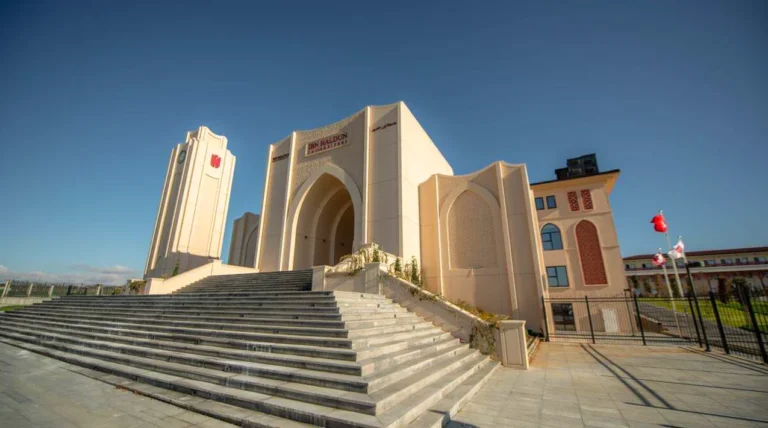
2. Ibn Haldun University
Known as a “Research University” primarily focusing on social and human sciences. It features a very strong psychology program integrating modern Western schools with Islamic heritage in understanding the psyche. The university possesses a Psychotherapy Center (IPAM) on campus, providing services to the public and serving as an excellent training ground for students, in addition to its significant emphasis on teaching languages (Arabic, English, and Turkish).
3. Istanbul Sabahattin Zaim University (IZU)
This university possesses one of the most beautiful and deeply rooted campuses in Istanbul, and features a very solid academic environment in the field of educational and psychological sciences. Its psychology department includes an elite group of prominent academics, and its curricula focus on building a solid theoretical foundation for the student, while providing a calm environment encouraging research, reading, and deep analysis.
4. Istanbul Aydin University
Istanbul Aydin University is considered one of the most dynamic and applied universities, raising the slogan “Towards a Bright Future.” Its psychology department is distinguished by its focus on the practical aspect and openness to the world, as the university provides extensive (Erasmus) student exchange opportunities with European universities. It also leverages its broad network of relationships with hospitals and health centers to provide training placements for its students.
5. Istanbul Topkapi University
Topkapi University is an excellent choice for students seeking a modern, flexible education in a central location. Its psychology department focuses on keeping pace with contemporary psychological challenges and features updated curricula prioritizing the development of the student’s personal and professional skills, helping them integrate into the job market quickly after graduation.
6. Nisantasi University
Nisantasi University is renowned for its advanced “NeoTech Campus,” which relies on technology in everything. For psychology students, the university provides a modern digital learning environment and focuses on “Education 5.0,” integrating technology into understanding human behavior. It is an attractive choice for students looking for a contemporary and vibrant study environment.
7. Istinye University
If your inclination is towards “Neuropsychology” or “Clinical Psychology,” then Istinye University is an ideal choice. The reason lies in its very strong medical background, being affiliated with the (MLP Care) group, which owns the “Liv Hospital” and “Medical Park” hospital chains. This massive medical support provides psychology students with an unparalleled infrastructure for clinical training in its affiliated hospitals.
Cost of Studying the Psychology Major in Turkey
The financial budget required to Study Psychology in Turkey is subject to several criteria making prices variable, most notably the language of instruction (English programs are usually higher in cost), the university’s status, and its geographical location. Despite this, the cost remains a “winning deal” compared to European universities. Here are the average prices at private universities:
Bachelor’s Level (Annually)
This stage is considered a reasonable investment, with tuition fees generally ranging from $2,250 up to $12,000 annually. The final price depends heavily on the university’s strength and facilities, and prices at universities teaching in Turkish are often lower than their English-taught counterparts.
Master’s Level (Full Program)
Master’s fees are usually paid for the full program, not annually. The total cost ranges between $3,500 and $20,000. It is worth noting here that “Clinical Psychology” programs are typically the highest in price due to high demand and the sensitive training involved.
PhD Level (Full Program)
PhD fees are also paid for the full four years, with an approximate cost ranging between $7,000 and $19,000. This variation depends on whether the university provides a global research environment and advanced laboratories for neurological and behavioral studies.
Admission Requirements to Study Psychology in Turkey
Admission policies in the Faculties of Arts and Social Sciences at private Turkish universities are characterized by openness and flexibility, granting the student an opportunity based on their passion for understanding the human psyche, not just their raw grades. Here is a complete guide to admission requirements for each academic stage:
1. Bachelor’s Level Requirements
Admission conditions for this major are highly accessible compared to medical majors, and include the following points:
- High School Diploma Type: Unlike engineering or medicine, the psychology major is highly flexible, as universities accept students from all high school tracks (Scientific, Literary, or Vocational) without discrimination, as the human psyche is a field combining science and art.
- Academic Average: Grades are not a major obstacle; most private universities are satisfied with an acceptable passing grade in high school (often 50% and above) to initially accept the file.
- Language Condition: To study in English, you will need to submit a (TOEFL) certificate or take the university’s “exemption exam.” For the Turkish language, the standard is the (TÖMER) certificate. If neither is available, the student joins the language preparatory year.
- Required Documents: The original high school diploma and transcripts (translated and notarized), passport, and personal photos.
2. Master’s Level Requirements
Criteria differ here to ensure scientific quality, especially for those wishing to pursue a clinical specialization:
- Academic Background: Preference is always given to Psychology Bachelor’s degree holders. However, some universities accept graduates of other majors closely related to social sciences.
- University GPA: It is usually required that the cumulative GPA in the Bachelor’s degree is good, with a minimum of 2.00 out of 4.00 (or equivalent) for registration acceptance.
- Language Proficiency: Considered a fundamental pillar in postgraduate studies; mastery of the study language must be proven to read complex research and references.
- Required Documents: Graduation certificate and transcripts (translated and notarized), language certificate, and a copy of the passport.
3. PhD Level Requirements
This stage features high selectivity to choose only serious researchers:
- Type of Previous Master’s: This is a core condition; the Master’s degree must be under the “Thesis” (Tezli) system exclusively. Professional Master’s graduates (non-thesis) are generally not accepted into a PhD.
- Academic Merit: Competition is stronger here, so the Master’s average is expected to be high (no less than 3.00 out of 4.00 in prestigious universities).
- Foreign Language Mastery: Even in Turkish programs, proving foreign language proficiency (like English) is often required because most modern psychology resources are published in it.
- Research Proposal: Submitting a paper explaining the psychological phenomenon the student intends to study and the research methodology. This is the deciding criterion for the academic supervisor’s acceptance of the file.
- Required Documents: Master’s degree and transcripts, a copy of the Master’s thesis, the research proposal, and a language certificate.
Future of Psychology Major Graduates
Interest in mental health is no longer a secondary “luxury,” but has turned into an urgent necessity in our fast-paced world. Enrolling in the Psychology Major in Turkey grants you the keys to understanding human behavior, guaranteeing you a place in a job market expanding horizontally and vertically, driven by three main tracks ensuring your job security:
Health and Clinical Sector:
Increased societal awareness has made visiting a psychologist normal and necessary. Graduates work in private clinics, rehabilitation centers, and family support centers. Today, mental health is viewed as a fundamental pillar of comprehensive treatment, no less important or impactful than the Medicine major in improving human life quality and recovery.
Business World and Human Resources (HR):
Global companies have realized that “understanding the employee” is the secret to productivity. Therefore, major corporations race to hire psychology graduates in HR, recruitment, and talent development departments, due to their unique ability to analyze personalities, resolve conflicts, and create a healthy, motivating work environment that increases employee loyalty.
Technology and User Experience (UX Research):
This field might seem surprising, but it is the fastest-growing and highest-paying. Tech companies and smartphone applications rely on psychologists to understand user behavior and improve User Experience. Your understanding of human behavior motives makes you a rare commodity in the fields of “Neuro-Marketing” and designing digital products that meet people’s real needs.
How Do I Study Psychology in Turkey?
To spare yourself the hassle of searching and ensure a correct academic start, follow these practical steps placing you in study seats at the right time:
1. Choosing the Right University
The first step is determining the university where you wish to study the psychology major from the list of available Turkish universities, and beginning the application procedures early to guarantee seat availability.
2. Preparing the Official File
The time factor is crucial. Start preparing your core documents to ensure swift procedures: you will primarily need the high school diploma (translated and notarized), transcripts, and a copy of your passport (valid).
3. Consulting Experts (Intilaqa)
Why risk a random choice? Let the “Intilaqa” team shorten the path for you. We will study your file and recommend the most appropriate university for your budget and ambition, then handle the application process on your behalf for free, ensuring you receive the best exclusive discounts and partial scholarships.
4. Confirming University Enrollment
Given the high demand for psychology seats in prestigious universities, once “Initial Acceptance” is issued, you must secure your seat by transferring the first installment of tuition fees to the university’s account. This step grants you the official “Final Acceptance” and guarantees the seat is yours.
5. Obtaining a Student Visa
After receiving final acceptance, head immediately to the Turkish embassy or consulate in your country to apply for a “Student Visa.” This document is your legal permit to enter Turkish territory and reside there as a university student.
6. Arrival and Starting the Journey
Welcome to Turkey! Upon your arrival, we will be waiting to assist you in completing the administrative registration procedures on campus and obtaining your student ID card, so you can take your first steps in understanding and studying the human psyche.
How Does the Intilaqa Team Help You?
The Intilaqa Educational Team works to assist you step-by-step to choose the most appropriate major and university for you in Turkey, according to your academic interests and study budget.
We offer you a comprehensive free consultation that includes:
- Recommending the best Turkish universities that teach your major.
- Clarifying available costs and scholarships.
- Full follow-up in the registration process until final acceptance.
Whether you plan to Study Psychology in Turkey or any other major, you can start by learning about the details of Studying in Turkey via our complete guide:
Study in Turkey