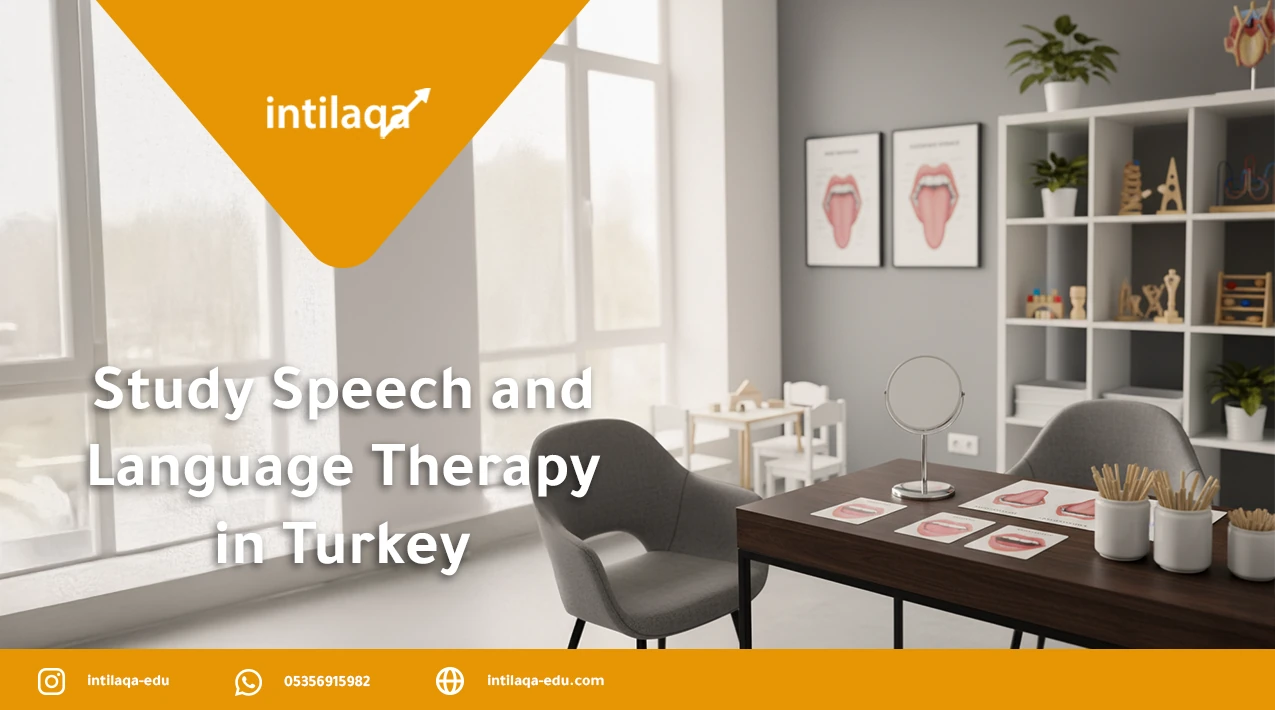
If you’re planning to study Speech and Language Therapy in Turkey, you’re choosing one of the most in-demand and impactful medical specialties today. As awareness grows around the importance of addressing communication disorders, Turkish universities combine modern medical curricula with intensive clinical training in their advanced hospitals.
In this comprehensive guide, we lay out a clear roadmap covering everything you need to know: from the nature of the coursework and the best universities, to costs and admission requirements, so you can confidently take your first step into this promising, human-centered field.
What Is Speech and Language Therapy?
Speech and Language Therapy is a precise health specialty sitting at a vital intersection between Medicine, psychology, and linguistics. It aims primarily to diagnose, assess, and treat human communication disorders and swallowing disorders in individuals of all ages.
The role of a speech therapist isn’t limited to correcting pronunciation — it extends to being an essential part of the rehabilitative medicine team. When you choose to study Speech and Language Therapy in Turkey, you’ll learn how to handle the following conditions:
Speech Disorders:
A disruption in moving the speech organs to produce sounds clearly. Causes may be functional or organic (such as a cleft lip), making a person’s speech unintelligible and requiring training to improve pronunciation.
Language Disorders:
Related to the ability to understand meaning or construct sentences. These include developmental delays, autism, or even loss of previously acquired language (aphasia) after brain injuries, where the individual struggles with comprehension or expression.
Fluency Disorders:
The most common being stuttering. Treatment here focuses on regulating breathing and controlling speech rhythm to reduce repetitions and pauses, improving speech fluency and the person’s self-confidence.
Voice Disorders:
Problems affecting the vocal cords that impact pitch or voice quality (such as chronic hoarseness), often resulting from vocal misuse or medical issues in the larynx.
Dysphagia:
Difficulty safely moving food or drink from the mouth to the stomach. This condition is often linked to nervous system disorders and requires careful intervention to prevent choking and ensure safe nutrition for the patient.
Benefits of Studying Speech and Language Therapy in Turkey
Studying Speech and Language Therapy in Turkey has seen growing interest from international students, thanks to the learning environment Turkish universities offer — one that combines European academic quality with intensive hands-on experience. Here are the key advantages of this program in Turkey:
Advanced Medical Infrastructure:
Turkish universities (especially those with their own hospitals) provide simulation labs and speech clinics equipped with the latest audio and visual technology, allowing students to train on modern diagnostic and treatment equipment that keeps pace with global developments.
Intensive Clinical Training:
Programs aren’t limited to theory — they integrate students into the work environment early on. University hospitals and rehabilitation centers offer opportunities to work directly with real cases (children and the elderly) under the supervision of specialists and experts, sharpening students’ diagnostic and treatment skills before graduation.
Education Quality and International Recognition:
Most Turkish universities follow the European Bologna Process standards, meaning high educational quality and broad recognition of the degree across EU member states and many Arab countries, making it easier to find employment or pursue graduate studies later on.
Studying in English:
To break the language barrier, many prestigious private universities offer the Speech and Language Therapy program fully in English, making it easier for international students to engage with the curriculum and keep up with global scientific resources.
Competitive Tuition Costs:
Compared to European and American universities, Turkey offers high-quality medical education at reasonable tuition fees, with living costs that suit students, making it a smart economic choice.
Courses in the Speech and Language Therapy Program in Turkey
Studying Speech and Language Therapy in Turkey spans 4 academic years, with a curriculum carefully designed to start with a medical and scientific foundation, progressing toward in-depth clinical courses and hands-on practice. Below are the main courses students take during their bachelor’s journey:
Basic Medical Sciences:
Considered the cornerstone for understanding the organic side of the field, including:
- Anatomy and physiology of the head, neck, and respiratory system.
- Neurology and its relationship to speech and language.
- Audiology, given the close link between hearing and speech.
- Pathology and genetics.
Linguistic and Psychological Sciences:
Aimed at understanding the nature of human communication, including:
- Phonetics and clinical linguistics.
- Developmental psychology and child development.
- The psychology of learning and language acquisition and development.
Specialized Core Courses (Diagnosis and Treatment):
- These form the core of the program and are typically taught starting in the second and third years, with separate courses for each type of disorder:
- Fluency disorders (stuttering and rapid speech).
- Voice and resonance disorders (vocal cord problems).
- Dysphagia in children and adults.
- Acquired speech and neurological disorders (such as aphasia following strokes).
- Articulation and voice disorders (lisps and pronunciation).
- Auditory-verbal rehabilitation for cochlear implants.
Clinical Applications and Research:
- In the fourth and final year, the schedule focuses on:
- Intensive clinical practicum (Staj) at hospitals and rehabilitation centers.
- Studying and discussing clinical cases.
- Professional practice ethics.
- Graduation project (research thesis).
How Long Does It Take to Study Speech and Language Therapy in Turkey
The standard duration to study Speech and Language Therapy in Turkey for a bachelor’s degree is 4 academic years, divided into 8 semesters.
However, this duration may extend to 5 years in one case: when the student doesn’t hold a proficiency certificate in the language of instruction (whether Turkish or English). In that case, the student must complete a “prep year” to learn the language before starting the core program courses.
Master’s in Speech and Language Therapy in Turkey
Master’s programs mark a pivotal stage in the journey of studying Speech and Language Therapy in Turkey, moving the student from general practice to advanced clinical specialization and research. Through their advanced curricula, Turkish universities aim to graduate specialized therapists and academic researchers, equipped with advanced diagnostic and treatment skills that qualify them to lead hospital departments or pursue academic careers internationally.
A master’s degree typically takes two years (four semesters). Turkish universities offer two main, flexible options:
Thesis-Based Master’s (Tezli)
This track focuses on systematic scientific research and evidence-based practice, requiring the student to prepare a thesis that explores a medical or therapeutic issue in depth. This option is the ideal path for students who want to pursue a PhD or work as academics and lecturers at universities. Students can direct their thesis research toward specialized, complex areas such as:
- Acquired neurological language disorders (such as aphasia following strokes).
- Advanced Dysphagia Management.
- Clinical voice studies and rehabilitation for professional voice users.
- Autism spectrum disorders and language development in children.
Non-Thesis Master’s (Tezsiz)
This track is designed specifically for healthcare practitioners and speech therapists already working in hospitals or private clinics who want to develop their skills without committing to lengthy academic research. The program focuses on applied learning and clinical skill development, with the student completing intensive coursework alongside a practical “graduation project” that solves a real-world problem. This track targets professionals seeking to enhance their expertise in applied areas such as:
- Early intervention techniques and family counseling programs.
- Augmentative and Alternative Communication (AAC) and assistive technology.
- Auditory-verbal rehabilitation for cochlear implant users and hearing aid wearers.
- Managing speech and language therapy units in healthcare institutions.
PhD in Speech and Language Therapy in Turkey
The PhD stage represents the peak of the academic pyramid in the journey of studying Speech and Language Therapy in Turkey, aiming to prepare an elite group of scientists and clinical experts capable of developing new therapeutic theories and leading medical teams. At this stage, Turkish universities focus on producing “independent researchers” and “consultants” equipped with deep critical-thinking skills, qualifying them for senior positions at universities, research hospitals, and international healthcare institutions.
A PhD typically takes 4 years (8 semesters). Given the nature of this degree, the academic program is divided, in both time and structure, into two consecutive stages:
First: Coursework and Proficiency Exam Stage
This stage forms the solid foundation before embarking on the research journey. The student goes through an intensive program of advanced courses that sharpen their theoretical background, concluding with a comprehensive “proficiency exam” that determines the student’s eligibility to continue. This part is designed to ensure the future PhD holder is well-versed in all modern theories and statistical methods needed, with a focus on courses such as:
- Advanced biostatistics and clinical research design.
- Medical ethics and healthcare policy.
- Motor learning theories and advanced neuropsychology.
- Leadership and management in healthcare rehabilitation institutions.
Second: Research and Dissertation Phase
After successfully passing the coursework and proficiency stages, the student moves to the heart of the PhD, transitioning from a consumer of knowledge to a producer of it. This track focuses on conducting original, innovative research that contributes new knowledge to the medical field globally. The student is required to publish articles in peer-reviewed scientific journals and prepare a substantial dissertation addressing complex issues. Researchers can focus their dissertations on specialized areas such as:
- Cognitive Linguistic Neuroscience.
- Developing standardized treatment protocols for swallowing and language disorders.
- Genetics of Communication Disorders.
- Forensic voice analysis and advanced speech technology.
Best Universities for Studying Speech and Language Therapy in Turkey
When looking into studying Speech and Language Therapy in Turkey, a number of private universities stand out for their massive investment in the medical and health sector, providing university hospitals and specialized labs for their students. Here’s a selection of these universities:
Bahcesehir University:
Bahcesehir University is located in the heart of Istanbul and stands out for its extensive global network. It provides the Faculty of Health Sciences with strong infrastructure and modern training labs, giving speech therapy students the chance to gain international exposure and access outstanding student exchange programs.
Istinye University:
Istinye University is known for being backed by one of Turkey’s largest medical groups (the MLPCare group, which includes Liv and Medical Park hospitals). This close relationship ensures students in the program get genuine, intensive clinical training at the university’s hospitals from the very first years.
Uskudar University:
Uskudar University is the first university in Turkey specialized in behavioral sciences and brain health. It operates the “NP Istanbul” hospital, specialized in the brain, making it the best environment for studying speech disorders of neurological and psychological origin.
Medipol University:
Medipol University operates the “Mega Medipol” complex, one of the largest medical-educational complexes in the country. It stands out for its highly advanced research centers in healthcare, giving speech and language therapy students a top-tier research and hands-on environment.
Biruni University:
Biruni University is fully specialized in health sciences only. This focus has allowed it to offer a fully integrated academic environment, including a university hospital and outpatient clinics that let students practice the profession and interact with patients daily.
Gelisim University:
Gelisim University is known for holding the most international accreditations for its programs (such as the German AHPGS accreditation for health sciences). The university focuses on educational quality and provides labs equipped with the latest audio and visual technology for speech therapy students.
Cost of Studying Speech and Language Therapy in Turkey
The cost of studying Speech and Language Therapy in Turkey varies notably based on several factors, most notably the language of instruction (Turkish or English), and how modern the clinics and medical simulation centers the university offers are, giving students a range of options that suit different budgets. Below are average prices at private universities:
Bachelor’s Degree (Annual Fees)
Annual tuition fees for the Speech and Language Therapy program at most private universities range between approximately $3,200 and $8,000. English-taught programs, and universities with their own hospitals for student training, tend to fall on the higher end of this range due to the high operating costs of medical facilities.
Master’s Degree (Full Program)
Turkey’s graduate study system is based on a total program cost rather than annual payments. For a master’s in speech therapy (whether thesis-based or not), total fees range between $4,500 and $14,000. This price variation is tied to how established the university is medically and its partnerships with international healthcare institutions that provide an advanced research environment.
PhD (Full Program)
Given the nature of the PhD stage, which requires intensive use of clinical labs and close supervision from consultant professors, the total cost of the program (over 4 years) typically ranges between $9,000 and $12,500 at private universities, and may be higher at some elite universities offering joint programs or international research opportunities.
Admission Requirements for Speech and Language Therapy in Turkey
Admission procedures at health sciences faculties in private universities are flexible and straightforward, with specific requirements varying by degree level — though they all share one goal: confirming academic eligibility and readiness to study a humanistic medical field. Below is a detailed look at the core admission requirements for studying Speech and Language Therapy in Turkey:
1. Bachelor’s Requirements
This stage is the first gateway into the medical field, and requires:
- High School Diploma: Submitting the original high school diploma. Although the program falls under health sciences, private Turkish universities show high flexibility — accepting graduates of the science track primarily, and sometimes accepting other tracks (such as literary or religious studies) provided there are supporting subjects, depending on each university’s regulations.
- Academic Average: The minimum admission threshold varies, but at private universities it’s typically a high school average of 60% or above, without requiring the very high averages needed for Human Medicine or Dentistry.
- Language Requirement: To join the English track, students must present a valid TOEFL certificate or pass the university’s “language proficiency exemption exam.” For the Turkish track, a TOMER certificate is required, or completion of the prep year.
- Documents Required for Enrollment: A translated and notarized copy of the high school diploma and transcript, a valid passport copy, and biometric personal photos.
2. Master’s Requirements
This stage aims for clinical and research depth, and requires a specific academic background:
- Prior Qualification: Not all program graduates are accepted — applicants must hold a bachelor’s degree in a closely related field such as: Speech and Language Therapy, Psychology, Child Development, Linguistics, Audiology, or medical faculties. The university may require a “supplementary scientific semester” if the prior field is somewhat distant.
- GPA: A minimum university GPA of no less than 2.00 out of 4.00 is usually required (this figure may vary slightly depending on each university’s internal regulations).
- Language Proficiency: Proving proficiency in the language of instruction (English or Turkish) is essential for understanding advanced medical references.
- Documents Required for Enrollment: Passport copy, a translated and certified copy of the bachelor’s diploma and transcript, and a language certificate if available.
3. PhD Requirements
This stage is academically rigorous, aiming to prepare experts and consultants:
- Prior Qualification: Holding a master’s degree in Speech and Language Therapy or related neuroscience and audiology fields. Most universities require the master’s to have been a thesis-based (Tezli) program, to ensure the student has prior research experience.
- Academic Excellence: Achieving a high GPA at the master’s level, typically required to be no less than 2.50 out of 4.00 for the application to be accepted and reviewed.
- Foreign Language: English proficiency is a central requirement in most PhD programs (even those taught in Turkish), enabling researchers to publish papers in international journals.
- Research Plan: Submitting a “research proposal” outlining the medical issue or language disorder the student aims to study and develop treatment protocols for.
- Documents Required for Enrollment: Master’s degree and transcript (translated and certified), a copy of the previous master’s thesis, the research proposal, academic recommendation letters, and a passport copy.
Is Speech and Language Therapy Worth the Investment?
The short answer is: yes, absolutely. This program is a strategic investment in your career future, as it holds an increasingly important place in both the global and Arab medical job markets, offering graduates high “job security” for the following reasons:
Growing Demand and a Shortage of Specialists:
Many countries suffer from an acute shortage of academically qualified professionals in this field, at a time when public awareness is growing around the need for “early intervention” to treat speech issues in children and autism, making employment opportunities almost immediate after graduation.
Diverse Work Environments:
Studying Speech and Language Therapy in Turkey gives graduates a high degree of flexibility — they’re not limited to working in hospitals, but can also work in international schools, special needs centers, elderly care homes, or even open their own private clinic.
Rewarding Financial Return:
As a precise and rare medical specialty, speech therapist salaries tend to be higher than the average for other health specialties, with the potential to grow income further through private consultations.
Profound Human Value:
This program gives you deep job satisfaction — you’re directly contributing to changing patients’ lives, giving them back their “voice” and their ability to connect with the world again.
How Do I Study Speech and Language Therapy in Turkey?
To ensure a smooth, successful start to your journey of studying Speech and Language Therapy in Turkey, you need to follow a clear approach that gets you into the faculty offering the best clinical training. Here’s the practical roadmap:
1. Choosing the Right University
The key step is identifying a university with strong medical infrastructure (university hospitals, speech clinics, and rehabilitation centers) serving your specialty. Instead of random searching that wastes your time, you can reach out to us, and we’ll recommend the universities that excel in medical sciences and offer the training environment you’re aiming for.
2. Preparing Your Official File
Start by organizing your necessary documents to ensure your file is ready: you’ll mainly need a translated and certified copy of your high school diploma (with transcript), along with a clear copy of a valid passport and recent personal photos with a white background.
3. Consulting the Experts (Free Application)
To save time and ensure the best choice, rely on the expertise of the Intilaqa team. We handle the research and comparison process for you, recommend the university that best fits your academic needs and budget, then manage your university application to secure your acceptance with the highest possible discounts, completely free of charge.
4. Securing Your Seat
After we submit your documents, you’ll receive a “preliminary acceptance” letter from the university within a short period. The next step requires you to pay the first installment of tuition fees directly to the university’s bank account, officially confirming your enrollment and obtaining your “final acceptance letter.”
5. Getting Your Student Visa
Once you have your final acceptance, take it to the Turkish consulate or embassy in your country of residence to begin the process of obtaining your “student visa” — the legal document that allows you to enter Turkey as a university student.
6. Arrival and Starting Your Studies
Welcome to Turkey! As soon as you arrive, we’ll be there to support you in completing your final registration procedures on campus and collecting your student ID card, so you can begin your academic journey in this noble, human-centered field right away.
How Can the Intilaqa Team Help You?
The Intilaqa Education team works step by step to help you choose the program and university that best fit you in Turkey, based on your academic interests and study budget.
We offer a comprehensive free consultation that includes:
- Recommending the best Turkish universities that teach your chosen specialty.
- Explaining the costs and available scholarships.
- Full follow-up throughout the registration process, all the way to final acceptance.
Whether you’re planning to study Speech and Language Therapy in Turkey or any other program, you can start by learning more about studying in Turkey through our complete guide: