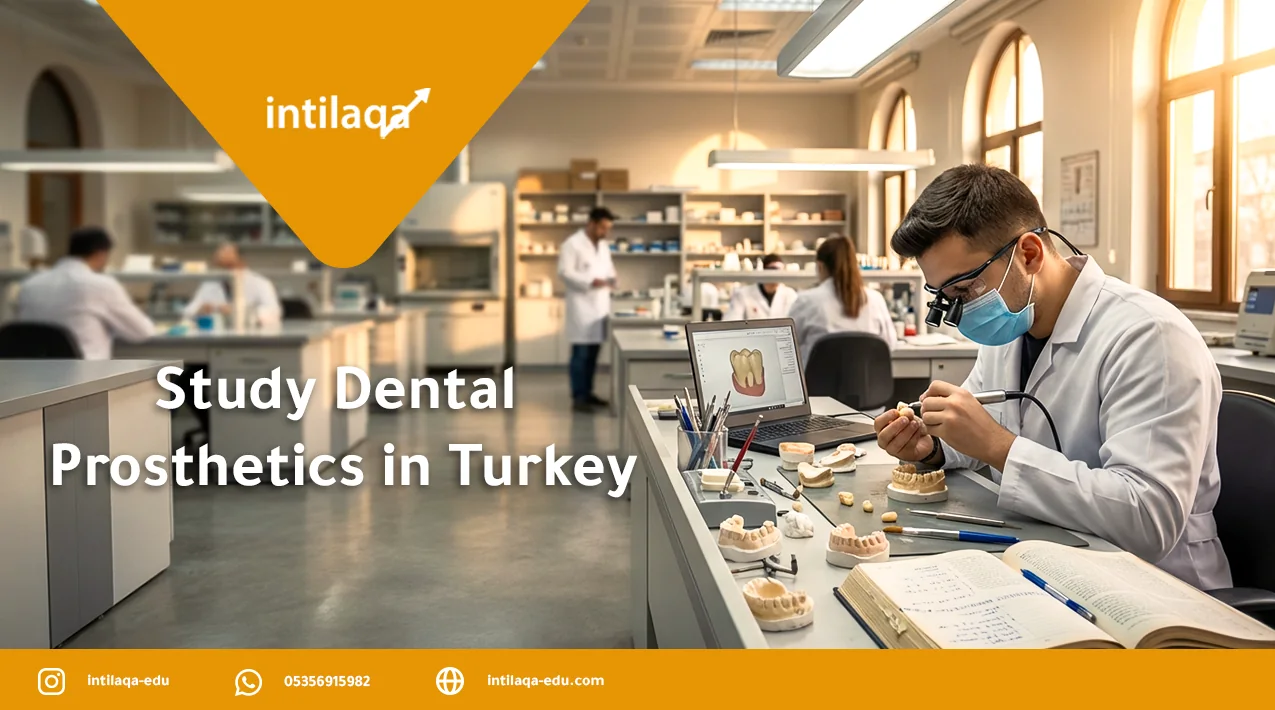
The dental sector is undergoing a major transformation, as the ideal smile has become the result of close collaboration between the dentist and the professional dental laboratory technician. With the rapid growth of medical tourism in Istanbul, choosing to study Dental Prosthetics in Turkey stands out as a strategic option for students seeking a two-year vocational diploma that combines manual craftsmanship with modern digital technologies.
What Is Dental Prosthetics?
Dental Prosthetics can be described as the technical and engineering side of Dentistry and one of the main gateways into Digital Dentistry. It is a two-year vocational diploma program in Dental Prosthesis Technology designed to prepare professional Dental Technicians with the manual and technical skills required to manufacture dental restorations and prostheses that restore patients’ smiles.
A Dental Technician works as an essential partner to the dentist. While the dentist performs clinical treatment and takes impressions or digital measurements, the technician transforms those records into precise dental prostheses in the laboratory using materials such as ceramics, zirconia, and metals.
The main tasks in this field include:
Manufacturing Crowns & Bridges:
Carving and shaping fixed restorations to replace missing or damaged teeth.
Preparing Removable Dentures:
Designing and manufacturing complete or partial dentures for older adults or patients who have lost teeth.
Preparing Orthodontic Appliances:
Producing models and appliances used by orthodontists to guide or correct tooth alignment.
Aesthetic Restorations:
Designing porcelain veneers with a high level of artistic precision to improve the appearance of the smile.
In short, this field combines medical science with sculptural artistry, making it a strong option for students who have artistic sensitivity, precision, and strong manual skills.
Why Study Dental Prosthetics in Turkey?
Choosing to study Dental Prosthetics in Turkey gives students access to a highly developed learning environment, as Turkish universities have invested heavily in laboratories that keep pace with global advances in Digital Dentistry. Key advantages include:
Digital Simulation Laboratories (CAD/CAM):
One of the major advantages is training on modern Computer-Aided Design and Computer-Aided Manufacturing technologies. Students learn how to design teeth digitally and produce restorations using technologies such as 3D printing instead of relying only on traditional methods.
Intensive Practical Training:
The curriculum is highly practical, with students spending more than 60% of their time in the laboratory practicing wax carving, mold casting, and working with porcelain and zirconia to develop strong manual skills.
Integrated Medical Environment:
Dental Prosthesis Technology programs are often located within or near Dentistry faculties and university hospitals. This gives students opportunities to interact with dentists, understand clinical requirements, and work with real cases during practical training.
Affordable Cost:
Despite the use of expensive materials and equipment during training, tuition fees for this diploma at private universities remain relatively affordable compared with the quality of the facilities provided.
Dental Prosthetics Courses in Turkey
The curriculum for studying Dental Prosthetics in Turkey is designed to take students from beginner level to professional technical practice, combining the precision of a sculptor with foundational dental knowledge. The program is heavily practice-oriented, at approximately 60-70%, and courses are generally divided as follows:
Year One: Technical and Anatomical Foundations
The first year focuses on developing manual skills and understanding the structure of the mouth and teeth.
- Dental Morphology: One of the most important first-year courses, where students learn to carve and shape teeth using materials such as soap or wax to understand the anatomy of each tooth accurately.
- Head and Neck Anatomy: Studying the muscles, bones, and nerves associated with the mouth.
- Dental Materials: Learning the properties of materials used in dental laboratories, including gypsum, wax, and acrylic.
- Fixed Prosthodontics 1: Learning the fundamentals of manufacturing metal crowns and bridges.
Year Two: Specialization and Digital Technologies
Students move into advanced applications and modern digital technologies.
- Removable Prosthodontics: Designing and manufacturing complete and partial dentures for patients who have lost teeth.
- Porcelain & Ceramics: Learning how porcelain layers are applied and colored to closely resemble natural teeth.
- CAD/CAM Applications: Learning digital dental design on computers and production technologies, a core component of Digital Dentistry.
- Implant Prosthetics: Learning how prosthetic teeth and restorations are manufactured for dental implants.
- Orthodontic Appliances: Manufacturing models, retainers, and appliances used by orthodontists.
How Long Does It Take to Study Dental Prosthetics in Turkey?
The duration to study Dental Prosthetics in Turkey is only two academic years (4 semesters), as the program is offered through vocational health schools and leads to an Associate Degree.
The duration may extend to 3 years in one situation: if the student does not meet the required proficiency level in the language of instruction, particularly Turkish. In that case, the student must complete a language preparatory year before beginning the two-year professional program.
Best Universities to Study Dental Prosthetics in Turkey
Turkish universities compete in providing modern digital dental laboratories for their students. The following are some of the leading options we recommend for students planning to study Dental Prosthetics in Turkey:
Istanbul Medipol University:
Istanbul Medipol University is well known for its medical and health infrastructure. Students in vocational health programs benefit from laboratories connected to the Medipol Mega medical complex and gain exposure to modern dental technologies.
Istanbul Aydin University:
Istanbul Aydin University is known for its strong Faculty of Dentistry and DentAydin dental hospital. Dental Prosthesis Technology students benefit from this medical infrastructure and from advanced technology laboratories on campus.
Biruni University:
As a university focused heavily on health sciences, Biruni University provides a specialized academic environment for Dental Prosthesis Technology students, with laboratories designed for both manual carving and precise digital design training.
Nisantasi University:
Nisantasi University is known for its technology-oriented NeoTech Campus and places strong emphasis on Digital Dentistry, making it suitable for students who want exposure to modern design software and digital workflows.
Uskudar University:
Uskudar University has a strong reputation in health-related fields and offers curricula that emphasize precision and quality in the manufacturing of dental prostheses, supported by experienced academic staff.
Istanbul Gelisim University:
Istanbul Gelisim University places strong emphasis on vocational programs and provides intensive workshops to help Dental Prosthesis Technology students develop job-ready technical skills.
Istanbul Topkapi University:
Istanbul Topkapi University is a practical option for students looking for relatively affordable tuition combined with hands-on vocational training, with an emphasis on preparing skilled technicians for the job market.
Cost to Study Dental Prosthetics in Turkey
The cost to study Dental Prosthetics in Turkey is relatively affordable and competitive, especially when compared with Dentistry programs or the advanced equipment students use during training. The following table shows the stated annual tuition fees at selected private universities:
| University | Language of Instruction | Annual Tuition Fee (After Discount) |
|---|---|---|
| Istanbul Topkapi University | Turkish | 1,450$ |
| Nisantasi University | Turkish | 1,950$ |
| Istanbul Gelisim University | Turkish | 2,557$ |
| Uskudar University | Turkish | 2,660$ |
| Istanbul Aydin University | Turkish | 3,000$ |
| Istanbul Medipol University | Turkish | 3,150$ |
| Istanbul Medipol University | English | 3,600$ |
| Biruni University | Turkish | 4,500$ |
Requirements to Study Dental Prosthetics in Turkey
Private Turkish universities generally follow flexible admission policies for international students and do not require complex entrance exams such as YOS or SAT.
To secure your place and study Dental Prosthetics in Turkey, you mainly need to meet the following basic requirements:
1. High School Diploma:
Applicants from all high school tracks, including science, humanities, and vocational education, may apply, although science or health-related vocational backgrounds may be preferred. A basic passing average in high school, usually 50% or above, is generally sufficient for admission to many private universities.
2. Language Requirement:
The requirement depends on whether the selected program is taught in Turkish or English. Students are encouraged to provide an accepted proficiency certificate such as TOMER or TOEFL if available. If they do not hold one, they generally take the university’s exemption or proficiency exam, and those who do not pass complete a language preparatory year before beginning the program.
3. Documents Required for Preliminary Registration:
To open your application file and reserve a place, prepare clear scanned copies of the following documents:
- A copy of a valid passport.
- A copy of the high school diploma.
- Academic transcript, translated and certified.
- A personal photo with a white background.
Career Prospects for Dental Prosthetics Graduates
The field is benefiting from rapid growth in Digital Dentistry and aesthetic dental services. Graduates of Dental Prosthesis Technology are no longer limited to traditional laboratory work, as modern digital workflows have expanded the technical role of Dental Technicians.
Graduates can pursue several career paths, including:
Digital Dental Labs:
Working as a technician specialized in designing and manufacturing crowns, bridges, and veneers using CAD/CAM technologies.
Dental Clinics and Hospitals:
Working closely with dentists in larger clinics and hospitals to support the preparation, fitting, and adjustment of dental prostheses.
Dental Materials and Equipment Companies:
Working in technical or scientific sales roles for companies that supply dental implants, raw materials, laboratory equipment, and related technologies.
Starting a Private Dental Laboratory:
After gaining experience and obtaining the required licenses, technicians may establish their own laboratory and work with multiple dental clinics, depending on local regulations.
Continuing to a Bachelor’s Degree (DGS):
The academic path does not necessarily end with the diploma. Graduates may take the Vertical Transfer Exam (DGS) and continue into related bachelor’s programs, including health-related management fields such as Health Management, subject to the applicable transfer rules and available programs.
How to Study Dental Prosthetics in Turkey?
To begin your plan to study Dental Prosthetics in Turkey in an organized way, follow this practical roadmap for choosing a vocational health school with strong laboratory facilities:
1. Choose the Right University
Do not base your decision on the university name alone. Make sure the institution provides modern CAD/CAM laboratories and practical technical training. The Intilaqa team can help you compare universities based on laboratory quality and tuition fees that fit your budget.
2. Prepare Your Application Documents
Prepare your documents early to save time. The main requirements are a translated and certified high school diploma, academic transcript, valid passport, and a personal photo.
3. Application and Admission
The Intilaqa team can manage the application process on your behalf free of charge. We review your file, recommend suitable programs based on your academic profile, and handle the application while helping you access available tuition discounts and partial scholarships.
4. Confirm Preliminary Enrollment
After receiving preliminary acceptance, you need to transfer the first tuition payment to the university’s official bank account to secure your place and receive the final acceptance document.
5. Apply for a Student Visa
Using the final acceptance document, apply for a student visa through the Turkish embassy or consulate in your country. This step is required for legal entry and study in Turkey when a visa is applicable to your nationality.
6. Arrive and Begin Your Studies
After arriving in Turkey, visit the university’s student affairs office to submit the original documents, complete final registration, receive your student ID, and begin the program.
How Can the Intilaqa Team Help You?
The Intilaqa Education team supports you step by step in choosing the program and university in Turkey that best match your academic interests and study budget.
We provide a comprehensive free consultation that includes:
- Recommending suitable Turkish universities that offer your chosen program.
- Explaining tuition fees and available scholarship opportunities.
- Providing full support throughout the application process until final admission.
Whether you plan to study Dental Prosthetics in Turkey or pursue another program, you can learn more about studying in Turkey through our complete guide:
Study in Turkey]