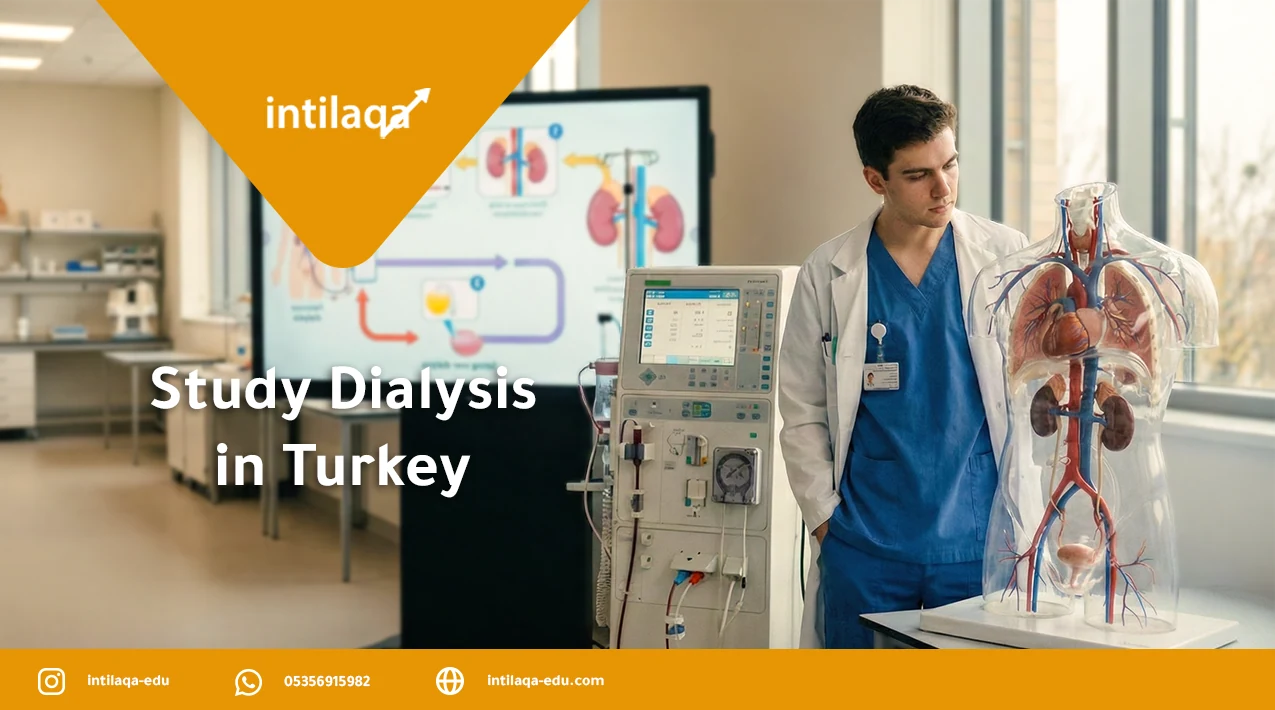
As the global need for specialized healthcare continues to grow, demand is increasing for professionals with both technical and medical skills. This is where choosing to Study Dialysis in Turkey becomes an important pathway within vocational health education. The program is designed to prepare qualified Dialysis Technicians who can operate blood purification equipment and assist in the care of patients with critical and chronic kidney conditions.
In this comprehensive guide, we cover the leading Turkish universities offering the program, study requirements, tuition fees, and how this diploma can become your first step toward a stable healthcare career.
What Is the Dialysis Major?
The Dialysis program in Turkey, known in Turkish as Diyaliz, is a specialized healthcare program that combines technical expertise with direct patient care. It prepares qualified technicians to carry out treatment procedures accurately under the supervision of graduates from the Medicine field and other healthcare professionals, providing essential support to patients with chronic kidney failure.
The main responsibilities of a Dialysis Technician include:
Preparing Dialysis Equipment:
Preparing and sterilizing dialysis machines before treatment sessions, ensuring that the equipment operates correctly and complies with applicable health and safety standards.
Patient Care:
Preparing patients physically and psychologically, connecting them to dialysis equipment, and monitoring vital signs such as blood pressure and pulse throughout the treatment session to help maintain stability and identify sudden changes.
Emergency Response:
Responding quickly and professionally to complications that may occur during dialysis and immediately informing the supervising physician so that the necessary medical procedures can be taken.
Equipment Maintenance:
Performing routine care of water-treatment units and equipment used within the dialysis department to maintain efficiency and reduce technical problems that could interrupt treatment.
In this role, graduates of Dialysis programs in Turkey serve as an important link between the specialist physician and the patient, supporting the continuity and safety of treatment for people with kidney failure.
Why Study a Dialysis Diploma in Turkey?
Choosing to Study Dialysis in Turkey offers several advantages for students who want to enter the healthcare field through a relatively short and practically focused academic program.
Opportunity to Continue to a Bachelor’s Degree:
Turkey gives diploma graduates the opportunity to continue toward bachelor’s programs in fields such as Nursing and Healthcare Management by passing the Vertical Transfer Exam (DGS). One of the main advantages of this pathway is that the student can complete the degree by studying only two additional years rather than beginning a four-year bachelor’s program from the start.
Advanced Learning Environment:
Turkish universities provide modern simulation laboratories designed to reproduce intensive-care and clinical environments, allowing students to train on modern dialysis equipment before graduation.
Practical Training Opportunities:
Thanks to Turkey’s developed healthcare system, students receive practical training in public and private hospitals, helping them become more confident when working directly with patients.
Fast Entry into the Job Market:
Because the program lasts only two years and leads to an associate diploma, graduates can enter the professional healthcare environment relatively quickly.
Academic Recognition:
Many universities provide the “Blue Diploma” and hold academic recognitions that can support degree recognition and employment opportunities in Arab countries and European Union countries.
Dialysis Courses in Turkey
The curriculum for students who Study Dialysis in Turkey follows a gradual structure, beginning with theoretical medical foundations before moving toward intensive technical and clinical training.
First-Year Courses: Medical Foundations
The first year focuses on developing the student’s medical foundation and understanding of the human body and basic dialysis principles:
- Anatomy and Physiology: Understanding the structure of the human body and the function of the kidneys and urinary system.
- Medical Terminology: Developing the ability to read medical reports and understand terminology used by healthcare professionals.
- Introduction to Dialysis: An introduction to the principles and types of dialysis, including hemodialysis and peritoneal dialysis, as well as the development of dialysis treatment.
- Biochemistry: Studying chemical processes in the body that affect kidney function and blood analysis.
- First Aid: Fundamental life-saving skills and basic emergency response techniques.
Second-Year Courses: Specialization and Practical Training
During the second year, students move toward more advanced technical knowledge and direct clinical practice:
- Dialysis Applications I and II: Intensive practical courses covering the steps involved in performing dialysis and working directly with patients.
- Dialysis Equipment and Devices: Technical study of dialysis machines, maintenance procedures, calibration, and associated water-treatment systems.
- Pharmacology: Focusing on medications used for patients with kidney failure, anticoagulants, and their possible side effects.
- Professional Ethics and Psychology: Learning how to provide psychological support to patients with chronic illnesses while following professional ethical and legal standards.
- Kidney Diseases (Pathology): Detailed study of diseases affecting the kidneys and leading to kidney failure, together with approaches to patient care.
How Long Does It Take to Study Dialysis in Turkey?
The standard duration to Study Dialysis in Turkey is 2 academic years, divided into 4 semesters. After completing the program, students receive an associate-level vocational diploma known in Turkey as Ön Lisans.
If the student does not meet the required language proficiency and does not hold an accepted language certificate, an additional preparatory year is required before beginning the major. In this case, the total study duration becomes 3 years.
Best Universities to Study Dialysis in Turkey
Students who want to Study Dialysis in Turkey can choose between universities with large medical complexes and universities that maintain strong partnerships with major hospitals for practical training. The following are among the notable options:
Istinye University:
Istinye University has a strong medical orientation and was established with connections to the MLP Care healthcare group. This relationship gives students opportunities for practical exposure within the Liv Hospital and Medical Park hospital networks across Turkey.
Biruni University:
Biruni University operates under the motto “The Future of Science” and specializes heavily in medical and health sciences. Its laboratories and academic resources are focused strongly on healthcare education, providing vocational health students with a professionally oriented environment.
Istanbul Medipol University:
Istanbul Medipol University operates one of Turkey’s largest medical complexes, Medipol Mega, and places significant emphasis on scientific research and intensive clinical training. Students can gain exposure to modern dialysis technologies through the university’s healthcare facilities.
Bahcesehir University (BAU):
Bahcesehir University has strong partnerships with Medical Park hospitals and provides students with advanced technological infrastructure. Its international academic environment also provides opportunities for student exchange and exposure to international medical practices.
Istanbul Aydin University:
Istanbul Aydin University is known for its integrated campus and advanced technical laboratories, including its Techno-Center. Dialysis students can also receive practical training through the university’s healthcare facilities, combining theoretical education with hands-on experience.
Uskudar University:
Uskudar University is known for its focus on health and behavioral sciences and its partnership with NPISTANBUL Brain Hospital. Students in health-services programs have access to specialized laboratories and training that combines technical patient-care skills with attention to psychological support.
Cost to Study Dialysis in Turkey
Healthcare diploma programs in Turkey are generally more affordable than longer medical degrees and can also be competitively priced compared with many European and regional institutions. Choosing to Study Dialysis in Turkey therefore provides students with a practically focused healthcare program at relatively accessible tuition rates.
Tuition fees vary according to the university, location, and language of instruction. In general, annual tuition fees for Dialysis programs at private Turkish universities range between 2,500$ and 4,500$.
Requirements to Study Dialysis in Turkey
Admission requirements for students who want to Study Dialysis in Turkey are generally flexible, particularly at private universities.
The main admission requirements include:
High School Diploma:
Applicants are generally required to hold a high school diploma or equivalent qualification, such as Tawjihi or Baccalaureate, from any academic track, with a minimum passing average typically starting from 50%.
No Complex Entrance Exams:
Private Turkish universities generally do not require international students applying to diploma programs to submit aptitude or entrance-test certificates such as YÖS or SAT. Admission is primarily based on the high school diploma.
Language Requirement:
Since the program is taught in Turkish, holding a Turkish-language proficiency certificate such as TÖMER is recommended. Students who do not have an accepted certificate take the university’s language placement or proficiency examination. Those who do not pass enroll in a preparatory language year.
Required Documents
- Passport Copy: The passport must be valid.
- High School Diploma: Translated into Turkish or English and officially certified.
- Academic Transcript: Showing the student’s subject grades and also translated and officially certified.
- Personal Photograph: A recent biometric photo with a white background.
Career Prospects for Dialysis Graduates
The Dialysis field offers a relatively stable professional pathway because healthcare systems continue to require trained personnel to provide dialysis services to patients with chronic kidney disease.
Graduates may work in a range of healthcare environments, including:
Hospital Dialysis Units:
Working in dialysis units within public and private hospitals, which represent one of the primary employment environments for Dialysis Technicians.
Specialized Dialysis Centers:
Working in independent medical centers dedicated specifically to providing outpatient dialysis services.
Kidney Transplant Departments:
Working as part of medical teams responsible for preparing patients for kidney transplantation and supporting follow-up care after transplantation.
Home Healthcare:
Providing dialysis-related support, particularly for peritoneal dialysis, to patients receiving treatment at home.
Medical Equipment Companies:
Working in medical sales, technical support, or training related to the use of modern dialysis machines and equipment.
Humanitarian Organizations:
Working with international healthcare and humanitarian organizations that provide medical services in disaster and crisis areas.
How Can I Study Dialysis in Turkey?
To begin your academic journey in an organized way and avoid unnecessary administrative difficulties when you Study Dialysis in Turkey, the application process can be divided into six practical steps:
1. Choose a University with a Strong Practical Training Environment
Dialysis is a highly practical technical healthcare field. For this reason, priority should be given to universities that operate hospitals or provide advanced medical simulation laboratories. The Intilaqa team can help identify universities with practical training environments that prepare students for professional fieldwork after graduation.
2. Prepare the Required Documents
Prepare your application documents early to make the process smoother. The main documents generally include the high school diploma and transcript, translated and officially certified, along with a valid passport copy and recent personal photographs.
3. Benefit from Academic Guidance Through Intilaqa
The Intilaqa team can review your academic profile and recommend universities and vocational schools that suit your budget and high school average. The team can also handle the application process on your behalf free of charge while helping identify available tuition discounts and partial scholarships.
4. Secure Your Place with Final Admission
After submitting the application, students generally receive an Initial Admission Letter. Because healthcare programs may have limited seats, students are then required to transfer the first tuition payment directly to the university’s official bank account. This confirms the reservation and allows the university to issue the official Final Admission Document.
5. Apply for a Student Visa
After receiving the Final Admission Document, students who require a visa should apply for a Student Visa through the Turkish embassy or consulate responsible for their country of residence. This legal procedure allows eligible students to enter Turkey for educational purposes.
6. Arrive and Begin Your Studies
After arriving in Turkey, the final step is to visit the university’s Student Affairs office, complete the administrative registration process, submit the required original documents, and receive your university student card before beginning the Dialysis program.
How Can the Intilaqa Team Help You?
The Intilaqa Education team supports students step by step in choosing the academic program and university in Turkey that best match their interests and study budget.
Our comprehensive free consultation includes:
- Recommending Turkish universities that offer your chosen program.
- Explaining tuition fees and available scholarship opportunities.
- Providing full support throughout the application process until final admission.
Whether you are planning to Study Dialysis in Turkey or pursue another academic field, you can learn more about the complete process through our guide: