In the era of the Fourth Industrial Revolution, the world increasingly needs engineers who can develop and improve the materials used in future technologies. Metallurgical and Materials Engineering plays an important role in industries such as Defense, Electric Vehicles, Aerospace, and Nanotechnology. With Turkey’s strong Steel, Manufacturing, and Industrial sectors, choosing to study Metallurgical and Materials Engineering in Turkey gives students access to an applied Engineering environment supported by modern laboratories and industrial opportunities.
What Is Metallurgical and Materials Engineering?
Metallurgical and Materials Engineering is not limited to theoretical study. The field focuses on understanding how materials behave and how their properties can be modified for different Engineering applications.
Students learn to answer two fundamental questions: Why does a material behave in a certain way? and How can its behavior be changed or improved?
During their studies, students explore several core concepts:
Microstructure Engineering:
Students examine materials at the atomic and crystalline levels to understand how internal structure affects properties such as Strength, Hardness, Ductility, and Durability.
Processing and Manufacturing Technologies:
Students learn how Heat Treatment, Pressure, and Chemical Processes can change the properties of materials and transform them into alloys capable of performing under demanding industrial conditions.
Materials Characterization and Testing:
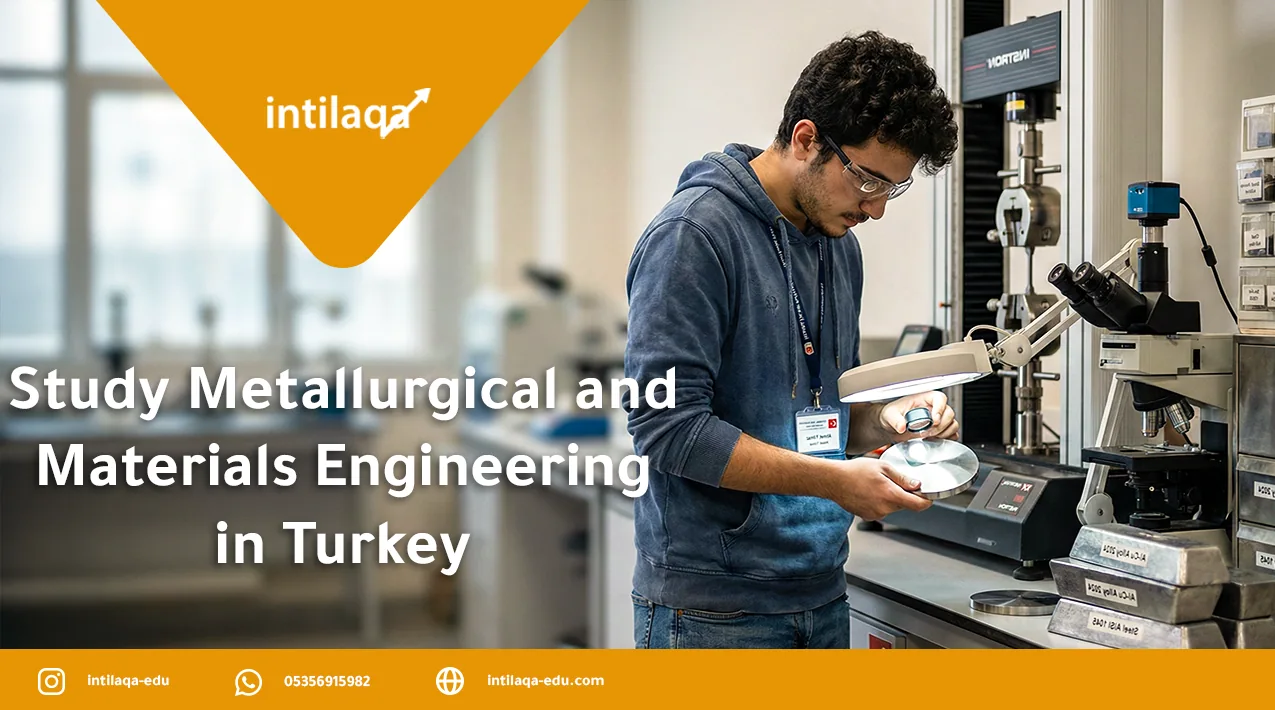
Students train on technologies such as Electron Microscopy and X-Ray analysis to detect internal defects, analyze material structures, and investigate the causes of Engineering failures.
Material Selection:
One of the most important Engineering skills in this field is selecting the most suitable material for each application. For example, materials used in aircraft engines have very different requirements from materials used in artificial joints inside the human body.
Why Study Metallurgical and Materials Engineering in Turkey?
Turkey has a substantial industrial and manufacturing sector, making it an attractive environment to study Metallurgical and Materials Engineering in Turkey. Students can combine academic Engineering education with exposure to industries that depend heavily on Metals, Advanced Materials, and Manufacturing technologies.
Some of the main advantages include:
Strong Connection With Industry:
Turkey has major Steel, Automotive, Defense, and Manufacturing industries. This industrial environment can provide Metallurgical and Materials Engineering students with opportunities for internships and practical exposure during their studies.
Advanced Research Infrastructure:
Turkish universities invest in Materials Science and Nanotechnology laboratories, allowing students to work with modern microscopy, testing, and characterization technologies.
Focus on Modern Materials Technologies:
University curricula increasingly cover advanced materials such as Aerospace Composites, Biomaterials, Nanomaterials, and other technologies used in modern Engineering industries.
International Academic Framework:
Turkish universities participate in the European Bologna Process, supporting academic comparability and student mobility. Students may also have opportunities to study abroad through exchange programs such as Erasmus.
Metallurgical and Materials Engineering Courses in Turkey
The curriculum for students who study Metallurgical and Materials Engineering in Turkey gradually progresses from fundamental Sciences and Engineering principles to advanced industrial applications.
First Year: Scientific and Engineering Foundations
The first year provides the scientific foundation required for later Materials Engineering courses:
- Mathematics and Calculus.
- General Physics.
- General Chemistry.
- Introduction to Metallurgical and Materials Engineering.
- Technical Drawing.
Second Year: Fundamental Materials Principles
Students begin studying the scientific principles that control material behavior:
- Materials Science.
- Thermodynamics of Materials.
- Structure of Materials.
- Strength of Materials.
- Physical Chemistry.
Third Year: Industrial Processes and Materials Analysis
The third year is a major stage for students who study Metallurgical and Materials Engineering in Turkey, as they begin working with manufacturing processes and advanced laboratory testing.
- Phase Diagrams.
- Mechanical Behavior of Materials.
- Materials Characterization.
- Casting and Iron Production.
- Kinetics.
Fourth Year: Advanced Applications and Graduation Project
During the final year, students move toward specialized areas of Metallurgy or Advanced Materials and complete their graduation project.
- Graduation Project.
- Nanomaterials.
- Composite Materials.
- Failure Analysis and Corrosion.
- Biomaterials.
How Long Does It Take to Study Metallurgical and Materials Engineering in Turkey?
The standard duration to study Metallurgical and Materials Engineering in Turkey is 4 academic years, divided into 8 semesters.
The total duration may extend to 5 years if the student does not have the required Turkish or English language proficiency and needs to complete a preparatory language year before beginning the Engineering program.
Master’s Degree in Metallurgical and Materials Engineering in Turkey
Postgraduate education allows engineers to move beyond standard industrial applications toward advanced Materials Development, Research, and Innovation. Students pursuing a Master’s degree in Metallurgical and Materials Engineering in Turkey generally have two academic options:
1. Thesis Master’s (Tezli Yuksek Lisans)
This research-oriented program is designed for students interested in continuing toward a Ph.D. or working in advanced Research and Development laboratories.
The program generally lasts two academic years and focuses on theoretical analysis and experimental research. Courses may include:
- Advanced Scientific Research Methods and Engineering Data Analysis.
- Advanced Thermodynamics and Kinetics of Materials.
- Microstructure Characterization and Spectroscopic Analysis.
- Preparation of an original scientific thesis addressing a Materials Engineering problem or developing a new material.
2. Non-Thesis Master’s (Tezsiz Yuksek Lisans)
This professionally oriented track is designed for practicing engineers working in factories and industrial companies who want to strengthen their technical knowledge and management skills without pursuing an extensive research thesis.
The program is generally shorter and usually lasts 3 semesters. It focuses on industrial problem-solving and applied Engineering subjects such as:
- Industrial Process Management and Total Quality Assurance.
- Modern Manufacturing Technologies and Engineering Material Selection.
- Mechanical Failure Analysis and Prevention Methods.
- An applied graduation project based on a real industrial case study.
Main Master’s Research Areas and Specializations
- Advanced Aerospace Materials: Developing lightweight and heat-resistant alloys for aircraft and Aerospace applications.
- Energy Storage and Conversion: Developing materials used in Batteries, Fuel Cells, and Solar Energy technologies.
- Smart Materials and Nanomaterials: Designing materials that respond to external stimuli and can be used in Electronics and advanced technological systems.
- Surface Engineering and Protection: Developing advanced coatings and treatments that protect materials against Corrosion and harsh Chemical or Marine environments.
Ph.D. in Metallurgical and Materials Engineering in Turkey
A Ph.D. represents the highest academic level for students who study Metallurgical and Materials Engineering in Turkey and is designed to prepare researchers for careers in Research and Development, Advanced Materials Innovation, and academia.
At private Turkish universities, related doctoral programs may also appear under modern interdisciplinary titles such as Materials Science and Nanotechnology.
Doctoral study generally takes 4 years and includes three main stages:
1. Advanced Coursework
During the first year, doctoral students complete advanced courses focusing on material behavior and microscopic properties, including:
- Advanced Thermodynamics and Kinetics.
- Materials Characterization and Microstructure Analysis.
- Computational Modeling and Simulation in Materials Engineering.
2. Comprehensive Proficiency Exam
After completing the required coursework, students take a comprehensive written and oral proficiency examination before an academic committee to demonstrate their ability to develop and conduct an independent research project.
3. Dissertation and Research Phase
Students then spend several years conducting original research aimed at developing new materials or improving existing ones to solve complex industrial and technological problems.
Common research areas include:
- Nanotechnology and Smart Materials.
- Composite Materials and Advanced Polymers.
- Corrosion and Surface Engineering.
- Green Metallurgy and Metal Recycling.
Best Universities to Study Metallurgical and Materials Engineering in Turkey
Students looking to study Metallurgical and Materials Engineering in Turkey can consider universities with strong Engineering laboratories, industrial connections, and specialized Materials Research facilities.
1. Atilim University
Atilim University in Ankara provides a strong Engineering and research environment. The university is associated with advanced Metal Forming research and gives students opportunities to develop practical experience related to Manufacturing, Materials Testing, Defense, and Aerospace applications.
2. Istanbul Gedik University
Istanbul Gedik University has strong connections with the industrial sector through the Gedik group, which has experience in areas such as Welding and Casting. Its Metallurgical and Materials Engineering education places significant emphasis on practical training and industrial applications.
Cost to Study Metallurgical and Materials Engineering in Turkey
The cost to study Metallurgical and Materials Engineering in Turkey at private universities varies according to the university, language of instruction, laboratory infrastructure, and available practical training opportunities.
Bachelor’s Degree: Annual Tuition Fees
Annual bachelor’s tuition fees generally range between 2,500$ and 6,000$. Costs may vary according to the program language and access to Materials Testing laboratories, Casting facilities, and other practical Engineering resources.
Master’s Degree: Total Program Cost
The total tuition cost for the complete Master’s program generally ranges between 2,500$ and 5,500$, whether the student chooses a thesis-based or professionally oriented track.
Requirements to Study Metallurgical and Materials Engineering in Turkey
Private Turkish universities generally provide relatively flexible admission procedures for international students who want to study Metallurgical and Materials Engineering in Turkey. Requirements vary according to the academic level.
1. Bachelor’s Degree Requirements
- High School Diploma: Applicants should hold a high school diploma from the Science track because the program relies heavily on Physics, Chemistry, and advanced Mathematics.
- Academic Average: Private universities generally require approximately 60%, while some universities may accept applicants with around 50%.
- Language Requirement: Students with an accepted language certificate such as TOEFL for English or TOMER for Turkish may be exempt from the preparatory year. Otherwise, they may take the university’s internal proficiency examination and complete a language preparatory year if necessary.
- Required Documents: Valid passport copy, high school diploma and transcript translated and certified when required, and a personal photo.
2. Master’s Degree Requirements
- Academic Background: Applicants should hold a bachelor’s degree in Metallurgical and Materials Engineering or a closely related Engineering field such as Mechanical Engineering, Chemical Engineering, or Manufacturing Engineering.
- Bachelor’s GPA: A GPA of approximately 2.00 out of 4.00 is generally sufficient for postgraduate application.
- Language Requirement: Private universities may allow applicants to take an internal proficiency examination instead of requiring an international language certificate in advance.
- Required Documents: Passport copy, bachelor’s diploma and transcript translated and certified when required, and a personal photo.
3. Ph.D. Requirements
- Master’s Degree Type: Applicants should hold a thesis-based Master’s degree (Tezli) before applying to a doctoral program.
- Master’s GPA: A Master’s GPA of approximately 3.00 out of 4.00 is generally preferred.
- Foreign Language Requirement: Applicants may need a minimum YDS score of 55 or an officially recognized international equivalent.
- Required Documents: Passport copy, translated and certified bachelor’s and Master’s diplomas and transcripts, official language examination result, preliminary Research Proposal, and two academic recommendation letters.
Career Opportunities for Metallurgical and Materials Engineering Graduates
Graduates who study Metallurgical and Materials Engineering in Turkey can work in industries where the performance, durability, weight, conductivity, or sustainability of materials plays a major role.
As industries develop lighter, smarter, and more sustainable materials, career opportunities continue to expand across several technological sectors.
Energy and Electric Vehicles:
Materials Engineers contribute to the development of advanced Batteries, energy-storage technologies, and lightweight alloys that can improve the efficiency and range of Electric Vehicles and other transportation systems.
Aerospace and Aviation:
The Aerospace industry requires materials capable of operating under extreme temperatures, pressures, and mechanical loads. Graduates may work on Advanced Alloys and Composite Materials used in aircraft and Aerospace systems.
Medicine and Bioengineering:
Materials Engineers contribute to the development of Artificial Joints, Heart Valves, Biomaterials, and other materials designed to interact safely with the human body.
Nanotechnology and Electronics:
Modern Smartphones, Computers, Electronic Components, and Semiconductor technologies depend on precise control of material properties at very small scales. Materials Engineers may contribute to areas such as Semiconductors, Flexible Electronics, and Nanotechnology.
How to Study Metallurgical and Materials Engineering in Turkey?
Starting your journey to study Metallurgical and Materials Engineering in Turkey requires choosing the right academic environment and preparing your application carefully.
1. Choose the Right Technical and Research Environment
Selecting the right university is an important step in building your academic and professional future. Consider the quality of Engineering laboratories, academic programs, research opportunities, industry connections, and how well the university matches your long-term goals.
2. Prepare Your Academic Documents
Applicants should prepare a Science-track high school diploma, detailed academic transcript, valid passport copy, and personal photo.
3. Apply Through Intilaqa
The Intilaqa team can review your academic profile, recommend suitable universities based on your grades and budget, and handle your application while helping you access available tuition discounts.
4. Secure Your University Seat
After receiving preliminary acceptance, students generally need to pay the required first tuition installment directly to the university’s official account to secure their seat and obtain final acceptance.
5. Apply for a Student Visa
After receiving final acceptance, students who require a visa can apply through the Turkish embassy or consulate responsible for their country or place of residence.
6. Complete Final Registration and Begin Your Studies
After arriving in Turkey, students complete final registration by submitting the required original documents to the university’s Student Affairs Office. Once registration is completed, the student receives a university card and officially begins to study Metallurgical and Materials Engineering in Turkey.
How Can the Intilaqa Team Help You?
The Intilaqa Education team supports you step by step in choosing the program and university in Turkey that best match your academic interests and study budget.
We provide a comprehensive free consultation that includes:
- Recommending suitable Turkish universities that offer your chosen program.
- Explaining tuition fees and available scholarship opportunities.
- Providing full support throughout the application process until final admission.
Whether you plan to study Metallurgical and Materials Engineering in Turkey or pursue another program, you can learn more about studying in Turkey through our complete guide: