Occupational Therapy is an essential part of integrated healthcare, helping individuals regain independence and improve their quality of life. The value of choosing to study Occupational Therapy in Turkey comes from the combination of modern European-oriented curricula and intensive clinical training.
In this comprehensive guide from Intilaqa, you will discover everything you need to know about Occupational Therapy, including the curriculum, the difference between Occupational Therapy and Physical Therapy, the best universities, tuition fees, admission requirements, and career opportunities.
What Is Occupational Therapy?
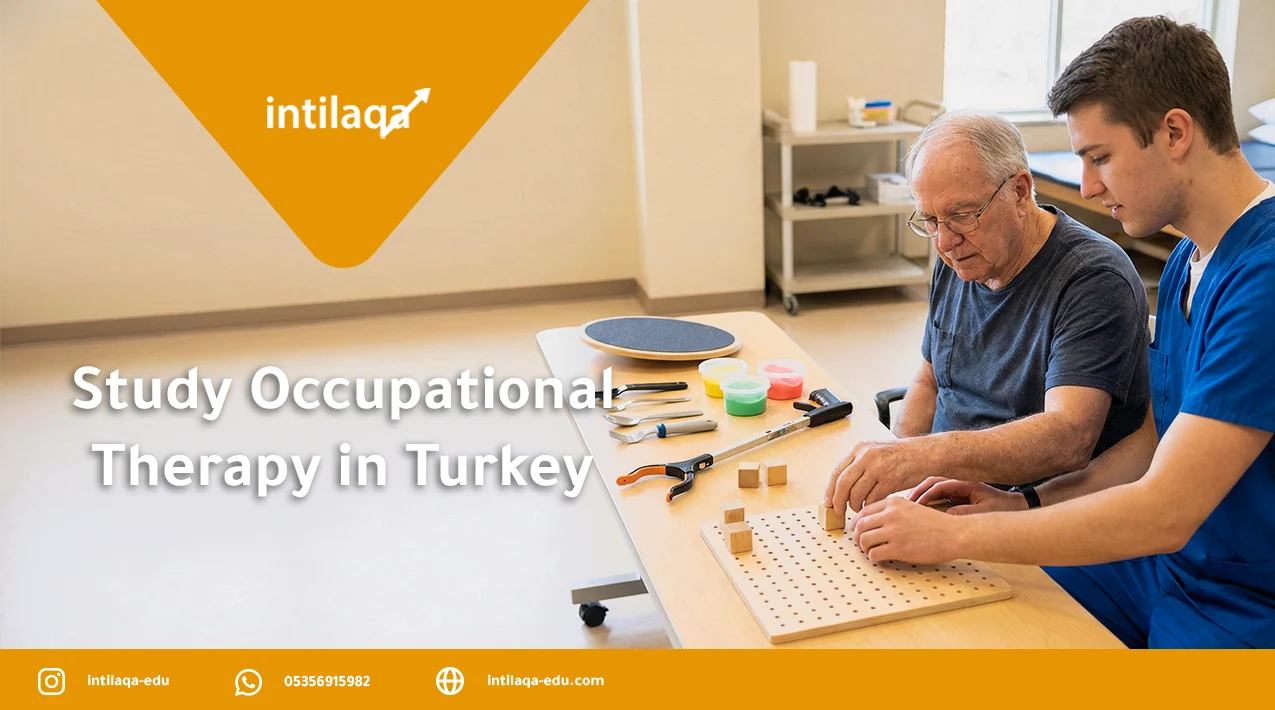
Occupational Therapy, also known internationally as Ergotherapy, is a healthcare field that connects medical sciences with social and behavioral sciences. It focuses on helping individuals with physical, cognitive, mental, or psychological challenges perform everyday activities as independently and effectively as possible.
When you choose to study Occupational Therapy in Turkey, you learn how to improve a person’s ability to live independently rather than focusing only on physical recovery. The field includes:
Developing Fine Motor Skills:
Training patients to perform essential everyday tasks such as eating, dressing, writing, and using everyday objects.
Psychological and Social Rehabilitation:
Helping people, including individuals with disabilities and older adults, participate more independently in society, education, and employment.
Environmental Adaptation:
Adapting homes, workplaces, and equipment to match the patient’s physical and cognitive abilities and provide greater independence.
Working With Different Age Groups:
Occupational Therapists can work with children experiencing Autism or learning difficulties, adults recovering from injuries, and older patients affected by Stroke or age-related conditions.
In short, Occupational Therapy focuses not only on how a patient recovers, but on how that person can return to living, studying, working, and participating in daily life.
Difference Between Occupational Therapy and Physical Therapy
Although Occupational Therapy and Physical Therapy often complement each other during rehabilitation, they have different objectives and are taught as separate healthcare disciplines.
1. Main Focus and Goal
- Physical Therapy: Primarily focuses on the body and movement. It addresses pain, muscle strength, mobility, balance, and movement after injuries or surgery. A typical question might be: “Can the patient move their hand?”
- Occupational Therapy: Focuses on function and activity. It examines how patients use their physical and cognitive abilities to perform tasks such as holding a pen, buttoning a shirt, preparing food, or driving. A typical question might be: “How can the patient use their hand to write?”
2. Skills Targeted
- Physical Therapy: Commonly focuses on Gross Motor Skills such as balance, standing, walking, and movements involving major muscle groups.
- Occupational Therapy: Places greater emphasis on Fine Motor Skills as well as cognitive, psychological, and social abilities required for independent participation in daily activities.
In summary: Physical Therapy primarily helps restore the ability to move, while Occupational Therapy helps restore the ability to live and function independently.
Why Study Occupational Therapy in Turkey?
Choosing to study Occupational Therapy in Turkey provides international students with several academic and practical advantages:
European-Oriented Academic Standards:
Turkish universities participate in the Bologna Process, supporting academic comparability and greater international understanding of Turkish university qualifications.
Diploma Supplement:
Many Turkish universities issue a Diploma Supplement that provides standardized information about the student’s qualification and supports its academic transparency across the European Higher Education Area.
Advanced Healthcare Infrastructure:
Turkey has a developed healthcare sector, and many universities provide Simulation Labs and rehabilitation facilities equipped with modern technologies for Occupational Therapy training.
Intensive Practical Training:
Students receive practical training in university hospitals, rehabilitation centers, and specialized healthcare facilities, allowing them to gain real clinical experience before graduation.
Affordable Tuition:
Compared with many European countries and the United States, tuition fees can be relatively affordable, with Turkish and English study options available depending on the university.
Occupational Therapy Courses in Turkey
The curriculum for students who study Occupational Therapy in Turkey combines medical theory with practical rehabilitation training from the early years of study.
First Year: Medical Foundations
The first year builds the scientific foundation required to understand the human body and behavior:
- Anatomy: Detailed study of muscles, bones, joints, and nerves.
- Physiology: Understanding how the major systems of the human body function.
- General Psychology: Understanding human behavior, motivation, and psychological processes.
- Introduction to Occupational Therapy: History, fundamental principles, professional roles, and ethics.
Second Year: Movement and Human Development
Students begin studying human activity and the theoretical foundations of Occupational Therapy in greater depth:
- Kinesiology: Understanding body mechanics and the movement of muscles and joints.
- Human Growth and Development: Physical and psychological changes from childhood through old age.
- Occupational Therapy Theories: Models and frameworks used by Occupational Therapists during assessment and intervention.
- Pathology: Understanding diseases and conditions that affect physical and cognitive function.
Third Year: Specialization and Practical Applications
The third year introduces specialized rehabilitation approaches for different patient groups:
- Pediatric Occupational Therapy: Developmental disorders, Autism, and learning difficulties.
- Geriatric Occupational Therapy: Aging, Dementia, Alzheimer’s disease, and maintaining independence among older adults.
- Neurorehabilitation: Rehabilitation following Spinal Cord Injuries, Stroke, and neurological conditions.
- Assistive Technology: Using and designing tools that help patients perform everyday activities independently.
- Hand Rehabilitation: Techniques designed to restore precise hand function.
Fourth Year: Clinical Training and Graduation Project
The final year focuses heavily on clinical practice and applying accumulated knowledge in real rehabilitation environments.
- Clinical Practice: Intensive training in hospitals and rehabilitation centers under professional supervision.
- Graduation Project: A scientific research project or case study completed as part of graduation requirements.
- Occupational Therapy in Mental Health: Advanced applications in psychological and mental healthcare settings.
How Long Does It Take to Study Occupational Therapy in Turkey?
The official duration to study Occupational Therapy in Turkey is four academic years, divided into eight semesters.
The total duration may extend to five years if the student needs to complete an English or Turkish language preparatory year before beginning the academic program.
Master’s Degree in Occupational Therapy in Turkey
Postgraduate study allows Occupational Therapists to move from general clinical practice toward more specialized professional and research roles. Students pursuing a Master’s degree in Occupational Therapy in Turkey generally find two main academic tracks:
1. Thesis Master’s (Tezli Yuksek Lisans)
This track is designed for students who plan to continue toward a Ph.D. or work in academic research and clinical studies. It normally takes two years or four semesters and focuses on advanced scientific research and Evidence-Based Practice.
Courses may include:
- Advanced Research Methods in Health Sciences and Biostatistics.
- Modern Occupational Therapy Models.
- Advanced Neurorehabilitation and Evidence-Based Practice.
- Preparation and writing of a scientific thesis in Rehabilitation.
2. Non-Thesis Master’s (Tezsiz Yuksek Lisans)
This professional track is intended for Occupational Therapists already working in hospitals and rehabilitation centers who want to strengthen their clinical skills without following a long academic research pathway.
It generally takes between one and one and a half years and emphasizes practical applications such as:
- Management and Leadership in Health and Rehabilitation Services.
- Advanced Assistive Technologies.
- Community-Based Rehabilitation and Early Intervention Strategies.
- Assessment and Analysis of Occupational and Environmental Performance.
Main Postgraduate Specializations and Research Areas
- Pediatric Rehabilitation: Autism, developmental disorders, and Sensory Integration.
- Geriatric Rehabilitation: Age-related conditions, Alzheimer’s disease, and maintaining independence among older adults.
- Neurorehabilitation: Advanced rehabilitation for Brain Injuries, Stroke, and Spinal Cord Injuries.
- Mental Health: Supporting participation in society and everyday life among individuals with mental health conditions.
Ph.D. in Occupational Therapy in Turkey
A Ph.D. in Occupational Therapy represents the highest academic level in this rehabilitation field. It is designed to prepare researchers, academics, department leaders, and experts capable of advancing clinical rehabilitation practices through original research.
Doctoral programs generally take approximately four years or 8 semesters and usually include the following stages:
1. Advanced Theoretical and Methodological Coursework
During the first year, doctoral students study advanced subjects designed to deepen their understanding of modern Rehabilitation Science, including:
- Advanced Occupational Therapy Theories and Models.
- Evidence-Based Practice in Rehabilitation.
- Advanced Biostatistics and Scientific Research Methodology.
2. Comprehensive Proficiency Exam
After completing the required coursework, students take written and oral proficiency examinations before an academic committee to demonstrate their ability to conduct independent scientific research.
3. Dissertation and Research Phase
Students then spend several years completing an original doctoral dissertation focused on developing new rehabilitation solutions or improving treatment protocols.
Research areas may include:
- Neurological and Cognitive Rehabilitation.
- Assistive Technology and Robotic Rehabilitation.
- Early Intervention and Rehabilitation for Children With Disabilities.
- Geriatrics and Environmental Adaptation.
Best Universities to Study Occupational Therapy in Turkey
Students who study Occupational Therapy in Turkey can choose from universities that provide modern healthcare infrastructure and clinically oriented training. Some of the notable private universities offering the program include:
1. Biruni University
Biruni University focuses heavily on Health Sciences and provides a specialized academic environment. Its simulation laboratories allow Occupational Therapy students to develop practical skills before entering hospital-based clinical training.
2. Istanbul Medipol University
Istanbul Medipol University provides a strong clinical environment through its large healthcare network and Medipol Mega University Hospital, giving students exposure to a wide range of clinical cases and modern rehabilitation practices.
3. Fenerbahce University
Fenerbahce University provides a modern Health Sciences environment and benefits from its connection with the Fenerbahce sports organization, supporting education related to physical rehabilitation and functional recovery.
4. Istanbul Topkapi University
Istanbul Topkapi University offers an application-oriented Occupational Therapy program with competitive tuition fees, making it an option for students looking for a balance between academic training and cost.
5. Ankara Medipol University
Ankara Medipol University combines the Medipol group’s healthcare-oriented academic approach with modern infrastructure in Ankara, providing students with a more specialized Health Sciences environment.
Cost to Study Occupational Therapy in Turkey
The cost to study Occupational Therapy in Turkey varies according to the university, language of instruction, available clinical facilities, and the quality of rehabilitation laboratories.
Bachelor’s Degree: Annual Tuition Fees
Annual tuition fees generally range from 2,700$ to 5,000$. English-taught programs may be more expensive, while costs can also vary according to the quality of Sensory Integration laboratories and clinical training partnerships.
Master’s Degree: Total Program Cost
Whether the student chooses a thesis-based academic track or a professionally oriented non-thesis track, the total cost of the Master’s program generally ranges from 2,500$ to 7,000$.
Ph.D. Degree: Total Program Cost
The average total tuition cost of a Ph.D. program lasting approximately four years is around 5,000$.
Requirements to Study Occupational Therapy in Turkey
Private Turkish universities generally offer relatively flexible admission procedures for international students. Requirements differ according to the academic level.
1. Bachelor’s Degree Requirements
- High School Diploma: students applying for Occupational Therapy should hold a high school diploma from the Science track because the program includes Anatomy, Physiology, and Biology.
- Academic Average: Private universities generally require approximately 60%, while some universities may accept students with around 50%.
- Language Requirement: Students studying in Turkish may present a TOMER certificate. Those without an accepted language certificate may take the university’s proficiency exam and complete a language preparatory year if necessary.
- Required Documents: Valid passport copy, high school diploma and academic transcript translated and certified when required, and a biometric personal photo.
2. Master’s Degree Requirements
- Academic Background: Applicants should hold a bachelor’s degree in Occupational Therapy or a closely related Health Sciences field such as Physical Therapy, Nursing, or Child Development.
- Bachelor’s GPA: A GPA of approximately 2.00 out of 4.00 is commonly sufficient for application to postgraduate programs.
- Language Requirement: Private universities may allow students to take an internal language proficiency exam instead of requiring an external language certificate in advance.
- Required Documents: Passport copy, bachelor’s diploma and university transcript translated and certified when required, and personal photo.
3. Ph.D. Requirements
- Master’s Degree Type: Applicants must hold a thesis-based Master’s degree (Tezli) to continue to doctoral study.
- GPA: A relatively strong Master’s GPA of approximately 3.00 out of 4.00 may be required.
- Foreign Language Requirement: Doctoral applicants may need a minimum YDS score of 55 or an equivalent internationally recognized examination accepted by the Turkish Council of Higher Education.
- Required Documents: Passport copy, translated and certified bachelor’s and Master’s diplomas and transcripts, language examination document, Research Proposal, and two academic recommendation letters.
Career Opportunities for Occupational Therapy Graduates
Occupational Therapy is a healthcare profession with career opportunities across several rehabilitation and community care sectors. Growing awareness of quality of life, population aging, and greater attention to supporting people with disabilities have increased demand for rehabilitation professionals.
Occupational Therapy graduates can work in several areas, including:
1. Hospitals and Medical Rehabilitation Centers
Occupational Therapists work within multidisciplinary medical teams in areas such as Neurology and Orthopedics, helping patients recovering from Stroke, Spinal Cord Injuries, accidents, and other conditions regain independence in daily activities.
2. Pediatric Care and Special Education Centers
Graduates can work in schools, pediatric rehabilitation centers, and Early Intervention programs with children affected by Autism, ADHD, learning difficulties, and Sensory Integration disorders.
3. Elderly Care and Geriatric Rehabilitation
Occupational Therapists design programs that help older adults maintain physical and cognitive activity while adapting home environments to reduce fall risks and preserve independence.
4. Mental Health Centers
Occupational Therapists can support people with mental health conditions such as Depression or Schizophrenia through programs focused on social participation, time management, work skills, and independent living.
5. Ergonomics and Workplace Consulting
Graduates may work with companies and industrial organizations to design healthier workplaces, reduce occupational injuries, or contribute to the development of assistive devices and rehabilitation technologies.
How to Study Occupational Therapy in Turkey?
To begin your journey to study Occupational Therapy in Turkey successfully, it is important to choose the right university and prepare the admission process carefully.
1. Choose the Right Academic and Clinical Environment
For Health Sciences programs, the university name alone is not enough. Clinical training opportunities are particularly important. Students should consider universities with their own hospitals or partnerships with major rehabilitation centers, along with modern Simulation Labs.
2. Prepare Your Academic File and Documents
Prepare your documents early. The main documents include a Science-track high school diploma, academic transcript, valid passport, and biometric personal photo.
3. Apply Through Intilaqa
Instead of managing university applications individually, the Intilaqa team can review your academic profile, recommend universities with suitable Occupational Therapy programs, and submit your application while helping you access available tuition discounts.
4. Secure Your University Seat
After receiving preliminary acceptance, the student usually needs to pay the required first tuition installment directly to the university’s official account to secure the seat and obtain final acceptance.
5. Apply for a Student Visa
After receiving final acceptance, students who require a visa can apply through the Turkish embassy or consulate responsible for their place of residence.
6. Complete Final Registration and Begin Your Studies
After arriving in Turkey, students complete final registration at the university by submitting the required original documents. Once registration is completed, they receive their student card and officially begin to study Occupational Therapy in Turkey.
How Can the Intilaqa Team Help You?
The Intilaqa Education team supports you step by step in choosing the program and university in Turkey that best match your academic interests and study budget.
We provide a comprehensive free consultation that includes:
- Recommending suitable Turkish universities that offer your chosen program.
- Explaining tuition fees and available scholarship opportunities.
- Providing full support throughout the application process until final admission.
Whether you plan to study Occupational Therapy in Turkey or pursue another program, you can learn more about studying in Turkey through our complete guide: