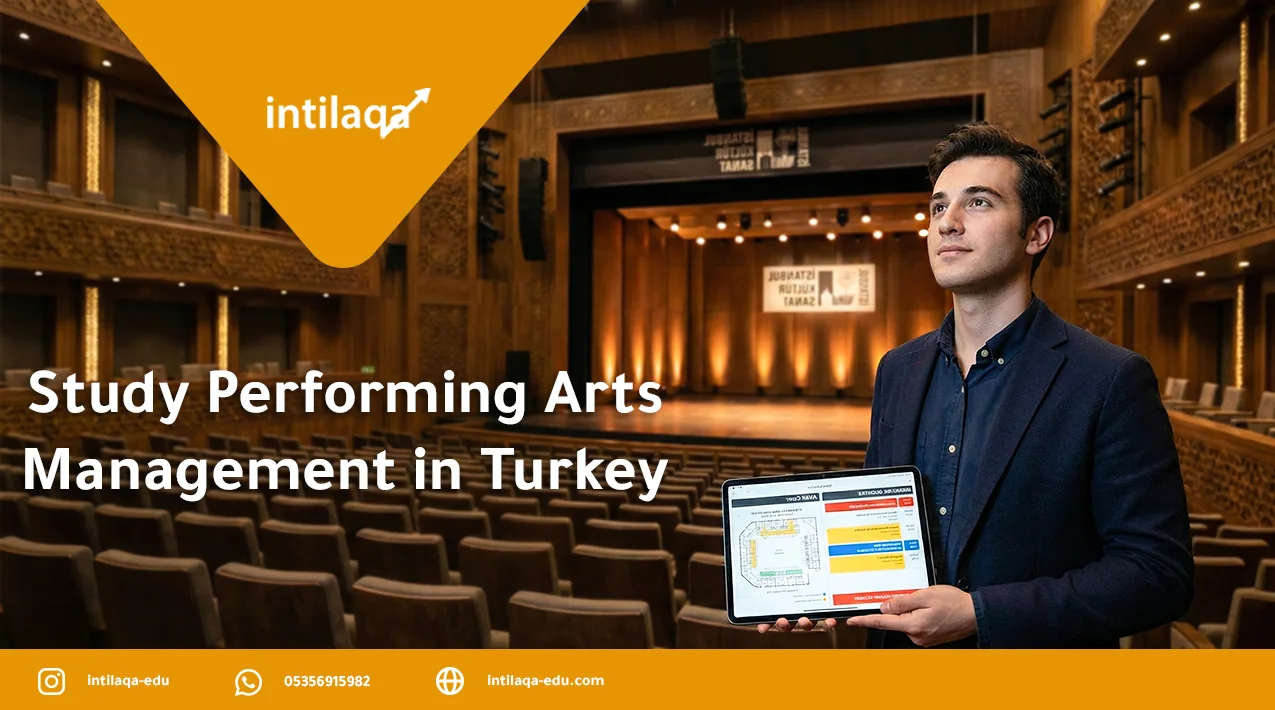
Performing Arts Management is one of the most influential fields within the creative industries, connecting artistic creativity with professional management to support the success of performances and cultural events. With the continued development of Turkey’s arts sector, the country offers a dynamic environment for studying this field thanks to its cultural diversity, active festival scene, and modern academic infrastructure. Choosing to Study Performing Arts Management in Turkey gives students the opportunity to gain practical experience in an active artistic environment while building a career that combines creativity with professional management.
What Is Performing Arts Management?
This field serves as a vital bridge between creativity and the audience, focusing on the organizational and commercial work behind transforming artistic ideas into successful productions. When students Study Performing Arts Management in Turkey, they discover that the core of the field is not acting or film directing, but rather the organizational leadership of artistic institutions. The major combines artistic awareness with structured management skills to help ensure the success of creative productions.
The program is built around several core areas that students study in order to understand how theatrical and artistic productions are managed successfully:
Production and Planning:
Learning how to transform a script into a complete production, including budgeting, rehearsal scheduling, and coordination between technical and artistic teams.
Marketing and Audience Development:
Strategies for attracting audiences, selling tickets, and building a sustainable relationship between the theater and its surrounding community.
Financial Management and Funding:
Identifying funding sources, writing grant proposals, and attracting sponsors to support performances and artistic projects.
Law and Intellectual Property:
Understanding artistic contracts, copyright, and the legal regulations governing live performances.
Facility Management:
Supervising the operation of theaters, performance halls, and artistic festivals to ensure safe and effective operations.
Why Study Performing Arts Management in Turkey?
Choosing to Study Performing Arts Management in Turkey provides students with an academic experience that combines Turkey’s cultural heritage with its modern artistic infrastructure. Some of the main advantages include:
A Rich Cultural Environment:
Turkey, particularly Istanbul, brings together Eastern and Western cultural influences. This gives arts management students a broad perspective and a deeper understanding of diverse audiences and artistic preferences.
Festivals and Cultural Events:
Turkey hosts numerous international events, including the Istanbul Theatre Festival, giving students opportunities for practical exposure and interaction with producers and arts managers from different parts of the world during their studies.
Modern Academic Infrastructure:
Turkish universities often provide theaters and conference centers equipped with modern technologies, allowing students to practice Performing Arts Management in real academic environments before graduation.
Competitive Tuition and Living Costs:
Compared with many European countries and the United States, Turkey offers arts education at relatively competitive tuition and living costs for international students.
Strategic International Location:
As a country connecting two continents, Turkey allows students who Study Performing Arts Management in Turkey to build international networks and understand how cross-border artistic productions and collaborations are managed.
Performing Arts Management Courses in Turkey
Academic curricula for students who Study Performing Arts Management in Turkey are generally comprehensive, taking students from the foundations of art and management to the leadership of larger creative projects. Although course structures vary slightly between universities, the curriculum generally follows the progression below:
First Year: Foundations and Cultural Background
The first year introduces students to the academic environment and the fundamental concepts of art and management:
- Introduction to Arts Management: Understanding the organizational structures of artistic institutions.
- History of Civilizations and the Arts: A historical overview of the development of theater and performing arts internationally and locally.
- Principles of Economics and Management: The foundations of management and their general applications.
- Communication Skills: Learning how to communicate effectively within an artistic work environment.
- Sociology of Art: Studying the relationship between society and artistic production.
Second Year: Management and Technical Tools
During the second year, students begin developing the practical skills needed for administrative work behind artistic productions:
- Arts Marketing: Strategies for attracting audiences and promoting theatrical productions.
- Accounting and Financial Management for Arts Organizations: Preparing budgets and financial reports.
- History of Turkish Theater: An in-depth study of the development of theater in Turkey and its leading figures.
- Play Analysis: Reading theatrical scripts from a production perspective to identify requirements and costs.
- Human Resources Management in the Arts: Managing artists, technical staff, and volunteers.
Third Year: Specialization and Cultural Policy
Third-year courses explore more complex legal, strategic, and organizational aspects of the field:
- Cultural Policy: Studying the role of governments and institutions in supporting the arts.
- Arts Law and Intellectual Property: Contracts, copyright, and legal regulations governing performances.
- Resource Development and Fundraising: Methods for obtaining grants and sponsorships.
- Event and Festival Management: Logistical planning for large artistic festivals and events.
- Theater Facility Management: The daily operation and maintenance of theater facilities.
Fourth Year: Practical Training and Graduation Projects
The final year brings together the knowledge and skills developed throughout the program through real-world experiences that prepare students for the job market:
- Graduation Project: Planning and implementing a complete artistic project or conducting an in-depth field research project.
- Internship: Working within real Turkish theaters or cultural institutions.
- Strategic Arts Management: Long-term planning for artistic institutions.
- Contemporary Issues in the Arts: Examining modern challenges and the role of technology in theater.
- Cultural Entrepreneurship: Learning how to establish an independent artistic project or organization.
How Long Does It Take to Study Performing Arts Management in Turkey?
In general, Turkish university programs follow the standard undergraduate structure, and the bachelor’s degree duration for students who Study Performing Arts Management in Turkey is 4 years, divided into 8 academic semesters.
If a student does not hold a certificate proving proficiency in the language of instruction, whether Turkish or English, the university may require a language proficiency examination. Students who do not pass the exam complete an additional preparatory language year before beginning the degree. In this case, the total duration becomes 5 years.
Master’s in Performing Arts Management in Turkey
Students who want to move from operational roles toward the strategic leadership of artistic institutions can pursue advanced programs at Turkish universities, often under the broader title of Arts Management. These programs are designed to develop analytical and leadership skills and are generally available through two main tracks:
1. Thesis-Based Master’s Degree (Tezli Yuksek Lisans)
This track is designed for students interested in an academic career or continuing to PhD studies. It places strong emphasis on theory and research methodologies and concludes with a thesis examining an original issue related to the arts. The program takes two years, with courses such as:
- Research Methods in Cultural Studies: Training in scientific research tools used to analyze artistic and cultural phenomena.
- Comparative Cultural Policies: Understanding how arts support systems develop and operate locally and internationally.
- Sociology of Art: Studying the relationship between theatrical performance, audiences, and society.
- Contemporary Management Theories: Analyzing the philosophical and organizational changes influencing creative institutions.
2. Non-Thesis Master’s Degree (Tezsiz Yuksek Lisans)
This track is designed for professionals and theater managers who want to strengthen their practical skills and return to the job market. It has a more applied structure and replaces the academic thesis with a graduation project addressing a real-world challenge. The program is shorter, usually lasting between one and one and a half years, and focuses on subjects such as:
- Funding and Sponsorship Strategies (Fundraising): Methods for attracting sponsors and securing financial support for artistic projects.
- Digital Cultural Marketing: Promoting performances and developing audiences through modern digital platforms.
- Event and Festival Management: Logistical and organizational aspects of managing audiences and artistic teams.
- Cultural Entrepreneurship: Practical tools for transforming artistic ideas into sustainable projects.
Key Research Areas and Specializations
Turkish universities may offer opportunities to specialize in areas connected with the future development of the creative industries, including:
- Sustainable Arts Management (Green Arts): Developing environmentally responsible production strategies to reduce carbon emissions and waste in theatrical productions.
- Art and Social Impact: Using performing arts management as a tool for social inclusion, education, and support for marginalized communities or refugees.
- Digital Transformation in the Arts: Integrating virtual reality (VR) into production and exploring hybrid performance models and digital archiving.
- International Festival Policy: Studying the dynamics of cross-border events and regulations surrounding international cultural exchange.
Best Universities to Study Performing Arts Management in Turkey
Although many universities offer programs related to the arts, two universities stand out when considering the management side of theater and performing arts because of their professional and practical learning environments:
1. Bilgi University
Bilgi University is a notable option because of its specialized Management of Performing Arts program. Its Santral Istanbul campus provides an active artistic environment, while international partnerships give students opportunities to take part in the management of festivals and cultural events on campus, helping them gain practical experience before graduation.
2. Istanbul Kultur University
Istanbul Kultur University is known for its Arts Management program and its Akınguc Auditorium, where students can gain practical experience in operating and managing a professional performance venue. The curriculum combines hands-on experience with academic attention to the legal and financial dimensions of theatrical production.
Cost to Study Performing Arts Management in Turkey
Choosing to Study Performing Arts Management in Turkey can provide students with internationally oriented arts education at tuition rates that are competitive compared with many European destinations. Tuition at private universities depends on factors such as the university, academic theater facilities, and language of instruction.
Bachelor’s Degree: Annual Tuition Fees
Annual tuition fees for bachelor’s programs range from 3,500$ to 10,000$.
Costs are generally higher for English-taught programs and programs connected with faculties of arts and design that provide advanced workshops and creative facilities for training in production and theater management.
Master’s Degree: Total Program Cost
The total cost of the full master’s program ranges from 4,000$ to 7,500$.
This amount generally covers program tuition for either track, academic supervision, access to university arts facilities such as auditoriums, theaters, and performance halls, as well as digital libraries and specialized databases related to marketing and cultural product management.
Requirements to Study Performing Arts Management in Turkey
Requirements to Study Performing Arts Management in Turkey are generally flexible at Turkish universities, particularly private institutions, which aim to attract international students interested in the arts and creative industries. Admission tends to focus on the applicant’s academic readiness and interest in the field rather than relying exclusively on very high grades. Requirements vary according to the academic level:
1. Bachelor’s Degree Requirements
- High School Diploma: Turkish universities accept applicants from different secondary-school tracks, including science, literature, arts, and commercial studies.
- Minimum Grade: Admission requirements at private universities are generally flexible, and a high school average of 50% or above is commonly sufficient for admission.
- Language Requirements: Students who hold an accepted language proficiency certificate may begin their degree directly. Otherwise, they may take the university’s language exemption examination. Students who do not pass enroll in a preparatory language year before beginning the major.
- Required Documents:
- A copy of a valid passport.
- Original high school diploma, translated and officially certified.
- Academic transcript, translated and officially certified.
- A recent biometric photograph.
2. Master’s Degree Requirements
- Academic Background and Previous Major: Applicants are preferably expected to hold a bachelor’s degree in a related field that overlaps with either the arts or management, such as Performing Arts, Cinema, Business Administration, Marketing, Public Relations, or the Humanities.
- GPA: Previous university grades are generally not a major barrier at private universities. An applicant is commonly considered if the cumulative GPA is at least 2.00 out of 4.00.
- Language Requirements: International language certificates such as TOEFL are not always mandatory before application at many private universities. Students may instead take the university’s own language proficiency examination during the admission process.
- Required Documents:
- A copy of the passport.
- Bachelor’s degree certificate, translated and officially certified.
- University transcript, translated and officially certified.
- A recent personal photograph.
Career Prospects for Performing Arts Management Graduates
Graduates who complete their Study Performing Arts Management in Turkey develop a combination of administrative and artistic skills that can be applied across different areas of the creative economy. Career opportunities are not limited to traditional theater management and may extend into a range of sectors within the arts and entertainment industries:
Public and Private Arts Institutions:
Graduates can work in national theaters, opera houses, and concert halls, where responsibilities may include seasonal planning, managing operating budgets, and supervising artistic and administrative teams.
Media and Entertainment Production:
Graduates can work in film and television production companies as production managers or logistics coordinators, applying their experience in transforming creative concepts into completed projects within specific schedules and budgets.
International Events and Festivals:
Career opportunities can include managing the logistical, artistic, and financial aspects of major cultural festivals in Turkey, such as the Istanbul Theatre Festival. Responsibilities may include audience management, sponsorship coordination, and working with international artistic teams.
Non-Profit Cultural Organizations:
Graduates may work with organizations that use art as a tool for social impact and community development, including managing funding projects and fundraising activities to support sustainable cultural initiatives.
Cultural Entrepreneurship:
Graduates can establish independent artistic organizations, such as theater companies or agencies specializing in talent management and cultural marketing.
How Can I Study Performing Arts Management in Turkey?
To begin your academic journey in Performing Arts Management with a clear plan, the application process can be divided into six practical steps:
1. Choose the Right University
The first step is to identify a university that matches your artistic and professional goals. Your options can be narrowed according to the strength of practical training, academic program structure, and tuition fees that fit your budget.
2. Prepare Your Academic Documents
To help make the application process smoother, prepare your documents in advance. These generally include a translated and officially certified high school diploma and transcript, together with a valid passport and recent personal photograph.
3. Apply Through Intilaqa
The Intilaqa team can manage the application process on your behalf, review your academic profile, and help you apply for university admission free of charge while identifying available tuition discounts and scholarship opportunities.
4. Pay the Initial Tuition Payment and Confirm Your Place
Preliminary admission alone does not permanently reserve your university place. To confirm your enrollment, you generally need to transfer the required initial tuition payment to the university. Once the payment is confirmed, the university issues the official final admission document.
5. Apply for a Student Visa
After receiving your final admission document, you can apply for a Student Visa through the Turkish embassy or consulate responsible for your country of residence when required. This allows you to enter Turkey legally for educational purposes and later complete the relevant student residence procedures.
6. Arrive, Complete Registration, and Receive Your Student Card
After arriving in Turkey, the final step takes place at the university. You submit the required original documents and complete the official registration procedures through the Student Affairs office. You can then receive your university student card and begin your studies in Performing Arts Management.
How Can the Intilaqa Team Help You?
The Intilaqa Education team supports you step by step in choosing the academic program and university in Turkey that best match your interests and study budget.
Our comprehensive free consultation includes:
- Recommending suitable Turkish universities that offer your chosen program.
- Explaining tuition fees and available scholarship opportunities.
- Providing full support throughout the application process until final admission.
Whether you are planning to Study Performing Arts Management in Turkey or pursue another academic field, you can learn more about the entire process through our complete guide: